
Jötnar: The Giants of Norse Mythology, Their Names and What the Eddas Say
On this page 16 sections
- What are the jötnar? Quick facts
- What does jötunn mean? Jötunn, þurs, risi and troll
- Where do the jötnar come from? Ymir and the frost giants
- Where do the giants live? Jötunheimr and Útgarðr
- Names of the giants in Norse mythology: a sourced list
- Are the Norse gods part giant? Odin, Loki, Thor and their giant kin
- Thor, killer of giants: Thrym, Hrungnir, Geirröðr and Hymir
- Wisdom, wealth and beauty: why the jötnar are not simply monsters
- Frost giants in Norse mythology, and fire and mountain giants
- The jötnar at Ragnarök
- Are the jötnar evil? Why the gods and giants fight
- Jötnar in modern culture: Marvel, God of War and Jotunheimen
- Where to read about the giants
- A modern song inspired by the jötnar
- Frequently asked questions
- Sources and editorial notes
The jötnar (singular jötunn) are the giants of Norse mythology: the oldest beings in the world, who live in Jötunheimr beyond the gods’ realm, the gods’ great rivals and, surprisingly often, their relatives. Odin’s mother is a giant’s daughter, Loki’s father is a giant, and several gods marry giantesses. Yet Thor spends much of his life killing their kind, and at Ragnarök they march against the gods.
That double role is the key to understanding them. “Giant” is the usual English translation, but the medieval texts are not describing a single species defined by height. They describe a whole world of beings outside the gods’ order: wise, wealthy, dangerous, desirable and indispensable. This guide sets out what the Poetic Edda and Snorri Sturluson’s Prose Edda actually say, names the giants who matter, and marks clearly where modern interpretation begins.
- Jötunn is the Old Norse word usually translated “giant”; jötnar is its plural. Þurs and risi are overlapping terms with their own nuances.
- They come first: in the Eddic creation story the primordial being Ymir and the frost giants exist before the gods shape the world from Ymir’s body.
- They are family as well as enemies: Odin, Loki, Thor’s son Magni and Víðarr all have giant parentage in the sources, and the gods marry giantesses such as Skaði and Gerðr.
- Size is not the defining trait: some giants are enormous, others are beautiful, wise or simply foreign to the gods’ world.
What are the jötnar? Quick facts
- Name: jötunn (Old Norse jǫtunn), plural jötnar. English spellings include jotun, jotunn and jotnar. A female giant is often called a giantess.
- Related words: þurs (plural þursar), risi and troll, which already appears in the medieval texts but dominates later folklore. A giantess can also be called a gýgr. Snorri also speaks of rime-giants (hrímþursar) and hill-giants (bergrisar).
- Origin: the primordial being Ymir, from whom the race of the rime-giants descends (Gylfaginning 5; Vafþrúðnismál 31–33).
- Home: Jötunheimr (English Jotunheim), often in the plural Jötunheimar, and the stronghold of Útgarðr (Utgard), home of Útgarða-Loki, beyond the enclosed world of gods and men.
- Best-known giants: Ymir, Skaði (Skadi), Þrymr (Thrym), Hrungnir, Útgarða-Loki (Utgard-Loki), Vafþrúðnir (Vafthrudnir), Angrboða (Angrboda) and Surtr (Surt).
- Role at Ragnarök: the giant Hrymr comes from the east (Völuspá 50) and, in Snorri, steers Naglfar and brings the rime-giants (Gylfaginning 51).
What does jötunn mean? Jötunn, þurs, risi and troll
A jötunn is, in the simplest translation, a giant. The word has relatives in other Germanic languages: Old English eoten appears in Beowulf, line 112, where eotenas are listed among the monstrous descendants of Cain. The same word survives in later English as ettin, “giant”; elsewhere in Beowulf, in the Finnsburh episode, scholars still debate whether a similar form means giants or the Jutes. The deeper origin is reconstructed rather than recorded. Elof Hellquist’s Swedish etymological dictionary derives the related Swedish jätte from a Germanic *etuna- connected with the verb “to eat”, glossing the idea as “great eater”. Hellquist, Svensk etymologisk ordbok (1922), s.v. jätte. It is an attractive explanation, but it remains a reconstruction, not something a medieval source tells us.
The Eddas use several words that overlap. Þurs often carries a more hostile, monstrous tone, as in the rime-giants, the hrímþursar; it is also the name of the rune ᚦ in the Norwegian and Icelandic rune poems (reconstructed for the older alphabet as *þurisaz), discussed in our complete guide to the Elder Futhark. Risi is common in later prose and gives Snorri’s hill-giants, the bergrisar. Troll already occurs in the medieval texts (Snorri has Thor go east “to fight trolls”) and becomes the dominant word in later Scandinavian folklore. The Norwegian encyclopedia Store norske leksikon notes how giants, trolls and the related jutul of folk tradition became large, ugly, forest- and mountain-dwelling and often easily fooled figures in later stories.
These words were not used like a modern biological classification. A single figure can be called a jötunn in one passage and a þurs or troll in another. When a modern game or film presents “jötnar”, “frost giants” and “fire giants” as tidy separate races, it is building on the sources, not quoting them.
The stories below come from the Poetic Edda, preserved mainly in the Codex Regius manuscript of about 1270 (the poems themselves are older, by how much is debated), and from Snorri Sturluson’s Prose Edda, written in Iceland around 1220 by a Christian author more than two centuries after the conversion. Snorri also quotes older skaldic poems, such as Haustlöng and Þórsdrápa, our earliest witnesses for several giant stories. Chapter numbers for Gylfaginning and Skáldskaparmál follow Arthur Gilchrist Brodeur’s 1916 translation; stanza numbers follow Henry Adams Bellows’s 1923 translation. Other editions sometimes number stanzas differently. Names are given in their Old Norse form, with the common English spelling in brackets at first mention (Þrymr = Thrym); quotations keep each translator’s spelling. Paintings and illustrations are later interpretations, not Viking Age evidence.
Where do the jötnar come from? Ymir and the frost giants
In the Eddic creation story, giants are not latecomers who invade an ordered world. They are there first. Snorri’s Gylfaginning 5 describes venom-laden streams called Élivágar freezing into rime in the great void, Ginnungagap. Where that rime met the heat from Múspellsheimr, it melted and dripped, and “life was quickened from the yeast-drops” into the shape of a man: “that man is named Ymir, but the Rime-Giants call him Aurgelmir” (Brodeur’s edition prints “Aurgelimir”). Gylfaginning 5, translated by Brodeur.
The poem Vafþrúðnismál preserves the same tradition in the mouth of a giant. Asked where Aurgelmir came from, the giant Vafþrúðnir answers that venom dropped from Élivágar “and waxed till a giant it was”, adding with some pride: “thence arose our giants’ race” (stanza 31, a line preserved only in Snorri’s quotation of the stanza). Ymir had no partner. Under his arms grew a man-child and a maid, and his feet together begot a six-headed son (stanza 33). Snorri repeats the strange birth in prose: a man and a woman grew “under his left hand” while he slept, “and one of his feet begat a son with the other”. Vafþrúðnismál 31–33, translated by Bellows.
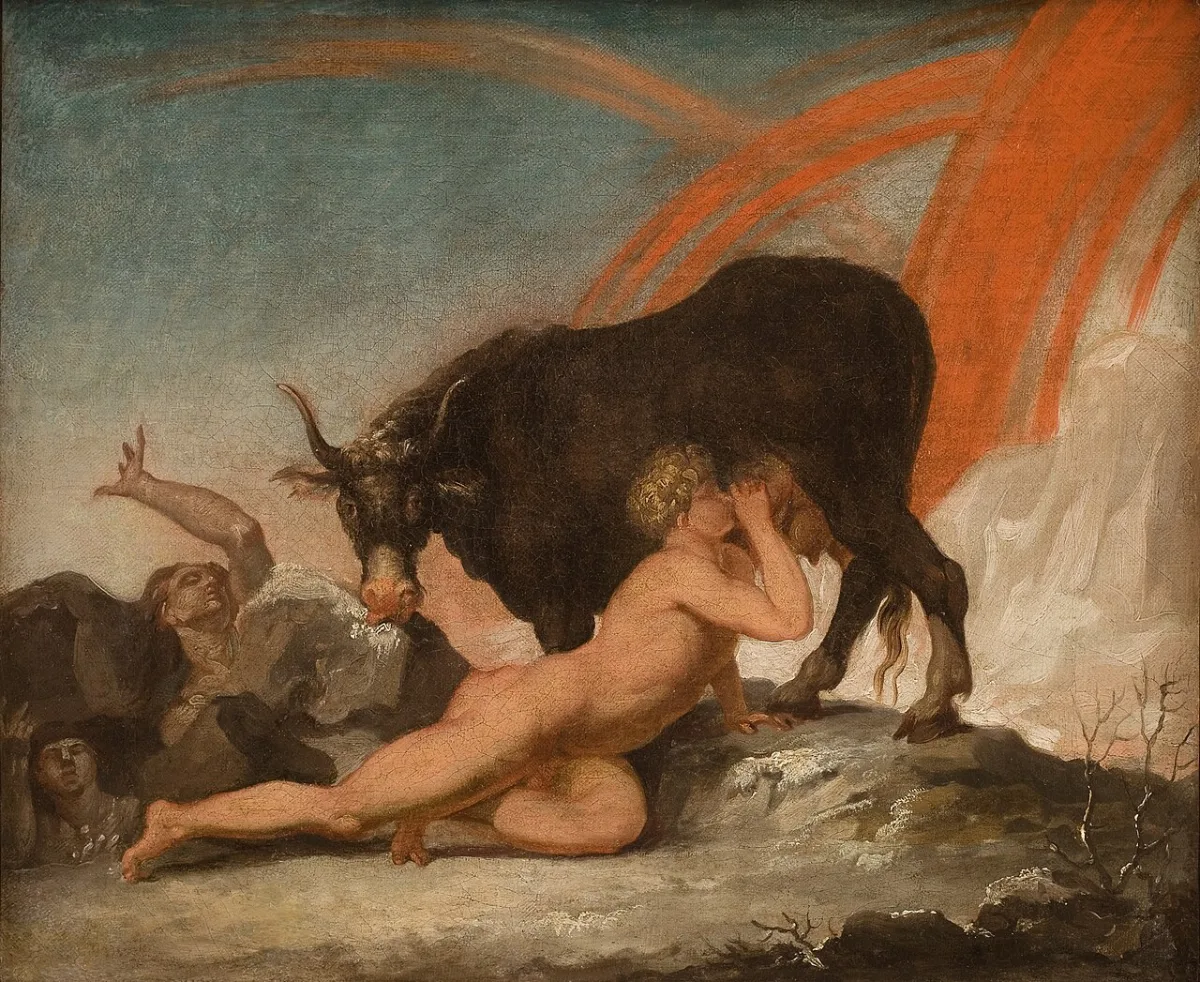
The gods appear one step later. In Gylfaginning 6, the cow Auðumbla licks the salty ice-blocks and frees Búri, whose son Borr marries “the woman named Bestla, daughter of Bölthorn the giant”. Their sons are Odin, Vili and Vé. From the very first generation, then, the gods carry giant blood. Our guide to Odin the Allfather follows that lineage further.
The sons of Borr then kill Ymir. In Snorri’s version so much blood gushes from his wounds that it drowns the whole race of rime-giants, “save that one, whom giants call Bergelmir”, who escapes on a vessel with his wife and becomes the ancestor of the later giants (Gylfaginning 7). The poem is more cryptic. Vafþrúðnismál 35 says only that the earliest thing Vafþrúðnir remembers is Bergelmir being laid on a lúðr, an obscure word here (elsewhere a box, a flour-bin or a mill-frame) that Bellows renders “boat” and Snorri took for a ship. The flood itself is Snorri’s narrative, not the poem’s, and many scholars suspect the influence of Noah’s Flood, all the more because medieval Christian tradition, as in Beowulf, already linked giants with the Flood.
Ymir’s body becomes the world: his flesh the earth, his blood the sea, his bones the hills, his hair the trees and his skull the sky (Grímnismál 40–41; Vafþrúðnismál 21; Gylfaginning 8). Every Norse landscape, in other words, is built from a dead giant. For the wider cosmology, see our guide to Yggdrasil and the nine worlds.
Where do the giants live? Jötunheimr and Útgarðr
Once the world is made, the gods divide it. According to Gylfaginning 8, the earth is ring-shaped with the deep sea around it, and “along the strand of that sea they gave lands to the races of giants for habitation”. On the inner earth they raise a fortification against the giants’ hostility from Ymir’s eyebrows and call it Miðgarðr, “the middle enclosure”. The giants’ lands lie outside the fence. Modern scholars often contrast Miðgarðr with Útgarðr, “the outer enclosure”, the name of Útgarða-Loki’s stronghold (Gylfaginning 45–47); the contrast is suggestive, but it is theirs, not Snorri’s.
The sources call this outer region Jötunheimr or, more often in the poems, the plural Jötunheimar, “giant-homes”. It is a direction more than a mapped country. Thor goes “into the east” to fight trolls (Gylfaginning 42; Skáldskaparmál 17), while Freyr sees Gerðr’s house when he looks into the northern region (Gylfaginning 37). Vafþrúðnismál 16 adds a boundary: the river Ífingr runs between the realms of gods and giants and never freezes. Mountains, rivers, sea-coasts and forests mark the edge of the gods’ world, and giants live beyond them.
Some giant homes have names. Skaði keeps her father’s hall, Þrymheimr, in the mountains (Grímnismál 11). Útgarða-Loki rules a fortress so high that Thor has to bend his neck back to see over it (Gylfaginning 46). A giantess in the forest called Járnviðr, “Ironwood”, east of Miðgarðr, bears giant sons in the shape of wolves (Gylfaginning 12; Völuspá 40). Two of them, Sköll and Hati, chase the sun and moon; our guide to Fenrir follows the wolf lineage.
Names of the giants in Norse mythology: a sourced list
Dozens of giants are named in the Eddas, and the name-lists (þulur) transmitted with Snorri’s Skáldskaparmál preserve many more, most of them known from nothing else. The table below gathers the figures who play a real part in the surviving stories, with the passage where each can be read.
| Giant | Who they are | Where to read |
|---|---|---|
| Ymir (Aurgelmir) | The primordial being; the world is made from his body | Gylfaginning 5–8; Vafþrúðnismál 21, 29–33 |
| Bergelmir | Ymir’s grandson; the survivor from whom the later giants descend in Snorri | Vafþrúðnismál 29, 35; Gylfaginning 7 |
| Bölþorn (Bolthorn) and Bestla | Odin’s maternal grandfather and mother | Gylfaginning 6; Hávamál 141 |
| Vafþrúðnir (Vafthrudnir) | The all-wise giant who loses a contest of knowledge to Odin | Vafþrúðnismál |
| Þjazi (Thiazi, Thjazi) | Abducts Iðunn and her apples; killed by the gods in Snorri, by Thor in his own boast; his eyes become stars | Skáldskaparmál 1; Hárbarðsljóð 19 |
| Skaði (Skadi) | Þjazi’s daughter; marries Njörðr and hunts on skis | Gylfaginning 23; Grímnismál 11 |
| Þrymr (Thrym) | “The giants’ master”; steals Thor’s hammer and demands Freyja | Þrymskviða |
| Hrungnir | Stone-hearted giant, “strongest of them all”; dies fighting Thor | Skáldskaparmál 17 |
| Geirröðr (Geirrod), Gjálp and Greip | A giant and his two daughters who try to trap Thor | Skáldskaparmál 18 |
| Gríðr (Grid) | Giantess who arms Thor; mother of the god Víðarr | Skáldskaparmál 18 |
| Járnsaxa | Giantess; mother of Thor’s son Magni | Skáldskaparmál 17 |
| Útgarða-Loki (Utgard-Loki; also Skrýmir) | Giant king and master of illusion who outwits Thor | Gylfaginning 45–47 |
| Hymir | Owner of the great cauldron; Thor’s fishing companion | Hymiskviða; Gylfaginning 48 |
| Suttungr (Suttung), Baugi and Gunnlöð (Gunnlod) | Keepers of the mead of poetry, which Odin steals | Skáldskaparmál 1; Hávamál 104–110 |
| Gymir and Gerðr (Gerd) | Gerðr, “fairest of all women”, is wooed by Freyr | Gylfaginning 37; Skírnismál; Hyndluljóð 32 |
| Angrboða (Angrboda) | Mother of Fenrir, Jörmungandr and Hel by Loki | Gylfaginning 34; Hyndluljóð 42 (the wolf only) |
| Fárbauti | Loki’s father | Gylfaginning 33 |
| Nörfi (Narfi) | Father of Nótt, Night | Gylfaginning 10 |
| Hyrrokkin | Giantess who launches Baldr’s funeral ship | Gylfaginning 49 |
| Þökk (Thokk) | Giantess who refuses to weep Baldr out of Hel | Gylfaginning 49 |
| Fenja and Menja | Giant women forced to turn King Fróði’s magic mill; they boast of descent from Iði and Aurnir and compare their strength to Hrungnir’s and Þjazi’s | Skáldskaparmál 42; Grottasöngr |
| Hræsvelgr (Hraesvelg) | Giant in eagle’s form who sits at the end of heaven and makes the wind | Vafþrúðnismál 37 |
| Eggþér (Eggther) | “The giants’ warder”, who sits on a mound striking his harp as Ragnarök approaches | Völuspá 42 |
| Hrymr | Comes from the east at Ragnarök; in Snorri he steers Naglfar and brings the rime-giants | Völuspá 50; Gylfaginning 51 |
| Surtr (Surt) | The fiery adversary from Múspell at Ragnarök | Gylfaginning 4, 51; Völuspá 52 |
Surtr has his own detailed guide: Surtr in Norse mythology. The children of Angrboða are covered in the children of Loki, and Hyrrokkin and Þökk belong to the story of Baldr’s death.
Are the Norse gods part giant? Odin, Loki, Thor and their giant kin
The sources suggest that the line between gods and giants is drawn by allegiance and community more than by blood, a reading many scholars share. The examples are striking:
- Odin is the son of Bestla, “daughter of Bölthorn the giant” (Gylfaginning 6). In Hávamál 141 he says he learned nine mighty songs from “the son of Bölthorn, Bestla’s father”: from his own giant uncle.
- Loki is “son of Fárbauti the giant” and of Laufey or Nál, yet Snorri says he is “numbered among the Æsir” (Gylfaginning 33). Our guide to Loki explores that ambiguity.
- Thor’s mother is Jörð, Earth. Snorri makes her the daughter of Nótt, Night, whose father Nörfi “was a giant that dwelt in Jötunheim” (Gylfaginning 10). Thor himself has a son, Magni, by the giantess Járnsaxa (Skáldskaparmál 17).
- Víðarr, the silent god who avenges Odin at Ragnarök, is the son of the giantess Gríðr (Skáldskaparmál 18).
- Týr, in the poem Hymiskviða 5, calls the giant Hymir “my father”. Snorri instead lists “Son of Odin” among Týr’s poetic names (Skáldskaparmál 9), so the sources disagree.
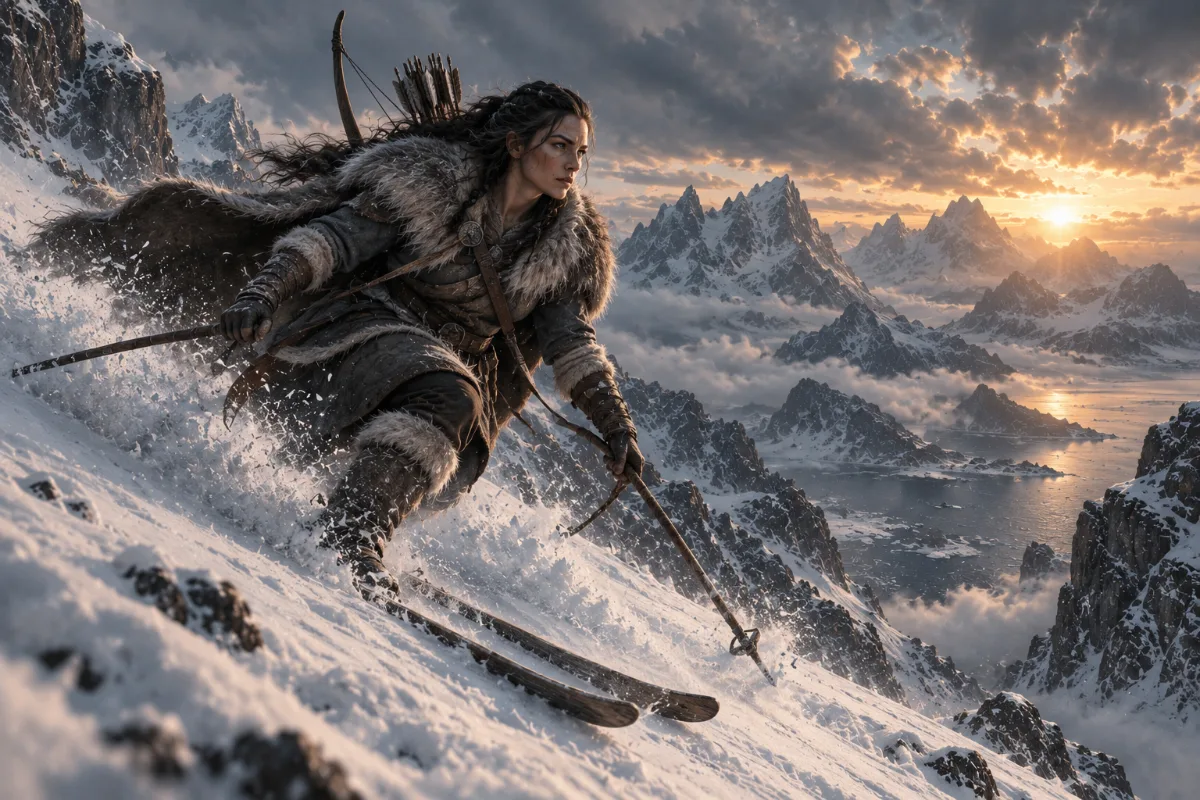
Marriage runs in the same direction. After the gods kill Þjazi (in Hárbarðsljóð 19 Thor claims the kill, and in Lokasenna 50 Loki boasts of his part), his daughter Skaði (Skadi) arrives in Ásgarðr armed for revenge. As compensation she may choose a husband, but only by looking at the feet. She picks the most beautiful, expecting Baldr, and gets Njörðr of Nóatún (Skáldskaparmál 1). The marriage fails over geography: Njörðr hates the howling of wolves in her mountains, Skaði cannot sleep for the cries of the sea-birds by his shore, and she returns to Þrymheimr to hunt on skis (Gylfaginning 23). Freyr falls in love with Gerðr (Gerd), daughter of Gymir and of Aurboða, who “was of the stock of the Hill-Giants” (Gylfaginning 37), and gives away his sword to win her, a loss that costs him dearly at Ragnarök.
Odin’s partners include giantesses too. Skáldskaparmál 19 calls Frigg the “co-wife of Jörd and Rindr and Gunnlöd and Grídr”: Gunnlöð and Gríðr are giantesses, and Jörð descends from giants through her mother Nótt. But the traffic hardly ever goes the other way (one exception: the goddess Gefjun bore four sons to a giant, Gylfaginning 1). When giants demand goddesses, they fail: the builder of Ásgarðr’s wall wants Freyja, the sun and the moon (Gylfaginning 42), Þrymr wants Freyja, Hrungnir boasts that he will carry off Freyja and Sif, and Þjazi abducts Iðunn. Margaret Clunies Ross has influentially described this one-way pattern as a form of “negative reciprocity”: the gods take what they need from the giants, women but also wisdom and the mead of poetry, and give nothing back, above all not their own women (Prolonged Echoes, vol. 1, 1994). The pattern is strong but not absolute: Loki, a giant’s son, is married to Sigyn, who is counted among the goddesses, and Skaði chooses her own husband. Other scholars stress what the gods gain from these unions: Gro Steinsland reads the marriage of Freyr and Gerðr as a sacred-marriage myth behind Norse royal ideology (Det hellige bryllup og norrøn kongeideologi, 1991).
Medieval genealogies took these unions seriously. In Snorri’s Ynglinga saga, which recasts the gods as ancient kings, Skaði leaves Njörðr and bears Odin many sons, among them Sæmingr, to whom Earl Hákon the Great traced his ancestry; Freyr and Gerðr become the ancestors of the Swedish Yngling kings. Ynglinga saga, chapters 9 and 12 in Samuel Laing’s translation.
Two goddesses make the point vivid. Freyja, a Van by birth, is the prize every giant wants and never gets. Skaði, a giantess by birth, ends up counted among the goddesses. In these stories, status seems to depend less on birth than on which side of the fence you live, and with whom.
Thor, killer of giants: Thrym, Hrungnir, Geirröðr and Hymir
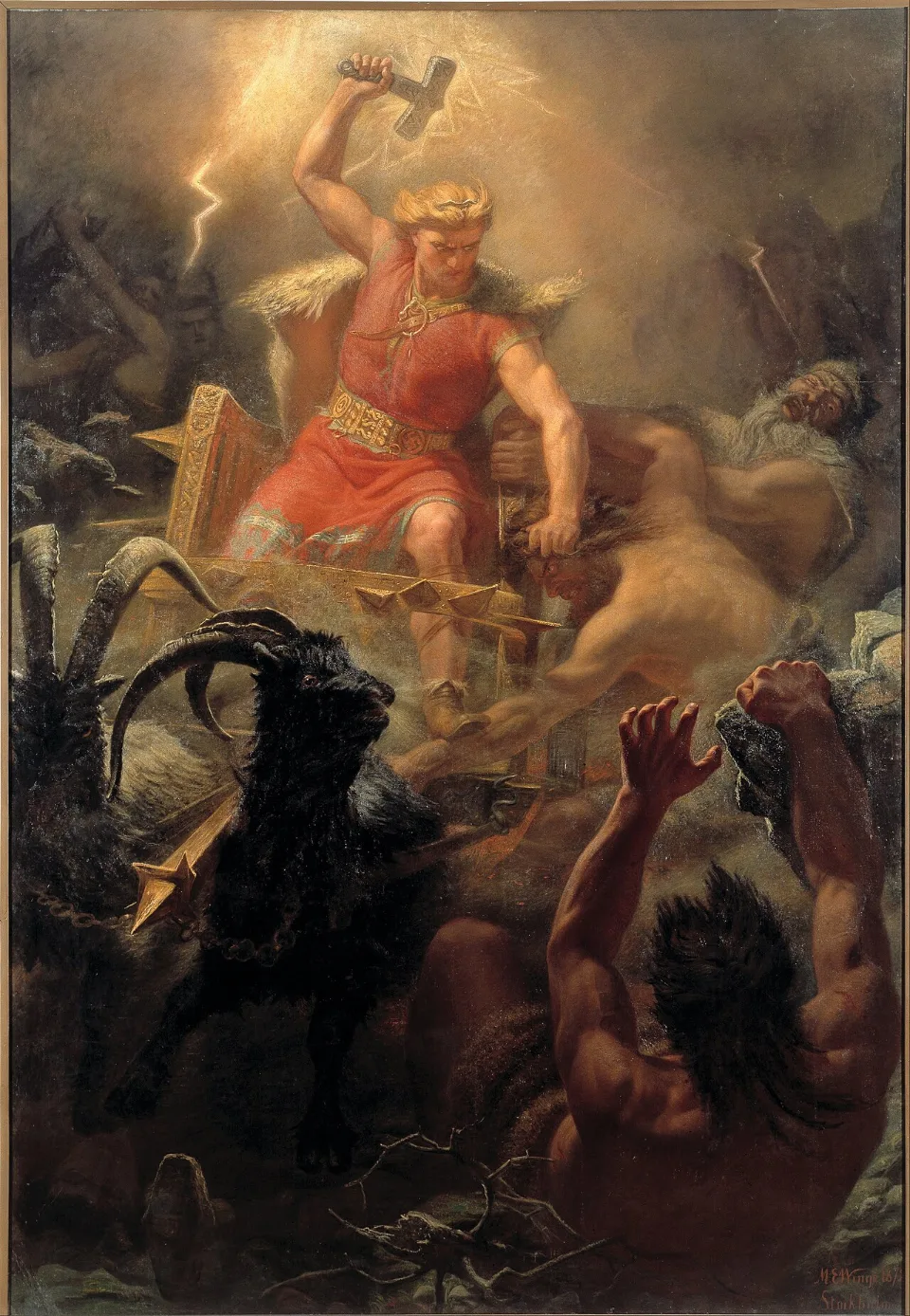
If the giants have one consistent enemy, it is Thor. Snorri says the rime-giants and hill-giants know his hammer when it is raised, since “it has bruised many a skull among their fathers or their kinsmen” (Gylfaginning 21). Poets call him by kennings such as “slayer of giants and troll-women” (Skáldskaparmál 4). His most famous encounters:
Thrym and the stolen hammer
In Þrymskviða, Thor wakes to find Mjölnir gone. Þrymr (Thrym), “the giants’ master”, has hidden it and will return it only in exchange for Freyja as his bride. Freyja refuses, so Thor travels to the giant’s hall disguised as the bride, with Loki as his maid. When the hammer is laid in the “bride’s” lap to bless the wedding, Thor seizes it and kills Þrymr and his kin (stanzas 30–32). Our guide to Mjölnir covers the hammer itself. Þrymskviða, translated by Bellows.
Hrungnir, the strongest giant
If one giant can be called the most powerful, the sources point to Hrungnir, whom the giants regard as “strongest of them all” (Skáldskaparmál 17). After racing Odin on Sleipnir, he ends up drunk in Valhalla, boasting that he will sink Ásgarðr, kill the gods and take Freyja and Sif home. He meets Thor in a duel with a heart, head and shield of stone, beside a clay giant, Mökkurkálfi, built with a mare’s heart. Thor’s hammer smashes his skull, but a fragment of the giant’s whetstone lodges in Thor’s head and the dead giant’s leg pins him down. Only Thor’s three-night-old son Magni, born to the giantess Járnsaxa, can lift it; he is rewarded with Hrungnir’s horse, though Odin objects to such a gift for “the son of a giantess”. Snorri’s prose follows the older skaldic poem Haustlöng, which he quotes. Skáldskaparmál 17, translated by Brodeur.
Geirröðr and his daughters
Loki, captured by the giant Geirröðr, buys his life by promising to bring Thor without his hammer or belt of strength. On the way, the giantess Gríðr lends Thor her own belt, iron gloves and staff. In the goat-shed where he is lodged, his chair rises towards the roof; he pushes back with the staff and breaks the backs of Geirröðr’s daughters Gjálp and Greip, hidden beneath it. Geirröðr hurls a glowing iron bar at him; Thor catches it in the iron gloves and throws it back through the giant (Skáldskaparmál 18). Snorri’s prose follows an older and far more difficult poem, Eilífr Goðrúnarson’s Þórsdrápa, composed in the late tenth century.
Hymir and the World Serpent
Thor’s visit to the giant Hymir survives in two versions. In Hymiskviða he goes with Týr to fetch a cauldron large enough to brew ale for the gods, and goes fishing with Hymir on the way; in Gylfaginning 48 he goes alone, disguised as a young lad. In both, using an ox’s head as bait, he hooks Jörmungandr itself; in Snorri the terrified giant cuts the line. The episode, and its picture stones, are discussed in our guide to Jörmungandr, the World Serpent.
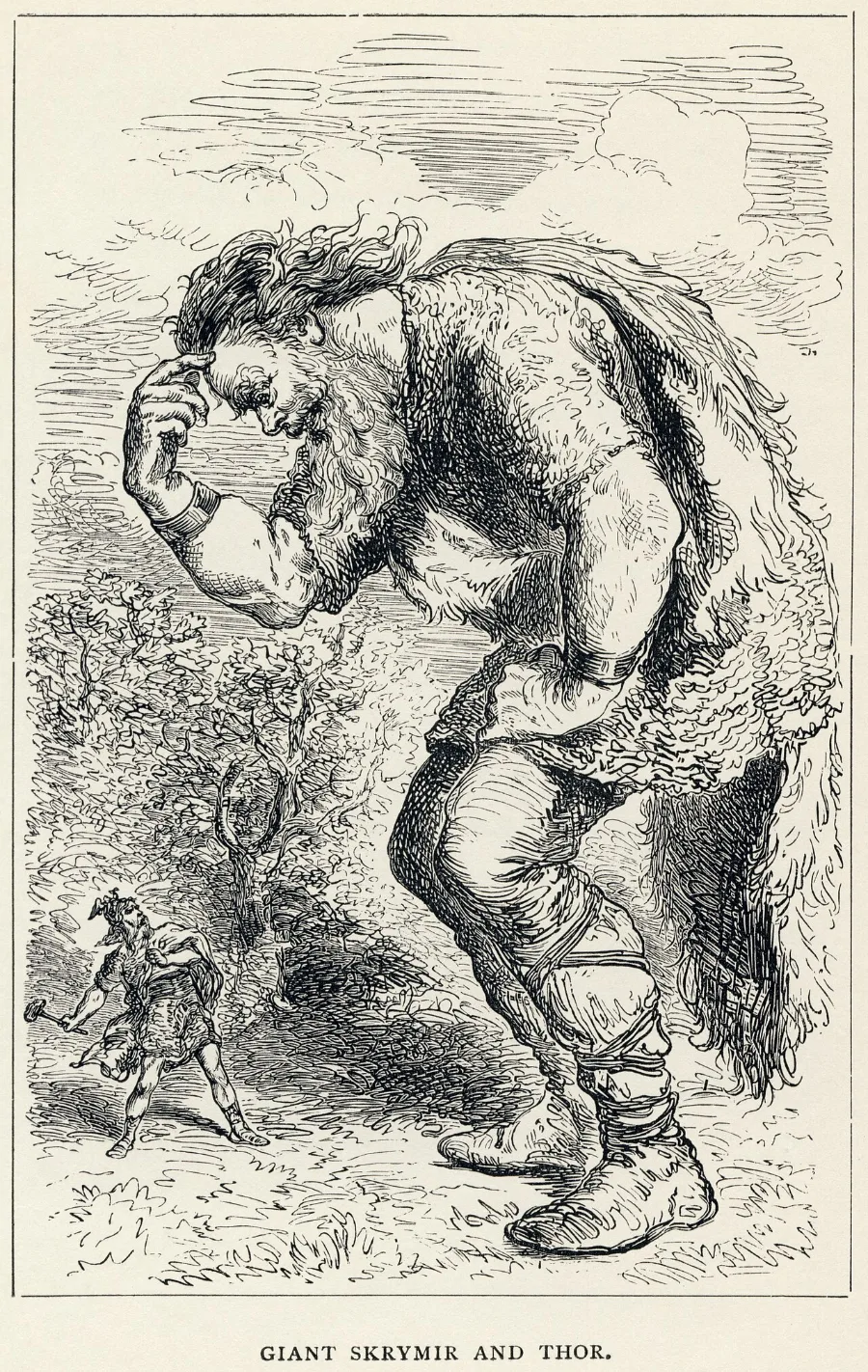
Thor does not always win. At Útgarðr, Útgarða-Loki defeats him in a drinking contest, a lifting contest and a wrestling match, then reveals that the horn was connected to the sea, the “cat” was the Midgard Serpent and the old woman was Old Age herself (Gylfaginning 46–47). The giants’ greatest weapon here is not size but deception. More on the god himself in our guide to Thor, god of thunder.
Wisdom, wealth and beauty: why the jötnar are not simply monsters
The gods need what the giants have. Three kinds of treasure recur.
Knowledge. The giants remember what came before the gods. In Vafþrúðnismál, Odin travels in disguise to the hall of “the giant wise” Vafþrúðnir to match his learning. Each wagers his head. The giant answers question after question about creation and the end of the world, and loses only when Odin asks what he whispered into the ear of his dead son, a question only Odin can answer (stanzas 54–55).
“Winters unmeasured ere earth was made
Was the birth of Bergelmir;
This first knew I well, when the giant wise
In a boat of old was borne.”
Vafþrúðnismál, stanza 35, translated by Henry Adams Bellows (1923)
Poetry. The mead of poetry ends up in giant hands: Suttungr hides it inside a mountain under the guard of his daughter Gunnlöð. Odin, calling himself Bölverkr, works a summer for Suttungr’s brother Baugi, gets Baugi to bore through the rock with the auger Rati, then crawls in as a snake, spends three nights with Gunnlöð and drinks the mead in three draughts before escaping as an eagle (Skáldskaparmál 1). In Hávamál 104–108 Odin tells the same story from his side; the next stanzas switch to a narrator who comments that he broke a ring-oath and left Gunnlöð “to grief” (110). The mead was first brewed by dwarves from Kvasir’s blood, but in this myth all Norse poetry reaches gods and men by theft from the giants.
Wealth and beauty. Þjazi’s family measured their inherited gold by mouthfuls (Skáldskaparmál 1); Þrymr boasts of gold-horned cattle and jet-black oxen (Þrymskviða 23). When Gerðr raises her hands to open her door, “brightness gleamed from her hands, both over sky and sea” (Gylfaginning 37). The ugly, clumsy giant of folk tales exists, but it is only one side of the Eddic picture.
Some figures sit on the boundary. Ægir, whose hall hosts the gods’ feasts in Lokasenna and Hymiskviða, is called a “mountain-dweller” and a giant in Hymiskviða 2–3, but Snorri introduces him as a man “deeply versed in black magic” (Skáldskaparmál 1). Mímir, keeper of the well of wisdom beneath the root of Yggdrasil that turns toward the rime-giants (Gylfaginning 15), is never explicitly called a giant; some scholars identify him with Odin’s unnamed uncle, the son of Bölþorn, a suggestion Bellows records without endorsing it. Laufey, Loki’s mother, is given no ancestry or race in the medieval texts; Bellows’s notes call her a giantess, but no Eddic text does. These are open questions, not hidden facts.
Frost giants in Norse mythology, and fire and mountain giants
Frost giants is a fair translation of the hrímþursar, “rime-giants”, the descendants of Ymir in Snorri and in Vafþrúðnismál. The cold belongs to their origin story, born from frozen venom, more than to any described appearance. The sources never give them blue skin, which comes from modern comics and film.
Mountain giants or hill-giants (bergrisar) appear in Snorri alongside the rime-giants: Heimdall guards Bifröst against them (Gylfaginning 27), and the master builder of Ásgarðr’s wall is revealed as one (Gylfaginning 42). The difference between the two groups is never explained.
Fire giants is the least secure label. Surtr rides from the south (Völuspá 52), and in Snorri the sons of Múspell ride out of the riven sky (Gylfaginning 51), but the sources do not define a race of fire giants with its own lineage. As our Surtr guide explains, no Eddic passage calls Surtr a jötunn outright, but Völuspá 47 calls the wolf Fenrir his “kinsman”, and a skaldic verse quoted by Snorri uses his name for a giant (Skáldskaparmál 2: “Surtr’s sunk dales”).
Size varies just as much. Skrýmir is so large that Thor and his companions shelter for a night in the thumb of his glove; Mökkurkálfi is “nine miles high” in Brodeur’s translation (the original measures in rastir, an Old Norse unit of distance). But Skaði, Gerðr and Gunnlöð are described in terms of beauty, skill and character, not height. What the jötnar share is not a measurement but their place outside the gods’ community.
The jötnar at Ragnarök
The end of the world is, among other things, the giants’ return. Völuspá 50 begins the attack: “From the east comes Hrym with shield held high”, while the serpent writhes “in giant-wrath” and the ship Naglfar is loosed. Snorri’s version gives Hrymr the helm of Naglfar and then brings “Loki and Hrymr… and with him all the Rime-Giants” to the battlefield of Vígríðr, alongside the sons of Múspell led by Surtr (Gylfaginning 51). The gods and their oldest kin destroy one another.
The giants’ prominence is visible even earlier in Völuspá. The gods’ golden age ends, in stanza 8, when “giant-maids three, huge of might” arrive out of Jötunheimr; Bellows suggests they may be the Norns, though something may have been lost after the stanza. Our guides to the Norns and to Ragnarök follow both threads. Völuspá, translated by Bellows.
Are the jötnar evil? Why the gods and giants fight
Snorri’s narrator does call Ymir evil: “he was evil and all his kindred: we call them Rime-Giants” (Gylfaginning 5). That line comes from a thirteenth-century Christian author, in a frame story where the speakers themselves turn out to be illusions. It is a judgement inside a narrative, not a theology recorded from pre-Christian believers.
Many modern readers describe the gods and giants as order against chaos, or as the inner world (Miðgarðr) against the outer one (Útgarðr), a structural model associated with scholars such as Aron Gurevich and Kirsten Hastrup and repeated by many online guides. That model explains a great deal, but it is an interpretation. Others, such as Lotte Motz and Katja Schulz in her monograph Riesen (2004), stress how varied and changing the figure of the giant is. It struggles with the cases where giants are hosts, teachers, lovers and parents of gods, or where the gods break oaths, as they do to the giant builder of Ásgarðr’s wall (Gylfaginning 42; Völuspá 26). The safest summary is that the jötnar are the gods’ rivals and their necessary other, sometimes threatening and sometimes generous, never simply villains.
Jötnar in modern culture: Marvel, God of War and Jotunheimen
Most people now meet the jötnar through adaptations. Marvel’s comics and the 2011 film Thor turned the rime-giants into blue-skinned Frost Giants ruled by a King Laufey, and made Loki his son, adopted by Odin. The God of War games (2018 and 2022) present the giants as a hunted, largely peaceful people, and reveal that Kratos’s wife Faye is the giantess Laufey and that their son Atreus is Loki. These are creative choices. In the Eddas, Laufey is only Loki’s mother, with no stated kin, and no source describes a giant’s skin colour.
The giants also left their name on the map. The Norwegian writer Aasmund Olavsson Vinje coined the name Jotunheimen, “home of the giants”, for the mountain range around Galdhøpiggen, Norway’s highest peak, in a travel account of 1862. Store norske leksikon, “Jotunheimen”.
Where to read about the giants
- Start with Snorri: Gylfaginning 5–8, 42 and 44–47, then Skáldskaparmál 1, 17 and 18: the creation, the master builder, Útgarðr, Þjazi, Hrungnir and Geirröðr.
- Then the giants’ own voices: Vafþrúðnismál, the wisdom contest, and Þrymskviða, the comic tale of Thor as a bride.
- Finally the end: Völuspá 8, 40–42 and 50, from the giant-maids to Hrymr at Ragnarök.
For Old Norse texts with modern translation and notes side by side, Edward Pettit’s The Poetic Edda: A Dual-Language Edition (2023) is freely available. Our complete guide to the Norse gods and goddesses places every deity mentioned here in the wider pantheon.
A modern song inspired by the jötnar
Mythic Harmonies explores the giants in Jǫtnar rísa (“Giants Rise”), an original modern song that appears as “Rise of the Jotnar” on the album Shadows over Midgard. Its verses echo Ymir’s origin in frost and fire, then imagine something the Eddas never describe: the jötnar answering Odin’s call. It is a creative work, and the guide above explains the sources behind it.
From the Mythic Harmonies catalogue
Hear the giants rise
The lyrics of Jǫtnar rísa, written in Old Norse for this modern song, are published line by line with their English translation, alongside the passages that inspired them. On Shadows over Midgard it shares the album with Kall Þórs, the call of the giant-slayer himself.
Not a reconstruction of anything sung in the Viking Age, which is beyond recovery, but a modern song built on the stories that survive.
Frequently asked questions
What is a Norse giant called?
In Old Norse a giant is a jötunn, plural jötnar, often written jotun in English. The texts also use þurs (thurs), especially for the hrímþursar or frost giants, and risi; later Scandinavian folklore prefers troll. A giantess can be called a gýgr.
Are jötunn and jötnar the same?
Yes, it is the same word: jötunn is the singular and jötnar the plural. English texts also write jotun, jotunn or jotnar without the accents.
Were all jötnar giants?
Not in the sense of size. Some are enormous: Skrýmir is so large that Thor and his companions spend a night in the thumb of his glove. Others, such as Skaði, Gerðr and Gunnlöð, are described by their beauty, skill or character rather than their height. What they share is their place outside the gods’ community.
Who are some of the giants in Norse mythology?
The best known are Ymir, the first being; Skaði, who married Njörðr; Thrym, who stole Thor’s hammer; Hrungnir, the strongest; Útgarða-Loki, who tricked Thor; Vafþrúðnir, the wise giant; Angrboða, mother of Fenrir; and Surtr, who brings fire at Ragnarök.
Who is the most powerful giant in Norse mythology?
Snorri says the giants considered Hrungnir “strongest of them all” before his duel with Thor (Skáldskaparmál 17). Ymir, the first being, is the most fundamental, since the world is made from his body. Surtr is the most destructive at Ragnarök.
Is Loki half jötunn?
By descent, at least half. Loki’s father Fárbauti is called a giant, while his mother Laufey (or Nál) is given no stated ancestry. Yet Snorri says Loki is “numbered among the Æsir” (Gylfaginning 33), and he lives among the gods until Ragnarök. The idea of Loki as an adopted Frost Giant comes from Marvel, not from the Eddas.
Was Thor a jötunn?
No. Thor is one of the Æsir and the gods’ chief defender against the giants. But in Snorri’s genealogy he has giant ancestry on both sides: his father Odin is the son of the giant’s daughter Bestla, and his mother Jörð is the daughter of Nótt, whose father Nörfi was a giant (though Snorri elsewhere calls Jörð Odin’s own daughter, Gylfaginning 9). His own son Magni is born to the giantess Járnsaxa.
Was Laufey a giantess?
The medieval sources do not say. Snorri names Laufey, also called Nál, as Loki’s mother but gives no description of her kin, while Loki’s father Fárbauti is explicitly a giant. Some modern editors, Henry Adams Bellows among them, call her a giantess, but no medieval text does. Modern versions go further: Marvel makes Laufey the male king of the Frost Giants, and the God of War games make her a giantess called Faye. Neither comes from the medieval texts.
Why did Odin hate the giants?
No source gives Odin a personal hatred of the giants. The conflict begins when Odin and his brothers kill Ymir and build the world from his body, and it continues over land, treasure and women. Yet Odin also seeks out giants for wisdom and poetry, and his own mother is a giant’s daughter.
Are the frost giants evil?
Snorri’s narrator calls Ymir and his kin evil (Gylfaginning 5), but that is a thirteenth-century Christian author’s judgement inside a story. In the Eddas, giants are dangerous rivals but also hosts, teachers, lovers and parents of gods. Blue skin and simple villainy come from modern adaptations.
How do you pronounce jötunn?
In English it is usually said “YOH-tun”, plural jötnar “YOT-nar”. In modern Icelandic, jötunn [ˈjœːtʏn] sounds closer to “YUH-tun”, with a long rounded vowel like the German ö. The Old Norse pronunciation can only be reconstructed approximately.
Where do the giants live in Norse mythology?
In Jötunheimr (Jotunheim), often called Jötunheimar in the poems, and, in one story, the stronghold of Útgarðr (Utgard) ruled by Útgarða-Loki. Snorri says the gods gave the giants the lands along the outer sea and fenced off Miðgarðr against them (Gylfaginning 8). Travellers reach giant country by going east or north, across rivers and mountains.
Sources and editorial notes
This guide was checked against the medieval texts and the editions below in October 2026. It distinguishes what the poems say, what Snorri adds in prose, and what modern scholars propose. Where the sources disagree, as over who killed Þjazi or who fathered Týr, both versions are given.
- Snorri Sturluson: Gylfaginning and Skáldskaparmál, in Arthur Gilchrist Brodeur’s public-domain translation (1916), whose chapter numbers are used throughout; cross-checked with Rasmus B. Anderson’s translation, The Younger Edda (1880).
- The Poetic Edda: Völuspá, Hávamál, Vafþrúðnismál, Grímnismál, Skírnismál, Hárbarðsljóð, Hymiskviða, Lokasenna, Þrymskviða and Hyndluljóð, in Henry Adams Bellows’s public-domain translation (1923), including his notes. Older notes are not treated as the last word in scholarship.
- Edward Pettit: The Poetic Edda: A Dual-Language Edition (Open Book Publishers, 2023), for the Old Norse texts.
- Margaret Clunies Ross: Prolonged Echoes: Old Norse Myths in Medieval Northern Society, vol. 1, The Myths (Odense University Press, 1994), for the pattern of exchange between gods and giants; Gro Steinsland: Det hellige bryllup og norrøn kongeideologi (1991). Both cited as interpretations.
- Snorri Sturluson: Ynglinga saga, in Samuel Laing’s translation (1844), for the royal genealogies.
- Elof Hellquist: Svensk etymologisk ordbok (1922), entry jätte, for the proposed etymology.
- Store norske leksikon: “jotner”, by Ellen Næss, for the later folk tradition.
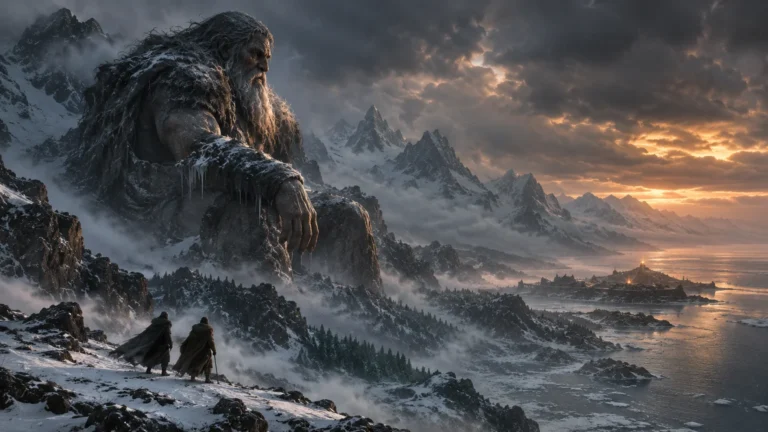
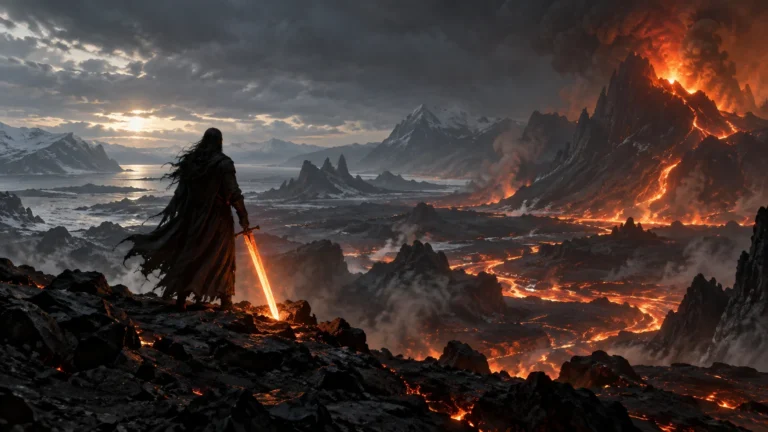
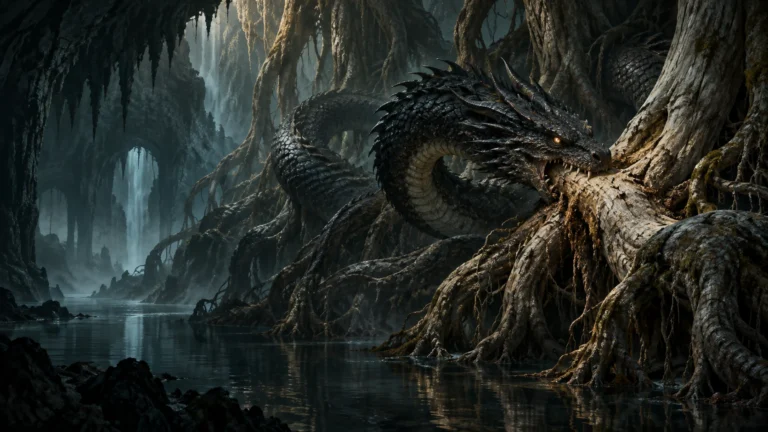
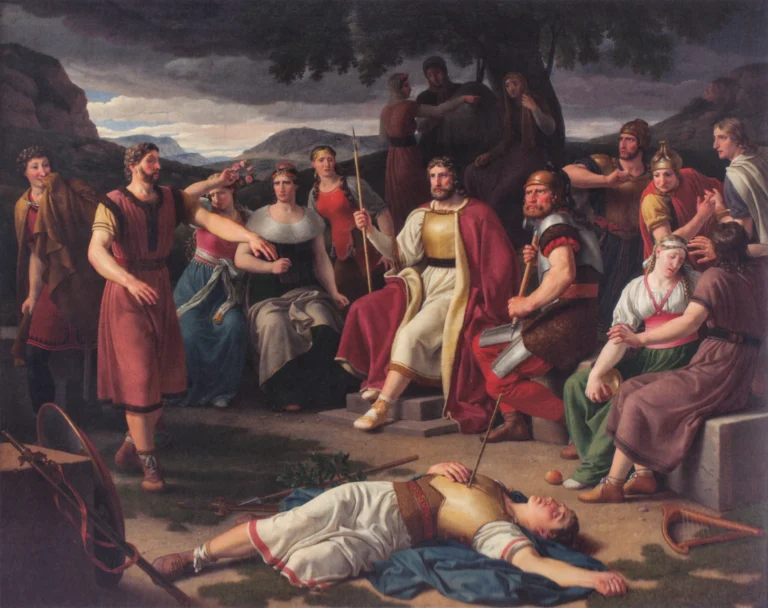
The featured image and the illustration of Skaði are contemporary artistic interpretations, not reconstructions of medieval depictions. The historical paintings are credited where they appear.




All five albums and every single: 86 songs in WAV and MP3, yours to keep.