

Ragnarök: What Actually Happens at the End of the World in Norse Mythology
You already know the name. You have seen it on T-shirts, in Marvel films, in video game titles. Ragnarök has become one of the most recognizable words from the ancient world, borrowed freely by anyone who needs to signal apocalypse.
What most people have not seen is what the original sources actually describe.
Not a cinematic battle between superheroes. Not a vague “twilight of the gods.” A precise, sequential catastrophe, foretold in extraordinary detail, in which almost every god you know by name dies in a specific way, against a specific opponent, in a specific order. And then something entirely unexpected happens afterward.
This is what Ragnarök actually looks like, drawn directly from the Völuspá in the Poetic Edda and the Gylfaginning section of Snorri Sturluson’s Prose Edda, the two primary written sources for Norse mythology.
The weight of what is coming demands the right soundtrack. Let the music of Mythic Harmonies carry you through it, including “Vidar’s Vengeance,” written directly for this moment.
The Myth-Buster: “Twilight of the Gods” Is a Mistranslation
Before the sequence of events, one correction that matters.
“Twilight of the Gods” is not a translation of Ragnarök. It is a German invention. Richard Wagner used Götterdämmerung, meaning twilight of the gods, as the title of the final opera in his Ring cycle in 1876. The phrase was poetic and dramatic, and it stuck. But it does not reflect what the Old Norse actually says.
Ragnarök is most accurately translated as “Fate of the Gods” or “Doom of the Powers.” The word rök in Old Norse means fate, origin, or reason, not twilight. A secondary form ragnarökr does mean twilight, which is where the confusion entered, but most scholars today treat ragnarök as the primary form, pointing to destiny rather than dusk.
The distinction matters because it changes the entire register of the myth. Twilight suggests something fading, passive, elegiac. Fate suggests something foretold, deliberate, and in some sense chosen. The Norse gods of the Eddas knew exactly what was coming. They prepared for it. They walked toward it with open eyes.
That is a completely different story.
The Sources: Where Does the Ragnarök Story Come From?
The account of Ragnarök rests on two texts, both written in Iceland in the 13th century CE but drawing on oral traditions that predate them by centuries.
The Völuspá (“The Prophecy of the Seeress”), from the Poetic Edda, is the primary source. It is structured as a vision delivered by a völva, a female seer, who recounts for Odin both the creation of the world and its eventual destruction. Scholars believe the poem itself was likely composed around 1000 CE, though the manuscript that preserves it, the Codex Regius, dates to around 1270 CE.
The Gylfaginning (“The Beguiling of Gylfi”), part of Snorri Sturluson’s Prose Edda written around 1220 CE, retells the same events in prose, often expanding on details not found in the Völuspá. Snorri was a Christian Icelandic scholar working two centuries after Iceland’s conversion, and some researchers note that his account may carry traces of Christian apocalyptic thinking. The core narrative, however, is widely considered to reflect genuine pre-Christian tradition.
These are not myths that were invented or dramatized for effect. They are the best documentation we have of what the Norse people actually believed about the end of their world.
Stage One: The Signs, Fimbulwinter and the Collapse of Order
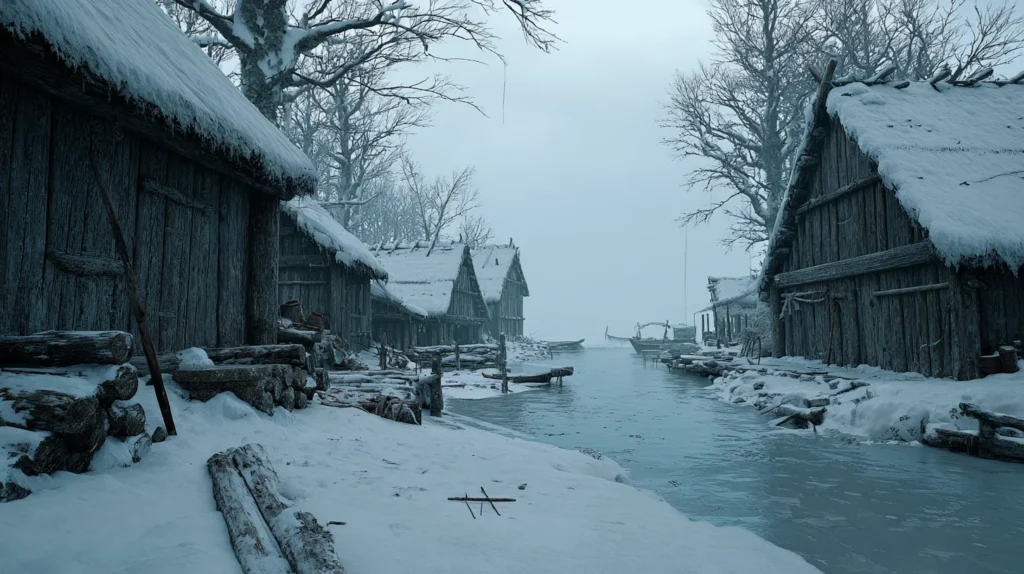
Ragnarök does not begin with a battle. It begins with a winter.
The first sign is the death of Baldr, the most beloved of all the gods, killed by a trick of Loki’s engineering. His death sets in motion a chain of consequences that cannot be reversed.
The second sign is Fimbulwinter, fimbulvetr in Old Norse, meaning “great winter” or “mighty winter.” It is not a single harsh season. It is three full winters, one after another, with no summer between them. For three consecutive years, the sun fails to warm the earth. Crops cannot grow. Animals die. The world runs out of food.
What happens to people during Fimbulwinter is, in some ways, the most chilling part of the entire myth. The Prose Edda states plainly that “over all the world there shall be mighty battles” and that “brothers shall slay each other for greed’s sake.” The social fabric of the Norse world, built on loyalty, kinship, and honor, disintegrates completely. Father kills son. Brother kills brother. Every code that held civilization together collapses under the pressure of starvation and cold.
This is Ragnarök’s first act: not the death of gods, but the death of the human world as a livable place.
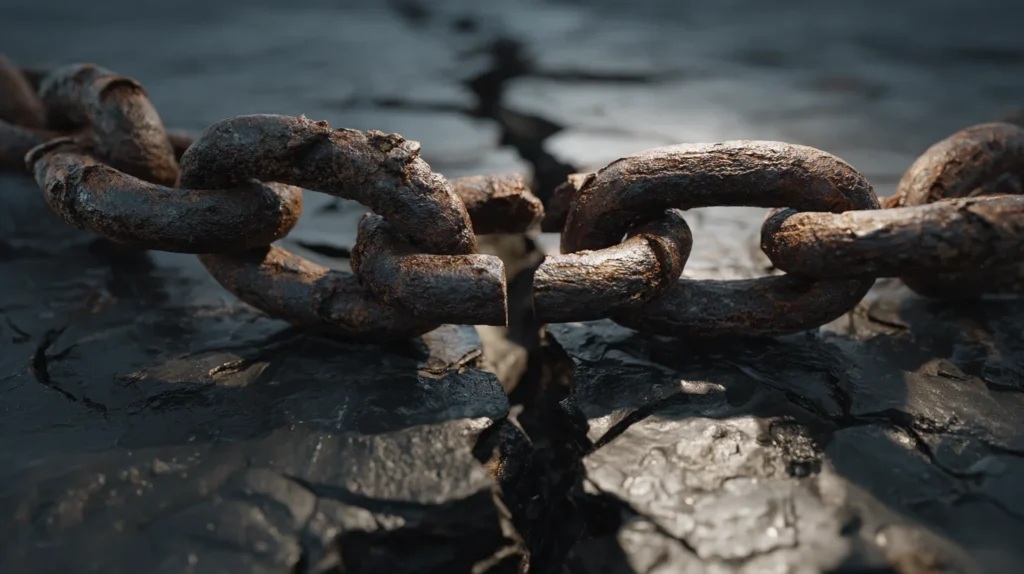
Then come the astronomical signs. The wolves Sköll and Háti, who have chased the sun and moon through the sky since the beginning of time, finally catch their prey. Sköll devours the sun. Háti devours the moon. The stars vanish from the sky. The world goes dark. Then the earthquakes begin, cracking the earth open across every realm, breaking every chain and bond, freeing every imprisoned creature.
Including Fenrir.
Stage Two: The Chains Break, Who Is Released
Three prisoners escape in the catastrophic earthquakes that accompany the end of Fimbulwinter.
Fenrir, the monstrous wolf and son of Loki, has been bound since the gods tricked him into allowing himself to be chained with the magical ribbon Gleipnir. The Prose Edda describes what happens when he breaks free: his jaws gape so wide that the upper jaw touches the sky and the lower jaw scrapes the ground, and fire pours from his eyes and nostrils.
Jörmungandr, the Midgard Serpent, also a child of Loki, has encircled the world at the bottom of the ocean since Odin threw him there at birth. When he finally writhes free and makes landfall, the seas flood over the earth as he moves.
Loki himself, imprisoned beneath a mountain after he engineered the death of Baldr, breaks his bonds. He takes command of the forces of chaos and sails to the battlefield on Naglfar, the ship made from the fingernails and toenails of the dead, which has been under construction since the beginning of time. His crew is an army of giants from Jotunheim.
From the south, Surtr marches. He is the fire giant who has guarded the realm of Muspelheim since before the gods existed, carrying a sword that burns brighter than the sun. He leads his own army of fire giants northward.
Everything that the gods have spent ages containing is now loose, converging on one place.
Stage Three: The Horn Sounds, Heimdall Calls the Gods to War
Heimdall, the watchman of the gods who has stood at the edge of Asgard since the beginning, raises the Gjallarhorn and blows it with all his strength. The sound carries across all nine realms. Every god hears it. Every Einherjar, the chosen warriors who have been training in Valhalla since their deaths on the battlefield, hears it. Even Yggdrasil, the World Tree that holds the cosmos together, shakes.
Odin rides to consult Mimir’s head one last time, seeking any final wisdom for what is coming. Then he dresses for war. The gods arm themselves and ride out to the plain of Vígríðr, a battlefield described in the sources as stretching a hundred leagues in every direction. The Einherjar march at their side.
They know they are going to lose. They go anyway.
This moment is at the heart of the Norse heroic worldview. Courage is not fighting when you expect to win. Courage is fighting when you know you will not. The gods march to Ragnarök not because they believe they can prevent it, but because it is their fate and they will meet it as warriors.
Stage Four: The Battle, Who Fights Whom, and Who Dies
The Völuspá and the Gylfaginning are specific about the individual confrontations. This is not a chaotic melee. It is a series of destined duels, each foretold, each unavoidable.
| Combatant | Opponent | Outcome |
|---|---|---|
| Odin | Fenrir | Odin is swallowed whole. Fenrir wins. |
| Víðarr (Vidar) | Fenrir | Vidar kills Fenrir, avenging Odin. |
| Thor | Jörmungandr | Thor kills the serpent, then takes nine steps and falls dead from its venom. |
| Freyr | Surtr | Freyr falls. He gave away his magic sword earlier, he fights without it. |
| Týr | Garmr (the hound of Hel) | Both kill each other. |
| Heimdall | Loki | Both kill each other. |

The most detailed and significant duel is the one between Odin and Fenrir, and the one that follows it.
Odin fights alongside the Einherjar, the greatest warriors who ever lived, trained for precisely this battle. It is not enough. Fenrir swallows the Allfather whole.
Then Víðarr moves.
Víðarr is one of Odin’s sons. In the surviving myths he appears rarely, described as powerful and almost completely silent. But he has been preparing for this moment since the beginning of time. On one of his feet he wears a special shoe, assembled over centuries from all the scraps of leather that human cobblers have ever discarded. He plants it on the wolf’s lower jaw. Then he kills Fenrir, though the sources differ on exactly how: Snorri has him tear the jaws apart, the Völuspá has him drive a blade to the heart.
This is the moment that inspired “Vidar’s Vengeance” on Mythic Harmonies, a son who has waited an entire age of the world to perform a single act, and does it in silence.
Thor kills Jörmungandr, landing a killing blow with Mjolnir. But the serpent’s venom, which has been pooling in Thor’s body throughout the fight, takes effect the moment the serpent falls. Thor takes exactly nine steps and collapses. Snorri preserves the precise number. Not eight. Not ten. Nine.
Freyr dies because he once gave away his magical sword to win the heart of Gerðr, the giantess he loved. He faces Surtr, the fire giant from Muspelheim, without it. He loses.
Loki and Heimdall have been enemies since Loki stole the Brísingamen from Freyja. Their confrontation at Ragnarök ends with both of them dead, each killing the other simultaneously.
When it is over, Surtr raises his blazing sword and sets the world on fire. The earth cracks and sinks beneath the sea. Everything burns. The stars go out. There is nothing.
Stage Five: What Comes After, the Part Nobody Tells You
Here is where the myth becomes genuinely strange, and where it separates itself completely from a simple apocalypse story.
The earth rises again.
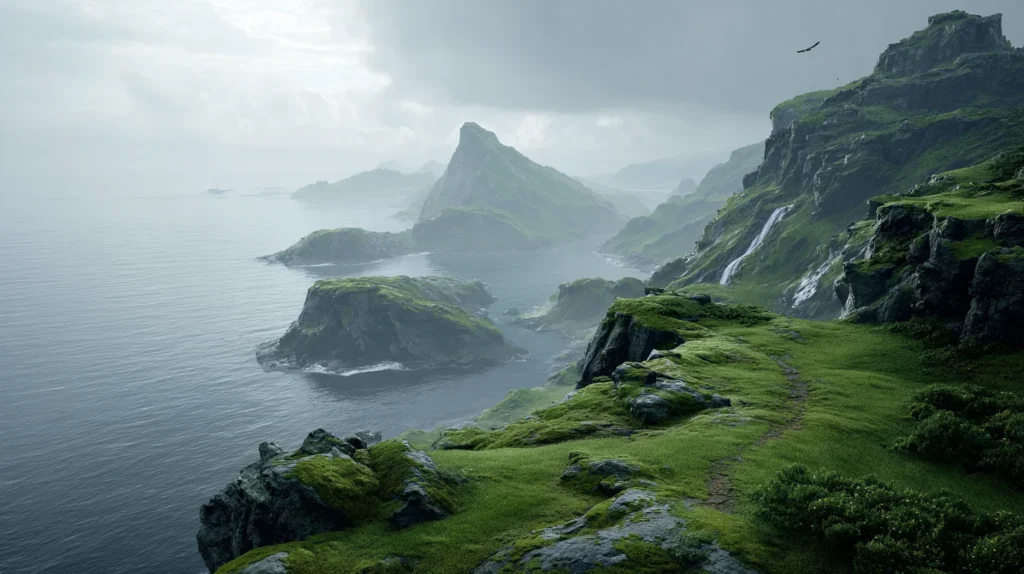
The Völuspá describes what the völva sees after the destruction: the earth emerging from the sea, green and fertile. Waterfalls running. Eagles flying over mountains, hunting fish. Fields growing grain without anyone having planted it. The world, it turns out, was not destroyed. It was reset.
A handful of gods survive. Víðarr, who killed Fenrir. Váli, another son of Odin. Móði and Magni, Thor’s sons, who inherit Mjolnir. And Baldr, who was already dead before Ragnarök began, returns from the realm of Hel, restored to life in the new world, along with his brother Höðr.
Two humans also survive: Líf and Lífþrasir, meaning “Life” and “Striving after Life.” They have hidden through the cataclysm in a place called Hoddmímis holt, Hoddmímir’s Wood. Whether that is Yggdrasil under another name, or a separate place entirely, the sources do not say and scholars disagree. They emerge into the new world and repopulate the earth. A new sun rises, described as the daughter of the old sun, already travelling her path across the sky before her mother was destroyed.
The Völuspá‘s final stanzas are among the most debated in all of Norse studies. Some scholars read the rebirth sequence as original, deeply embedded in pre-Christian Norse cosmology. Others note that a cyclical destruction and renewal narrative may show influence from Christian theology, introduced by the scribes who wrote down the poems after Iceland’s conversion. The debate has not been resolved.
What is not in debate is this: whatever interpretation one takes, the original Norse conception of Ragnarök was not simply an ending. It was a transition. The world that burns is not the last world.
Yet the poem closes on a troubling image: Nidhogg flies with corpses after the scenes of renewal. Our guide to Nidhogg’s final appearance examines this passage in Völuspá (stanza 66 in Bellows’s translation) and explains what the ending does and does not tell us.
What Ragnarök Actually Meant to the Vikings
One of the most persistent misreadings of Ragnarök is treating it as a source of despair in Viking culture. If the gods are going to die, if the world is going to end, what is the point of anything?
The Norse answer is embedded in the myth itself. The gods know they will lose. Odin has known since he consulted the Norns at the roots of Yggdrasil. He has spent the entirety of Norse mythology preparing for a battle he cannot win, gathering warriors, seeking knowledge, sacrificing his eye, hanging on the World Tree for nine days, all to face a defeat that is already written.
And he does it anyway. All the gods do.
The Viking heroic tradition held that the manner of facing the inevitable mattered infinitely more than the outcome. A man who fought bravely in a losing battle was worth more than one who survived through cowardice. Ragnarök scales this idea up to cosmic proportions. Even the gods are not exempt from fate. Even the Allfather falls. What defines them is not that they overcome fate, but that they meet it without flinching.
This is why Ragnarök resonated so deeply in Norse culture. It was not a theology of hope, exactly. It was a theology of dignity.
Ragnarök in Stone: The Archaeological Evidence
The myth was not only literary. Its imagery appears in the material culture of the Viking Age, sometimes in places where you would not expect it.
The Gosforth Cross, a 10th-century stone cross in Cumbria, England, is carved with a scene widely interpreted as Víðarr forcing open Fenrir’s jaws, a pagan Ragnarök image on a Christian monument, at a site that was actively used for Christian worship. The presence of the image suggests that the Ragnarök mythology remained culturally powerful even as Scandinavia converted to Christianity, and that local populations found ways to preserve it within the new religious context.
The Ledberg Stone, an 11th-century runestone from Östergötland, Sweden, carries a similar image: a man with his foot at the jaws of a large four-legged beast. Many researchers interpret this as another Ragnarök scene, specifically Odin being swallowed by Fenrir or Víðarr avenging him.
These stones confirm that Ragnarök was not an abstract theological concept known only to scholars of the Eddas. It was visual, immediate, and present in the landscape of everyday Norse life.
Frequently Asked Questions
What does Ragnarök mean?
Ragnarök is most accurately translated as “Fate of the Gods” or “Doom of the Powers” from Old Norse. The popular translation “Twilight of the Gods” comes from a secondary Old Norse form ragnarökr and was popularized by Richard Wagner’s opera Götterdämmerung. Most modern scholars prefer the “fate” reading.
Who survives Ragnarök?
According to the Prose Edda, the surviving gods include Víðarr and Váli (sons of Odin), Móði and Magni (sons of Thor, who inherit Mjolnir), and Baldr and Höðr, who return from the dead. Two humans, Líf and Lífþrasir, survive in Hoddmímis holt. Identifying this refuge with Yggdrasil is an interpretation, not an explicit statement in the passage.
Who kills Odin at Ragnarök?
Odin is swallowed whole by the wolf Fenrir during the final battle on the plain of Vígríðr. His son Víðarr immediately avenges him by forcing open Fenrir’s jaws using a specially made shoe and killing the wolf with his sword.
Does Thor survive Ragnarök?
No. Thor kills Jörmungandr, the Midgard Serpent, with Mjolnir. But the serpent’s venom kills him as well. According to Snorri, Thor takes exactly nine steps after the serpent falls before dying.
Is Ragnarök the end of everything?
In the original Norse sources, no. Both the Völuspá and the Prose Edda describe the earth rising again from the sea after the destruction, green and fertile, with surviving gods and a pair of human survivors repopulating the world. A new sun rises. The world continues.
What triggers Ragnarök?
The sequence begins with the death of Baldr, followed by Fimbulwinter, a three-year winter with no summer. After Fimbulwinter, the wolves devour the sun and moon, earthquakes break every chain, Fenrir and Jörmungandr break free, Loki escapes his imprisonment, and Surtr marches from Muspelheim.
What causes Fimbulwinter?
The sources give no physical cause: Fimbulwinter follows the death of Baldr as the first stage of the doom the Norns wove, three winters with no summer between them. Its function is moral as much as climatic, since the famine it brings collapses every bond of kinship before a single god has fallen.
Has Ragnarök already happened?
Mythologically, no: the Völuspá frames it as prophecy, a doom still to come. But some scholars argue the Fimbulwinter myth preserves the memory of a real catastrophe, the volcanic dust veil of 536 CE, which darkened the sun for years and devastated Scandinavian harvests. The end of the world may be a memory as much as a prediction.
The gods knew they would lose, and marched anyway. That is what our tracks Ragnarök Rís (Rise of Ragnarök) and Vidar’s Vengeance were written for: the doom, and the single silent act that answers it.
Sources consulted: The Poetic Edda, translated by Carolyne Larrington (Oxford University Press, 2014), specifically the Völuspá and Vafþrúðnismál; The Prose Edda by Snorri Sturluson, Gylfaginning chapters 51 to 53; John Lindow, Norse Mythology: A Guide to Gods, Heroes, Rituals, and Beliefs (Oxford University Press, 2001); Norse Mythology for Smart People, Ragnarök; Britannica, Ragnarök.
Music to read by
Each article has a soundtrack. Listen to Mythic Harmonies while you read.
Explore the music