
Elder Futhark Runes: Names and Meanings of All 24 Runes
On this page 16 sections
- Elder Futhark chart: all 24 runes and their meanings
- Elder Futhark quick facts
- What are runes? An alphabet first
- Elder Futhark vs Younger Futhark: which runes did the Vikings use?
- Where do the rune meanings come from? The three rune poems
- The three ættir (aettir): how the 24 runes are grouped
- The first ætt (Freyr’s ætt): Fehu to Wunjo
- The second ætt (Hagall’s ætt): Hagalaz to Sowilo
- The third ætt (Týr’s ætt): Tiwaz to Othala
- How Odin discovered the runes: what Hávamál says
- How runes were actually used: writing, memorials and magic
- Bind runes: historical ligatures and modern sigils
- Writing English with the Elder Futhark
- Modern rune meanings, divination and the blank “Odin rune”
- Frequently asked questions
- Sources and editorial notes
The Elder Futhark is the oldest complete runic alphabet: 24 runes used by Germanic-speaking peoples from about 150 CE, named after the sounds of its first six runes, f, u, þ (th), a, r and k. Each rune stood for a sound and had a name, such as fehu “cattle” or tīwaz “the god Týr”, but those names are reconstructed from medieval rune poems, and most rune meanings sold today are modern.
This guide gives all 24 Elder Futhark runes in order: each rune’s name and other common spellings, its sound, its meaning, and what the three medieval rune poems say about it. The modern divinatory meaning comes last in each entry, clearly labelled, so you can see where the evidence stops.
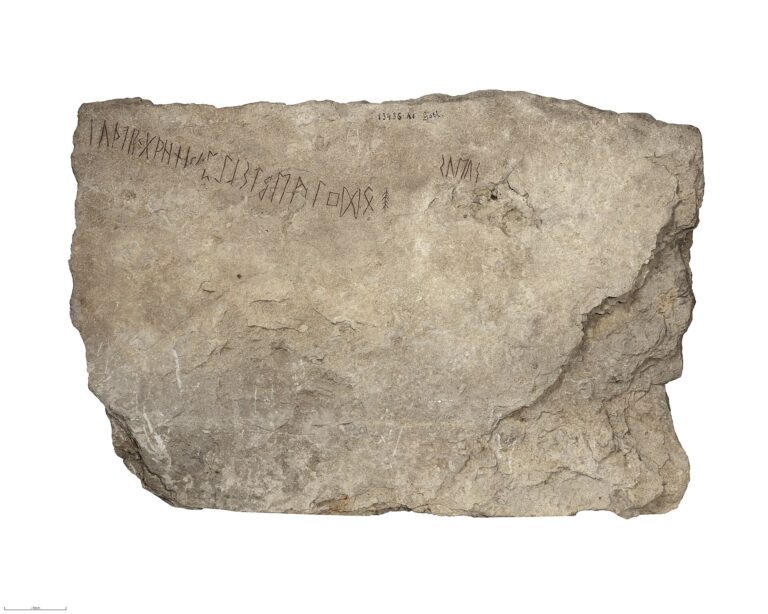
- 24 runes in three rows of eight: the order is known from complete rune rows, the oldest being the Kylver stone from Gotland (around 400 CE).
- Older than the Vikings: the Elder Futhark was used from about 150 to 650 CE, then gave way to a shorter row by the early eighth century. Viking Age Scandinavians wrote with the 16-rune Younger Futhark.
- The names are reconstructed from Old English, Norwegian and Icelandic rune poems written down many centuries later.
- Runes were writing first: early inscriptions are names, makers’ formulas and memorials. Magic has to be shown inscription by inscription. Reversed meanings, the blank rune and rune oracles are modern.
Elder Futhark chart: all 24 runes and their meanings
In the usual modern order; click a name to jump to its entry. Under each name: the Proto-Germanic reconstruction (asterisk, after Tineke Looijenga, 2003), then other spellings found in books and rune sets. Last column, the medieval poems that cover the rune: OE = Old English Rune Poem, N = Norwegian Rune Poem, I = Icelandic Rune Poem.
| Rune | Name and other spellings | Sound | Meaning of the name | Rune poems |
|---|---|---|---|---|
| ᚠ | Fehu *fehu; Feoh, Fé | f | cattle, wealth | OE, N, I |
| ᚢ | Uruz *uruz; Ur, Úr | u | aurochs (OE); drizzle or slag (N, I) | OE, N, I |
| ᚦ | Thurisaz *þurisaz; Thurs, Thorn | þ (th) | giant (N, I); thorn (OE) | OE, N, I |
| ᚨ | Ansuz *ansuz; Os, Óss | a | a god, one of the Æsir | OE, N, I |
| ᚱ | Raidho *raidō; Raido, Rad, Reið | r | riding, journey | OE, N, I |
| ᚲ | Kenaz *kaunan?; Kaunan, Kano, Cen, Kaun | k | ulcer (N, I); torch (OE) | OE, N, I |
| ᚷ | Gebo *gebō; Gyfu | g | gift | OE |
| ᚹ | Wunjo *wunjō; Wynn | w | joy | OE |
| ᚺ | Hagalaz *haglaz; Hagall, Hægl | h | hail | OE, N, I |
| ᚾ | Naudiz *naudiz; Nauthiz, Naudhiz, Nauðr | n | need, constraint | OE, N, I |
| ᛁ | Isa *īsaz; Isaz, Íss | i | ice | OE, N, I |
| ᛃ | Jera *jāran; Jeran, Ger, Ár | j (y) | year, good harvest | OE, N, I |
| ᛇ | Eihwaz *īwaz; Eiwaz, Ihwaz, Eoh | ï (uncertain) | yew | OE |
| ᛈ | Perthro *perō?; Perth, Pertho, Peorð | p | unknown (perhaps a gaming piece) | OE |
| ᛉ | Algiz *algiz?; Elhaz, Eolh | z (later R) | uncertain: elk? sedge (OE) | OE (later form: N, I) |
| ᛊ | Sowilo *sōwilō; Sowelu, Sigel, Sól | s | sun | OE, N, I |
| ᛏ | Tiwaz *tīwaz; Teiwaz, Tyr, Tir | t | the god Týr | OE, N, I |
| ᛒ | Berkano *berkanan; Berkana, Beorc, Bjarkan | b | birch | OE, N, I |
| ᛖ | Ehwaz *ehwaz; Eh | e | horse | OE |
| ᛗ | Mannaz *mannaz; Man, Maðr | m | man, human being | OE, N, I |
| ᛚ | Laguz *laguz; Lagu, Lǫgr | l | water, sea (or leek?) | OE, N, I |
| ᛜ | Ingwaz *ingwaz; Inguz, Ing | ŋ (ng) | the god Ing | OE |
| ᛞ | Dagaz *dagaz; Dæg | d | day | OE |
| ᛟ | Othala *ōþalan; Othila, Odal, Ēþel | o | inherited land, estate | OE |
Elder Futhark quick facts
- Name: “futhark” is a modern word made from the first six runes, as “alphabet” comes from alpha and beta. It is also called the Older, Old or Germanic Futhark, to distinguish it from the Younger Futhark.
- Runes: 24, in three groups of eight, later called ættir.
- Dates: about 150 to 650 CE. A transitional period follows (c. 520–700, seen on the Blekinge stones in Sweden), and the 16-rune Younger Futhark is established by the early eighth century.
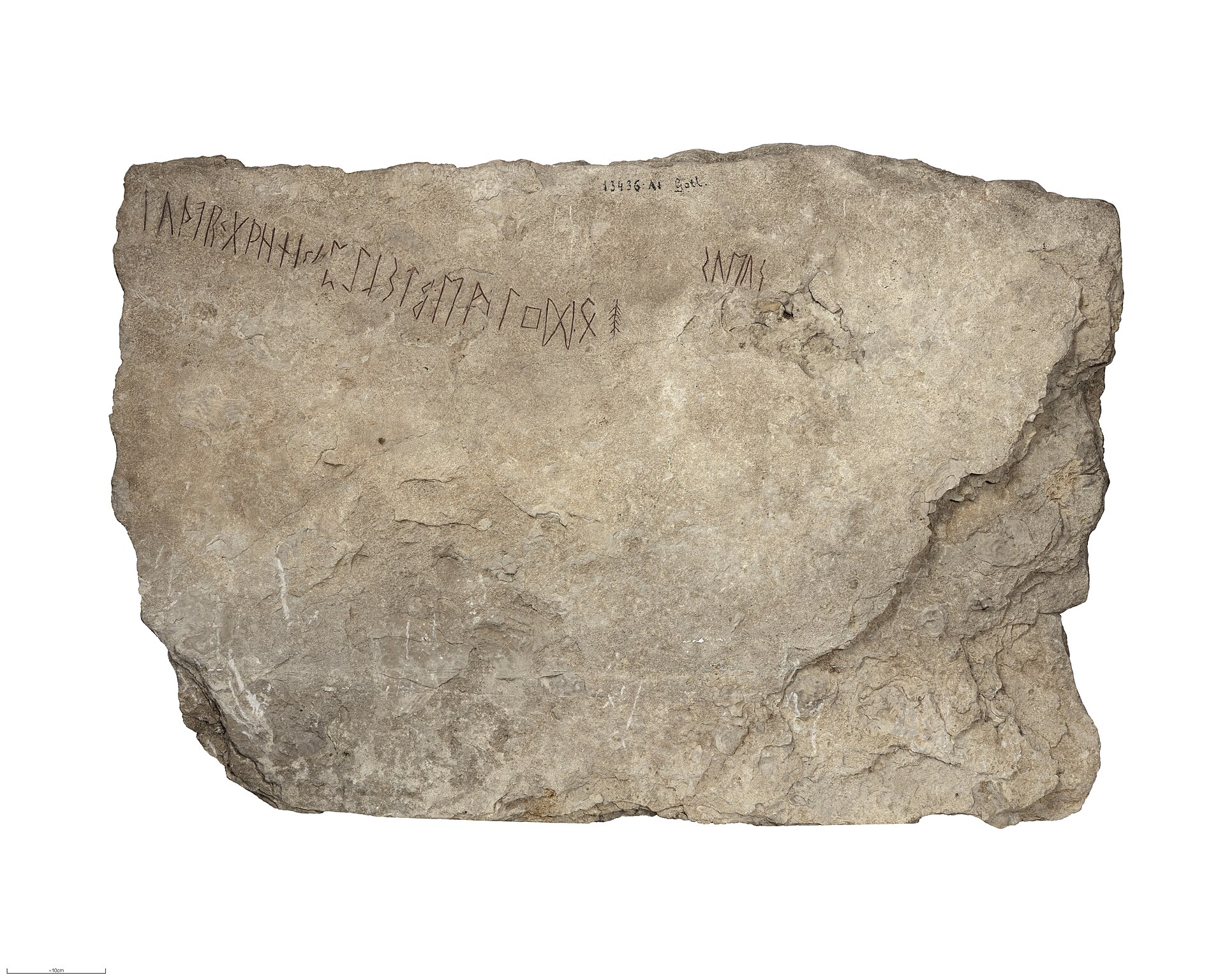
- Earliest secure inscriptions: the Vimose comb, Denmark, harja (c. 160), and the Øvre Stabu spearhead, Norway, raunijaz (c. 160–250). Inscribed stone fragments from Svingerud, Norway, come from a grave radiocarbon-dated to between 50 BCE and 275 CE, so a few runes may be older still.
- Complete rune rows: Kylver stone (Gotland, c. 400), Grumpan bracteate (Sweden, c. 500) and Vadstena bracteate (Sweden, sixth century), plus the partial rows of the Breza column (Bosnia, last four runes lost) and the Charnay brooch (Burgundy), both sixth century.
- Origin: adapted from a Mediterranean alphabet, Latin or North Italic, around the first century CE; the exact model is debated.
What are runes? An alphabet first
Runes are letters. Each Elder Futhark rune represents a sound, and the oldest inscriptions use them as any script is used: to write names, to say who made or owned an object, later to commemorate the dead. The word rune has a wider history: the fourth-century Gothic Bible uses runa for “mystery”, and Old English rūn can mean a secret or a whisper as well as a letter. That describes the word, not a hidden power in each sign.
Where the script came from is still argued. The Swedish History Museum says the inspiration came “mainly from the Roman alphabet”. Looijenga suggests the runes were devised in the first century CE in Romanized regions along the Rhine, perhaps from a North Italic variety of the alphabet; others prefer a provincial form of Latin. Some runes match Latin letters closely (ᚠ F, ᚱ R, ᛒ B); others have no obvious model.
The oldest texts are short: harja, probably a name, on the Vimose comb; raunijaz, “tester”, the name of the Øvre Stabu spearhead. The Einang stone in Norway reads [ek go]dagastiz runo faihido, “I, Godagastiz, coloured the rune” (c. 350–400): runes were painted as well as carved.
Elder Futhark vs Younger Futhark: which runes did the Vikings use?
Not the Elder Futhark. In the Viking Age (roughly 750–1050), Scandinavians wrote with the Younger Futhark of 16 runes. The Blekinge stones in southern Sweden, such as Stentoften and Björketorp (c. 520–700), show the transition, with old runes taking new sound values. With fewer letters, each rune did more work: the k-rune also wrote g, t also d, b also p, u also o.
Eight Elder runes dropped out: Gebo, Wunjo, Eihwaz, Perthro, Ehwaz, Ingwaz, Dagaz and Othala. Those are exactly the runes the Norwegian and Icelandic rune poems do not cover. The 16 that remained, in the order of the Norwegian poem, are fé, úr, þurs, óss, reið, kaun, hagall, nauðr, íss, ár, sól, týr, bjarkan, maðr, lǫgr and ýr. A page that shows the Elder Futhark as “Viking runes” mixes two systems; our evidence index of Viking symbols covers the Younger Futhark and the other signs securely dated to the Viking Age.
Where do the rune meanings come from? The three rune poems
No inscription from the Elder Futhark period tells us what the runes were called. The names come from medieval manuscripts, above all three poems that give each rune a short stanza. As Looijenga notes, several centuries separate the first runic writing from the first recorded names; linguists rebuild the early forms from the later ones.
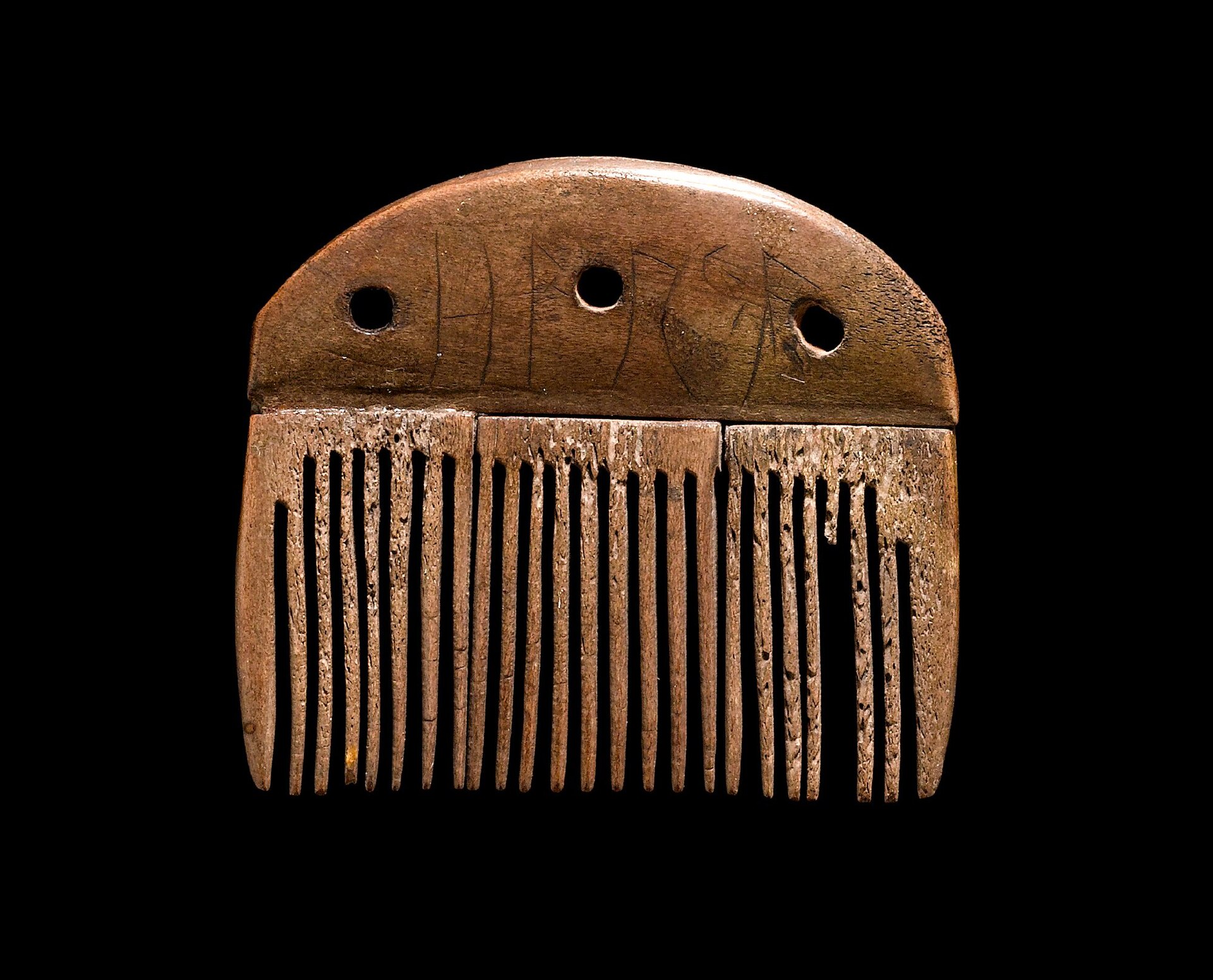
- Old English Rune Poem: 29 stanzas, covering all 24 Elder runes plus five English additions of the Anglo-Saxon futhorc. Its only manuscript, Cotton Otho B.x, burned in 1731; the text survives in George Hickes’s printed edition of 1705. Dickins judged the poem much older than the lost manuscript. Its outlook is Christian: it speaks of drihten, “the Lord”, and calls God hālig heofones cyning, “holy King of heaven”.
- Norwegian Rune Poem: 16 two-line stanzas, one per Younger rune, ascribed to the late thirteenth century. Ole Worm printed it in 1636 from a manuscript that burned in 1728. Each stanza pairs a line on the rune with a loosely connected saying.
- Icelandic Rune Poem: 16 stanzas of three kennings (poetic descriptions) each, in manuscripts from the fifteenth century onward such as AM 687 4to, where each stanza carries a Latin gloss: Óss is Jupiter, Týr is Mars.
So the poems are late, Christian and sometimes contradictory, because the names had drifted: the rune that is an aurochs in England is drizzle in Iceland. For the eight runes missing from the Younger row, the Old English poem is our only medieval witness.
The three ættir (aettir): how the 24 runes are grouped
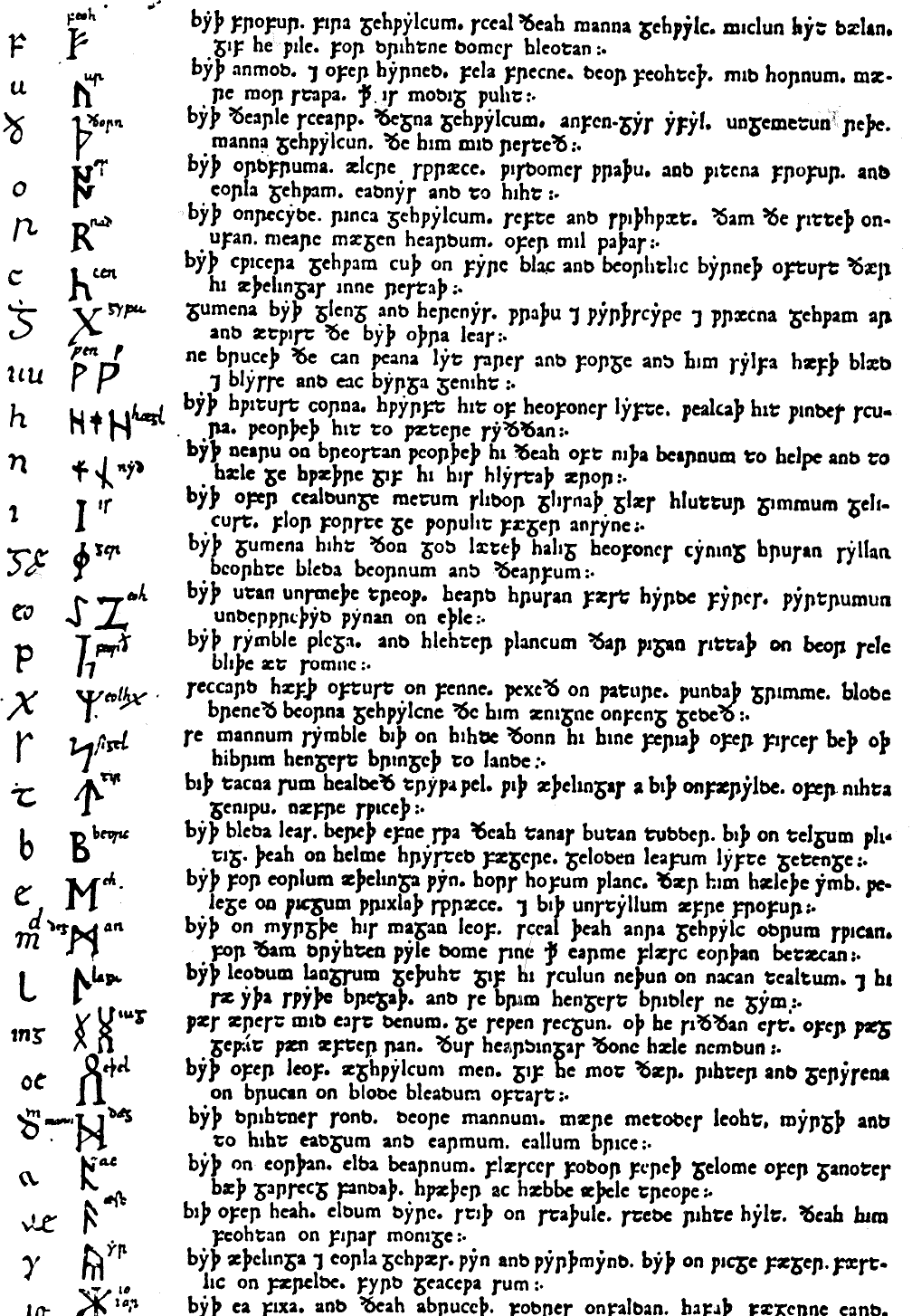
The division into three rows of eight is old. The sixth-century gold bracteates from Vadstena (Ög 178, now lost) and Grumpan (Vg 207) both write the futhark in three groups separated by marks: fuþarkgw : hnijïpzs : tbemlŋod. The name is much later: post-medieval Icelandic learned tradition called the groups ættir, “families”, after Freyr, Hagall and Týr; Cleasby and Vigfússon’s dictionary (1874) records Hagals-ætt as “the second part of the Runic alphabet”.
“Heimdall’s ætt” and “Freyr and Freyja’s ætt” are modern labels, and so are the themes often assigned to each row. Even the order varied: Kylver writes ᛈ before ᛇ and ends ᛞ ᛟ, while Vadstena, Grumpan and the Old English poem have ᛇ first and end ᛟ ᛞ. There was no single “correct” final rune.
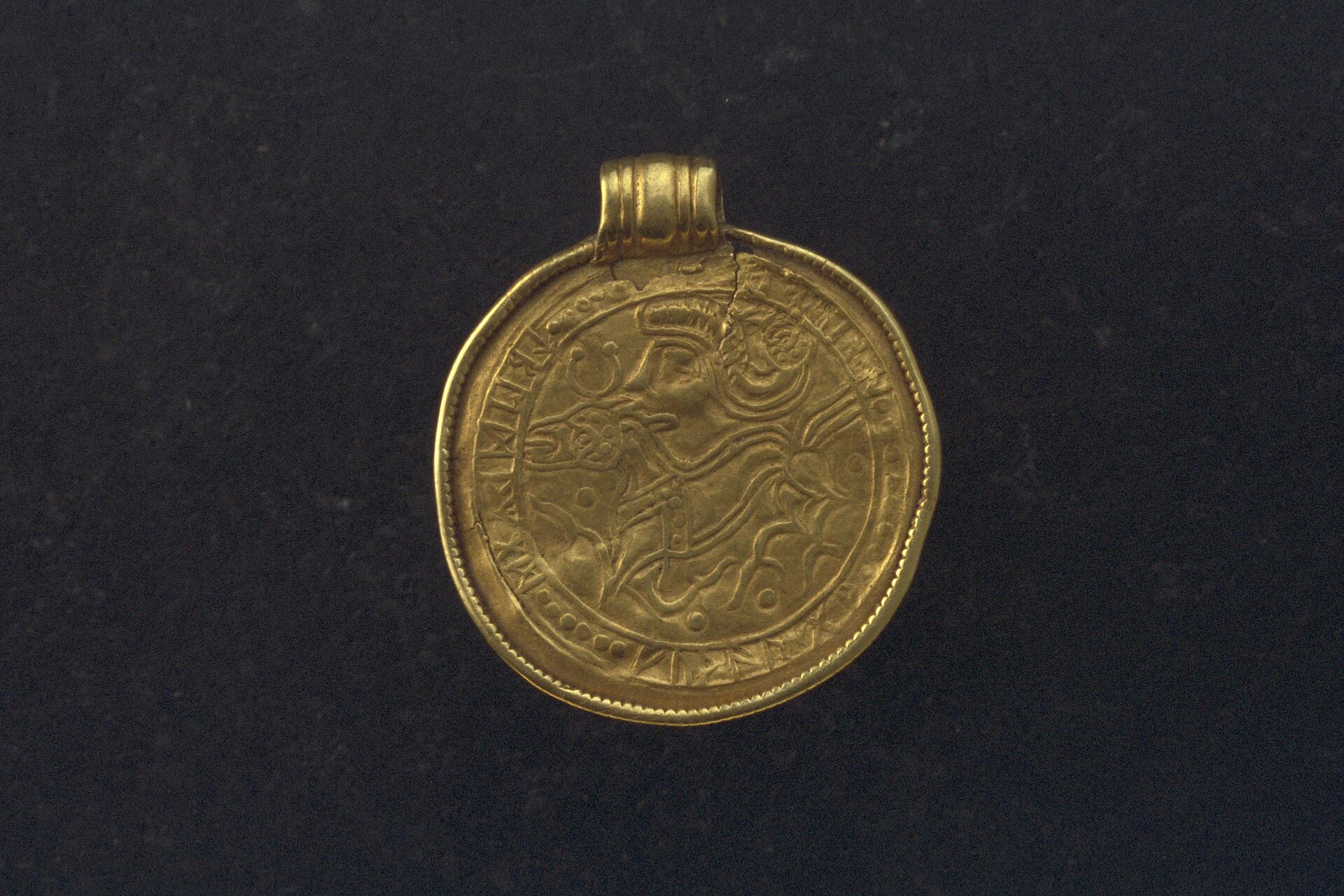
Meaning, sound and spellings come first, then what the rune poems say, in our own translation; the box gives the original Old English or Old Norse lines, from Bruce Dickins’s edition, Runic and Heroic Poems of the Old Teutonic Peoples (1915), with stanzas counted in order in each poem (Dickins numbers the Old English poem by line). Inscriptions carry their Rundata number, with readings and dates from Rundata and, for Continental and English finds, Looijenga. Eddic stanzas follow the standard numbering, with Bellows’s (1923) in brackets where it differs. The modern divinatory meaning comes last.
The first ætt (Freyr’s ætt): Fehu to Wunjo
ᚠ Fehu – Cattle, Wealth
Meaning: cattle, hence movable wealth (compare English “fee”). Sound: f. Name: *fehu; Old English feoh, Old Norse fé.
Rune poems (our translations): the Old English poem calls wealth “a comfort to everyone”, yet each must share it freely if he wants glory before the Lord. The Norwegian poem turns it round: “wealth causes strife among kinsmen; the wolf grows up in the forest”. The Icelandic poem agrees: “wealth is kinsmen’s strife”.
Feoh byþ frōfur fira gehwylcum
Fé vældr frænda rógi; føðesk ulfr í skógi
Fé er frænda róg
Old English st. 1 · Norwegian st. 1 · Icelandic st. 1
Inscription: the lost Gummarp stone in Blekinge (c. 560–700) read “Haþuwulfar placed three staves: fff”, usually taken as three f-runes standing for their name.
Modern divinatory meaning (not Norse): abundance, prosperity, earned success; the name taken literally as a forecast.
ᚢ Uruz – Aurochs (or Drizzle)
Meaning: aurochs, the wild ancestor of domestic cattle, in the Old English poem; drizzle or slag in the Norse poems. Sound: u. Name: *uruz; Old English ūr, Old Norse úr.
Rune poems (our translations): only the Old English poem has the animal: “the aurochs is fierce and great-horned”, a very dangerous beast that fights with its horns. The Scandinavian úr is another word. Norwegian: “slag comes from bad iron”, and the reindeer often runs over hard-frozen snow. Icelandic: “drizzle is the weeping of the clouds”, the ruin of the hay-swathes and the shepherd’s hate.
Ūr byþ ānmōd ond oferhyrned
Úr er af illu jarne
Úr er skýja grátr
Old English st. 2 · Norwegian st. 2 · Icelandic st. 2
Modern divinatory meaning (not Norse): raw strength, health, vitality, built on the English aurochs; the Norse “drizzle” and “slag” are ignored.
ᚦ Thurisaz (Thurs, Thorn) – Giant or Thorn
Meaning: giant in the Norse poems, thorn in the Old English. Sound: þ, the “th” of “thin”. Name: *þurisaz, Old Norse þurs, a word for the jötnar, the giants. English renamed it þorn, “thorn”, and kept þ as a letter for centuries.
Rune poems (our translations): Old English: “the thorn is very sharp”, bad for any warrior to grasp. Norwegian: “the giant causes women sickness”, and few are cheered by misfortune. Icelandic: “giant: torment of women, cliff-dweller, husband of Varðrún”, a giantess.
Ðorn byþ ðearle scearp
Þurs vældr kvenna kvillu
Þurs er kvenna kvǫl ok kletta búi ok varðrúnar verr
Old English st. 3 · Norwegian st. 3 · Icelandic st. 3
Eddic use: in Skírnismál 36 (Bellows 37), “I write thee a charm and three runes therewith”, the “charm” is literally the rune þurs.
Modern divinatory meaning (not Norse): defense, conflict, a “gateway”, often tied to Thor; no medieval source links this rune with Thor.
ᚨ Ansuz (Os) – A God, Odin
Meaning: “a god, one of the Æsir”; the Icelandic poem makes him Odin. Sound: a. Name: *ansuz; Old English ōs, Old Norse óss. The word appears in the name Asugisalas on the Kragehul spear-shaft, Denmark (DR 196, c. 450–500).
Rune poems (our translations): Icelandic: “god: the ancient Gautr, prince of Ásgarðr, leader of Valhalla”, clearly Odin. Norwegian: óss as “estuary”, where most journeys end, as the scabbard is for swords (st. 4; the text is emended). Old English: “os is the origin of all speech”, a support of wisdom, which Dickins took as Latin os, “mouth”.
Ōs byþ ordfruma ǣlcre sprǣce
Óss er aldingautr ok ásgarðs jǫfurr ok valhallar vísi
Old English st. 4 · Icelandic st. 4
Inscription: the Lindholm amulet, Skåne (DR 261), has eight a-runes in a row, read by some as eight times *ansuz.
Modern divinatory meaning (not Norse): communication, inspiration, “the divine breath of Odin”; the breath has no medieval source.
ᚱ Raidho – Riding, Journey
Meaning: riding, journey. Sound: r. Name: *raidō, also spelled Raido; Old English rād, Old Norse reið. The shape is close to a Latin R.
Rune poems (our translations): the Old English poem is ironic: “riding is easy for every warrior in the hall”, and hard work for the one who sits on a powerful horse over the long roads. That hall scene is English, not Norse. Norwegian: “riding, they say, is worst for horses; Reginn forged the best sword”. Icelandic: “riding is the rider’s bliss”, a swift journey and the horse’s toil.
Rād byþ on recyde rinca gehwylcum sēfte
Ræið kveða rossom væsta; Reginn sló sværðet bæzta
Reið er sitjandi sæla
Old English st. 5 · Norwegian st. 5 · Icelandic st. 5
Modern divinatory meaning (not Norse): travel, the right path, rhythm; “utangard”, often added, appears in none of the poems.
ᚲ Kenaz (Kaunan, Kano) – Torch or Ulcer
Meaning: disputed: “ulcer” in the Norse poems, “torch” in the Old English. Sound: k. Name: the Norwegian and Icelandic poems call it kaun, “ulcer”, and Looijenga gives *kaunan with a question mark; the Old English poem calls it cēn, “torch”. “Kenaz” follows the English side; “Kano” is a spelling used in modern rune sets.
Rune poems (our translations): Old English: “the torch is known to every living being by its fire”, pale and bright. Norwegian: “the ulcer is a curse to children; death turns a corpse pale”. Icelandic: “the ulcer is the bane of children”, a painful sore. With two poems against one, the ulcer is not easily dismissed as a late error.
Cēn byþ cwicera gehwām cūþ on fȳre
Kaun er barna bǫlvan; bǫl gørver nán fǫlvan
Kaun er barna bǫl
Old English st. 6 · Norwegian st. 6 · Icelandic st. 6
Shape: a small angle, like <, in the oldest inscriptions; English and Scandinavian forms diverged from the sixth century.
Modern divinatory meaning (not Norse): knowledge, creativity, illumination, all from the English torch.
ᚷ Gebo – Gift
Meaning: gift. Sound: g. Name: *gebō; Old English gyfu. The X shape is easy to combine: the Kragehul spear-shaft writes g and a three times as single bind-runes.
Rune poem (our translation): Old English only: “giving is people’s pride and praise”, and for every outcast who has nothing else it is help and a living.
Gyfu gumena byþ gleng and herenys
Old English st. 7
Inscription: a gold bracteate from Sealand (Seeland II-C) says gibu auja, “I give luck” or “protection”, a wish spelled out in words, not hidden in one rune.
Modern divinatory meaning (not Norse): partnership, exchange, love; the X as “two forces crossing” is modern symbolism.
ᚹ Wunjo – Joy
Meaning: joy. Sound: w. Name: *wunjō; Old English wynn. Proto-Norse lost the initial w (unja), one reason the rune left the Scandinavian row; in England, as wynn, it even entered the ordinary alphabet. Looijenga suggests ᚹ and ᛈ were both created as variations on ᛒ.
Rune poem (our translation): Old English only: “joy is for the one who knows little of woe”, pain or sorrow, and has prosperity, happiness and a sufficient home.
Wenne brūceþ ðe can wēana lȳt
Old English st. 8
Modern divinatory meaning (not Norse): joy, harmony, wishes fulfilled; the poem’s modest domestic happiness made spiritual.
The second ætt (Hagall’s ætt): Hagalaz to Sowilo
ᚺ Hagalaz – Hail
Meaning: hail. Sound: h. Name: *haglaz; Old English hægl, Old Norse hagall. Shape: an H with one slanting bar in Scandinavia; the double-barred ᚻ is found on the Continent, in Frisia and in England, never in Scandinavia.
Rune poems (our translations): Old English: “hail is the whitest of grains”; it whirls down from the sky and then turns to water. Norwegian: “hail is the coldest of grains; Christ shaped the world of old”. Icelandic: “hail: cold grain, driving sleet, the snakes’ sickness”. The snakes’ sickness, a kenning for winter, is Icelandic only.
Hægl byþ hwītust corna
Hagall er kaldastr korna; Kristr skóp hæimenn forna
Hagall er kaldakorn ok krapadrífa ok snáka sótt
Old English st. 9 · Norwegian st. 7 · Icelandic st. 7
Modern divinatory meaning (not Norse): sudden disruption that clears the way for change.
ᚾ Naudiz (Nauthiz) – Need, Constraint
Meaning: need, distress. Sound: n. Name: *naudiz, also spelled Nauthiz or Naudhiz; Old English nȳd, Old Norse nauðr.
Rune poems (our translations): Old English: “need is tight on the chest”, yet it often turns to help and healing for those who heed it in time. Norwegian: “need leaves little choice; the naked man freezes in the frost”. Icelandic: “need is the bondwoman’s grief and a hard lot”, and toilsome work.
Nȳd byþ nearu on brēostan
Nauðr gerer næppa koste; nøktan kælr í froste
Nauð er Þýjar þrá ok þungr kostr
Old English st. 10 · Norwegian st. 8 · Icelandic st. 8
Other sources: Sigrdrífumál 7, “Need shalt mark on thy nails”, uses the rune by name; Looijenga cautiously links the three n-runes on the Lindholm amulet with the “needs” of later charms.
Modern divinatory meaning (not Norse): hardship, patience, resistance; the “fire-drill” shape explanation has no medieval support.
ᛁ Isa – Ice
Meaning: ice. Sound: i. Name: *īsaz, also spelled Isaz; Old English īs, Old Norse íss. The shape is a single vertical stroke.
Rune poems (our translations): Old English: “ice is very cold, endlessly slippery”; it glitters clear as glass, like jewels, a floor made by frost, fair to see. Norwegian: “ice we call a broad bridge; the blind must be led”. Icelandic: “ice is the bark of rivers and the roof of the wave”, and a danger to doomed men.
Īs byþ oferceald, ungemetum slidor
Ís kǫllum brú bræiða; blindan þarf at læiða
Íss er árbǫrkr ok unnar þak
Old English st. 11 · Norwegian st. 9 · Icelandic st. 9
Modern divinatory meaning (not Norse): stillness, a pause, a frozen situation; the poems describe real ice.
ᛃ Jera – Year, Harvest
Meaning: year, good harvest. Sound: j (the y of “year”). Name: *jāran (earlier *jēra); Old English gēr, Old Norse ár. When Scandinavian lost the initial j, the name became ár and the rune took the value a.
Rune poems (our translations): Old English: “harvest is people’s hope, when God, holy King of heaven, lets the earth give bright fruits” to rich and poor; the giver is God, not a king. Norwegian: “plenty is a boon to men; I say that Fróði was generous”, recalling the legendary Danish peace-king.
Gēr byþ gumena hiht, ðonne God lǣteþ, hālig heofones cyning, hrūsan syllan beorhte blēda
Ár er gumna góðe; get ek at ǫrr var Fróðe
Old English st. 12 · Norwegian st. 10
Inscription: on the Stentoften stone (DR 357), a single j-rune stands for its own name: Haþuwulfar “gave good year”. Looijenga calls it “at least one clear instance” of a rune used as a word-sign.
Modern divinatory meaning (not Norse): cycles, reward for patience, “time moves in circles”; the philosophy of time is not in the sources.
ᛇ Eihwaz (Eiwaz) – Yew Tree
Meaning: yew. Sound: uncertain, written ï. Name: *īwaz or *eihwaz, also spelled Eiwaz or Ihwaz; Old English ēoh. It is the 13th of 24 runes, not the center.
Rune poem (our translation): Old English: “the yew is a tree rough on the outside”, hard, firm in the earth, a keeper of fire and a joy on the estate. The Norse poems put their yew under another rune (see Algiz).
Ēoh byþ ūtan unsmēþe trēow
Old English st. 13
The sound puzzle: Looijenga finds the rune used for a vowel, as in raïhan, “roe deer”, on a bone from Caistor-by-Norwich, England (c. 425–475), and suggests it began as a combination of i and j.
Modern divinatory meaning (not Norse): endurance, death and rebirth, Yggdrasil as “axis between worlds”. In the sources Yggdrasil is an ash (Völuspá 19), not a yew.
ᛈ Perthro (Perth) – Unknown Meaning
Meaning: unknown; a gaming piece or a dice cup are guesses from a single Old English stanza. Sound: p, rare in early Germanic and so rare in inscriptions. Name: Old English peorð, a word known only as this rune’s name; Looijenga gives *perō with a question mark. Also spelled Perth or Pertho.
Rune poem (our translation): there is no p-rune in the Younger Futhark, so no Norse poem covers it. Old English: “peorð is always play and laughter” for the proud, where warriors sit cheerfully together in the beer-hall. Dickins rendered the name “chessman?” and warned that “no stress can be laid on any of the suggested meanings”.
Peorð byþ symble plega and hlehter
Old English st. 14
Modern divinatory meaning (not Norse): fate, chance, mystery, the “web of wyrd”. Weaving as an image of fate is modern, as our guide to the Norns explains.
ᛉ Algiz (Elhaz) – Elk or Sedge (Meaning Disputed)
Meaning: disputed; “elk” is a guess, and the Old English name points to a sedge. Sound: a z that mostly ended words, as in raunijaz and erilaz, later R. Name: unknown; *algiz is a reconstruction, also spelled Elhaz; Old English eolh, and for the later Norse form ýr.
Rune poems (our translations): the Old English stanza is about a plant: “elk-sedge mostly lives in the fen”; it grows in water and wounds cruelly. Dickins concluded it was “some rush, species unknown”. The Norse ýr stanzas describe a yew (Norwegian: “yew is the greenest of trees in winter”) and a bow (Icelandic: “a bent bow”).
Eolh-secg eard hæfþ oftust on fenne
Ýr er vetrgrønstr viða
… bendr bogi …
Old English st. 15 · Norwegian st. 16 · Icelandic st. 16
Shape: a stave with two raised arms; from the sixth century Scandinavian carvers often turned it upside down, and that form became the Younger rune ýr. Looijenga notes the same form for z in Etruscan and some North Italic alphabets.
Modern divinatory meaning (not Norse): protection, antlers, a hand raised in warding; no early source calls it protective. The Nazis used the shape as the “life rune”, and the ADL lists it as a common white-supremacist symbol, while noting its use by neo-pagans.
ᛊ Sowilo (Sowelu) – Sun
Meaning: sun. Sound: s. Name: *sōwilō, also spelled Sowelu; Old English sigel, Old Norse sól. The shape is a zigzag, with many variants.
Rune poems (our translations): Old English: “the sun is always a hope to seafarers” as they cross the fishes’ bath, until the sea-steed brings them to land. Norwegian: “sun is the light of the lands; I bow to the holy judgment”. Icelandic: “sun: shield of the clouds and shining disc”, and the bane of ice. None mentions the wolf that pursues the sun until Ragnarök.
Sigel sǣmannum symble biþ on hihte
Sól er landa ljóme; lúti ek helgum dóme
Sól er skýja skjǫldr ok skínandi rǫðull
Old English st. 16 · Norwegian st. 11 · Icelandic st. 11
Modern divinatory meaning (not Norse): success, vitality, wholeness. The SS emblem was derived from this rune; the ADL notes the “SS bolts” remain in neo-Nazi use.
The third ætt (Týr’s ætt): Tiwaz to Othala
ᛏ Tiwaz (Tyr) – The God Týr
Meaning: the god Týr. Sound: t. Name: *tīwaz, also spelled Teiwaz; Old English tīr (the god is Tīw, as in “Tuesday”), Old Norse týr. The shape is an upward arrow.
Rune poems (our translations): the Norse poems remember the hand bitten off by Fenrir. Norwegian: “Týr is the one-handed of the Æsir; often the smith must blow”. Icelandic: “Týr: the one-handed god, the wolf’s leftovers, the ruler of temples”. The guiding star is Old English: “Tir is one of the signs”; it keeps faith with princes, holds its course over the night mists and never fails, so probably a star or constellation. Dickins suspected Tir was a misreading of Tiw.
Tīr biþ tācna sum
Týr er æinendr ása; opt værðr smiðr blása
Týr er einhendr áss ok ulfs leifar ok hofa hilmir
Old English st. 17 · Norwegian st. 12 · Icelandic st. 12
Other sources: Sigrdrífumál 6 links the rune with weapons: “winning-runes” on the sword-hilt, “and twice shalt thou call on Tyr”.
Modern divinatory meaning (not Norse): justice, honor, victory. The ADL records a Tyr-rune emblem for the Nazi SA’s leadership schools and its continued white-supremacist use, while warning against assuming every use is racist.
ᛒ Berkano (Berkana) – Birch
Meaning: birch. Sound: b. Name: *berkanan, also spelled Berkana; Old English beorc, Old Norse bjarkan. The shape is like a Latin B.
Rune poems (our translations): Icelandic: “birch is a leafy branch and a little tree”, a young wood; no poem mentions a “silver top”. Norwegian: “birch has the greenest leaves of any bough; Loki was lucky in his deceit”, which Dickins read as an allusion to Loki’s part in Baldr’s death. The Old English tree is blēda lēas, “without fruit”, yet puts out shoots without seed (st. 18), which Dickins thought fitted the poplar.
Bjarkan er laufgrønstr líma; Loki bar flærða tíma
Bjarkan er laufgat lim ok lítit tré
Norwegian st. 13 · Icelandic st. 13
Modern divinatory meaning (not Norse): growth, renewal, motherhood, the “birch goddess”; no such goddess appears in Norse sources.
ᛖ Ehwaz – Horse
Meaning: horse. Sound: e. Name: *ehwaz, related to Latin equus; Old English eh. In Scandinavia the word became jór and the rune disappeared. The shape is like an M.
Rune poem (our translation): Old English only: “the horse is a joy to princes before warriors”, a steed proud of its hooves, when wealthy men on horseback trade words about it. The riders exchange words (wrixlaþ sprǣce), not horses.
Eh byþ for eorlum æþelinga wyn
Old English st. 19
Modern divinatory meaning (not Norse): partnership, trust, movement; the horse-and-rider bond is a modern elaboration.
ᛗ Mannaz – Man, Human Being
Meaning: man, human being. Sound: m. Name: *mannaz; Old English man, Old Norse maðr.
Rune poems (our translations): Old English: “a man in his joy is dear to his kin”, yet each must fail the other, for the Lord will commit the poor flesh to the earth. Norwegian: “man is an increase of the dust; great is the hawk’s grip”. Icelandic: “man: man’s delight, increase of the earth, adorner of ships”. Dickins notes that maðr er manns gaman is borrowed from Hávamál 47.
Man byþ on myrgþe his māgan lēof
Maðr er moldar auki; mikil er græip á hauki
Maðr er manns gaman ok moldar auki ok skipa skreytir
Old English st. 20 · Norwegian st. 14 · Icelandic st. 14
Modern divinatory meaning (not Norse): the self, humanity, interdependence; the mortality that dominates all three poems drops out.
ᛚ Laguz – Water, Sea (or Leek)
Meaning: water, sea, in all three poems. Sound: l. Name: *laguz; Old English lagu, Old Norse lǫgr. Looijenga notes that some manuscript rune rows give names pointing to *laukaz, “leek”, a formula word on several bracteates.
Rune poems (our translations): Old English: “the sea seems endless to people” who must venture out in a rocking ship while the waves terrify them. Norwegian: “a waterfall is water that falls from the mountain”, but ornaments are of gold. Icelandic: “water: a welling stream, a wide cauldron, the land of the fish”.
Lagu byþ lēodum langsum geþūht
Lǫgr er, fællr ór fjalle, foss
Lǫgr er vellanda vatn ok víðr ketill ok glǫmmungr grund
Old English st. 21 · Norwegian st. 15 · Icelandic st. 15
Modern divinatory meaning (not Norse): intuition, emotion, the unconscious; the unconscious is a twentieth-century idea.
ᛜ Ingwaz (Inguz) – The God Ing
Meaning: the god or hero Ing. Sound: ŋ, the “ng” of “sing”. Name: *ingwaz, also spelled Inguz; Old English ing. Shape: a small square or diamond. Looijenga notes that this free-standing form occurs only in the rows of Kylver and Vadstena; in real words the sound is written with a taller sign on a stave, which she reads as a bind-rune of i and ŋ.
Rune poem (our translation): Old English only: “Ing was first seen by men among the East Danes”, until he went back east over the waves, his wagon running behind; so the Heardings named the hero. Dickins linked Ing with the Swedish god Yngvi-Freyr; the link is widely accepted but the poem does not name Freyr. Freyr is Freyja’s brother, not her twin.
Ing wæs ǣrest mid Ēast-Denum gesewen secgun
Old English st. 22
Modern divinatory meaning (not Norse): fertility, gestation, completion.
ᛞ Dagaz – Day
Meaning: day. Sound: d. Name: *dagaz; Old English dæg. Shape: two triangles meeting at their points; Looijenga derives both ᛞ and ᛜ from the Roman D. It is the last rune on Kylver but second-last on the Vadstena and Grumpan bracteates.
Rune poem (our translation): Old English only: “day is the Lord’s messenger, dear to people, the Creator’s glorious light”, a joy and a hope to rich and poor.
Dæg byþ drihtnes sond, dēore mannum, mǣre metodes lēoht
Old English st. 24
Modern divinatory meaning (not Norse): breakthrough, awakening, “two forces in balance” read into the shape.
ᛟ Othala (Odal, Othila) – Inherited Land, Estate
Meaning: inherited land, estate. Sound: o. Name: *ōþalan, also spelled Othalan, Othila or Odal; Old English ēþel. The shape is a diamond on two legs.
Rune poem (our translation): Old English only: “a homeland is very dear to every man”, if he may enjoy there, in his own house, what is right and fitting, in prosperity. It is about a peaceful home, not bloodlines. Since the oldest rows disagree on whether Othala or Dagaz comes last, readings of the futhark as a journey “ending” in inheritance rest on one arrangement among several.
Ēþel byþ oferlēof ǣghwylcum men
Old English st. 23
Modern divinatory meaning (not Norse): heritage, home, ancestry. A warning: according to the ADL, Othala appeared in the insignia of two Waffen-SS divisions and has been a white-supremacist symbol since; the ADL also notes its innocent use by pagans, so context decides.
How Odin discovered the runes: what Hávamál says
The myth comes from Hávamál, “the Sayings of the High One”, in the Codex Regius manuscript of about 1270. In the passage often called the Rúnatal (stanzas 138–145; 139–146 in Bellows), Odin tells how he won the runes:
“I ween that I hung on the windy tree,
Hung there for nights full nine;
With the spear I was wounded, and offered I was
To Othin, myself to myself,
On the tree that none may ever know
What root beneath it runs.”
Hávamál, stanza 138 (139 in Bellows), translated by Henry Adams Bellows (1923)
Then: “I took up the runes, shrieking I took them, / And forthwith back I fell” (139; Bellows 140). The poem does not name the tree or say whose spear it was, and the runes do not “reveal themselves”: Odin looks down and takes them up. Identifying the windy tree with Yggdrasil is a natural inference, made by Bellows in his notes, but the stanza gives no name.
A separate list follows, the Ljóðatal (146–163; Bellows 147–165), in which Odin names eighteen charms (ljóð): to heal, to blunt an enemy’s blade, to calm the sea. Only the twelfth explicitly uses runes, to make a hanged man speak: “So do I write and color the runes / That forth he fares, / And to me talks” (157; Bellows 158). Hávamál never gives a meaning to any individual rune. Another Eddic poem, Sigrdrífumál, names two: carve “winning-runes” on the sword-hilt “and twice shalt thou call on Tyr” (6), and “Need shalt mark on thy nails” (7).
How runes were actually used: writing, memorials and magic
Most Elder Futhark inscriptions are short and practical: a name on a comb, a weapon’s name, a maker’s formula such as the lost gold horn of Gallehus, Denmark, ek hlewagastiz holtijaz horna tawido, “I, Hlewagastiz Holtijaz, made the horn” (DR 12, c. 400–470). Longer texts commemorate the dead. The Tune stone in Norway (N KJ72, c. 375–530), raised for Woduridaz, says that “three daughters” did something with arbija, the inheritance; Rundata offers two readings, that they prepared the memorial or that they shared the inheritance. Our guide to Viking funeral rites looks at such stones.
Some inscriptions are ritual or protective, and they say so in words. Gold bracteates, pendants modelled on Roman medallions, carry formulas such as alu (literally “ale”, its function debated) and gibu auja, “I give luck”. The Björketorp stone in Blekinge (DR 360, c. 520–700) curses whoever breaks it: in Rundata’s translation, the carver conceals “runes of power” and the vandal is doomed to “insidious death”. The Lindholm amulet’s aaaaaaaazzznnn-bmuttt repeats runes in a pattern no one has convincingly read. Looijenga’s caution is the right one: it is “impossible to identify beyond any doubt” which early texts were religious.
In Egils saga (chapter 72; 75 in W. C. Green’s 1893 translation), Egill finds a whalebone with miscarved love-runes that have made a girl ill, burns it and says “Runes none should grave ever / Who knows not to read them”, then carves new runes and she recovers. That is a thirteenth-century saga, not a manual. Tacitus (Germania 10, 98 CE) describes lots: slips of a fruit-tree branch “distinguished by certain marks”, cast on a white cloth and read by a priest or head of household. He wrote decades before the oldest dated runes and does not say the marks were runes.
Bind runes: historical ligatures and modern sigils
A bind-rune joins two or more runes on a shared stave. They are genuinely old: the Kragehul spear-shaft writes g+a three times as single signs, and the Tune stone joins d and a. In such texts the combinations save space or decorate, and their purpose has to be read from each inscription. Merging runes chosen for their divinatory keywords into a personal talisman has no historical precedent; it is contemporary art and should be labelled as such. The best-known modern bind-rune is a logo: the Bluetooth Special Interest Group says its symbol merges the Younger Futhark runes Hagall (ᚼ) and Bjarkan (ᛒ), the initials of the Danish king Harald Bluetooth. Our symbols evidence index applies the same test to other “Viking” signs.
Writing English with the Elder Futhark
There is no historical spelling for modern English in Elder Futhark runes: the script was out of use long before English took its present form, and the Anglo-Saxons used an enlarged row, the futhorc. Writing a name in runes is a modern transliteration, done by sound, not by spelling:
- one rune per sound: ᚦ for th, ᛜ for ng, ᛃ for the y of “yes”;
- no runes for c, q, v or x: use ᚲ for k and hard c, ᛊ for soft c, ᚲᚹ for qu, ᚲᛊ for x, and ᚠ or ᚹ for v;
- early carvers often wrote a doubled consonant only once, so ᚨᚾᚨ for “Anna” is closer to their habits than ᚨᚾᚾᚨ.
Before carving or tattooing a text, check it rune by rune against the chart: many online converters mix Elder and Younger Futhark forms. Popular designs lean on the older row: our study of Viking symbol tattoos found that English Wikipedia readers look up the Elder Futhark 2.2 times as often as the Younger Futhark.
Modern rune meanings, divination and the blank “Odin rune”
The one-word rune meanings on most websites belong to a modern tradition with a traceable history. An early source was the Austrian occultist Guido von List, whose Das Geheimnis der Runen (1907 according to the Neue Deutsche Biographie, often dated 1908) presented a row of 18 runes built on the Younger Futhark, later called the Armanen futhark. The Neue Deutsche Biographie describes List as an influential exponent of völkisch neo-paganism who taught the superiority of the “Aryan race”.
Rune casting became a popular pastime in the 1980s. Ralph Blum’s The Book of Runes (first published in 1982) was sold as a kit; library catalogues describe it as including 25 rune stones, the 24 runes plus a blank one. Blum himself calls the blank rune a “later innovation”: by his own account it came with a home-made set and two photocopied sheets of meanings he acquired in England in 1976. His book heads it “The Unknowable” and associates it with the god Odin, and rune sets now sell it as the “Odin rune” or “wyrd rune”. It exists in no historical rune row: Kylver and the bracteates show 24. Stephen Flowers, writing as Edred Thorsson, published Futhark: A Handbook of Rune Magic in 1984, and many later handbooks build on these authors. Reversed meanings belong to the same modern practice; nothing in the poems or inscriptions supports them.
None of this makes modern rune practice illegitimate as a personal or religious choice. It means a meaning should be presented as what it is: “wealth” for Fehu is a name found in medieval poems; “abundance flowing toward you” is a twentieth-century reading.
In the sources: 24 runes in a fixed order (Kylver, Vadstena, Grumpan); names and glosses in three medieval rune poems; Odin winning the runes (Hávamál 138–139); runes named in charms (Sigrdrífumál 6–7); protective and curse formulas written out on bracteates and stones. Modern: the blank “Odin rune”; reversed meanings; one keyword per rune; Heimdall’s ætt; personal bind-rune sigils; the 18 Armanen runes.
Keep exploring
From the runes to the myths
Follow Týr’s hand to Fenrir, the þurs-rune to the jötnar, and Odin’s windy tree to Yggdrasil. For the signs that really are Viking Age, start with the evidence index.
The author also writes modern songs inspired by these sources, among them Syng rúnar.
Frequently asked questions
What are the 24 runes of the Elder Futhark?
In order, with the meaning of each name: Fehu (cattle, wealth), Uruz (aurochs), Thurisaz (giant; thorn in English), Ansuz (a god), Raidho (riding), Kenaz (torch or ulcer), Gebo (gift), Wunjo (joy); Hagalaz (hail), Naudiz (need), Isa (ice), Jera (year, harvest), Eihwaz (yew), Perthro (unknown), Algiz (uncertain, perhaps elk), Sowilo (sun); Tiwaz (the god Týr), Berkano (birch), Ehwaz (horse), Mannaz (human being), Laguz (water), Ingwaz (the god Ing), Dagaz (day), Othala (inherited land). The names are reconstructed, and the oldest rows vary slightly in order.
What does futhark mean?
Futhark is a modern name made from the sounds of the first six runes, f, u, th, a, r and k, just as alphabet comes from alpha and beta. It is usually pronounced FOO-thark. The English version of the row is called the futhorc.
How old is the Elder Futhark?
The oldest securely dated inscription, harja on a comb from Vimose in Denmark, dates to about 160 CE, and the Svingerud stone in Norway may be older. The Elder Futhark was used until about 650; after a transition seen on the Blekinge stones (about 520 to 700), the Younger Futhark was established by the early eighth century.
What is the difference between the Elder and Younger Futhark?
The Elder Futhark has 24 runes and was used from about 150 to 650 CE. The Younger Futhark has 16 and was the Scandinavian script of the Viking Age. It dropped Gebo, Wunjo, Eihwaz, Perthro, Ehwaz, Ingwaz, Dagaz and Othala, and each remaining rune stood for several sounds: k also wrote g, t also d, b also p.
Did the Vikings use the Elder Futhark?
No. Viking Age Scandinavians, from roughly 750 to 1050, wrote with the 16-rune Younger Futhark, which grew out of the Elder row after it had gone out of use.
Where do the meanings of the runes come from?
From the names of the runes, recorded in medieval manuscripts, above all three rune poems: the Old English Rune Poem, which covers all 24 runes, and the Norwegian and Icelandic poems, which cover the 16 Younger runes. The early Germanic names are reconstructed from these later ones. The keyword meanings used in divination are modern.
Which rune means protection?
In modern rune practice, Algiz (also spelled Elhaz), the rune with two raised arms. That meaning is modern: the rune’s original name is unknown and the Old English poem describes a sedge. Early protective wishes were written out in words, such as gibu auja, I give luck, on a gold pendant. The Nazis used the same shape as the life rune, so context matters.
How do I write my name in Elder Futhark runes?
By sound, one rune per sound: ᚦ for th, ᛜ for ng, ᚲ for k and hard c, ᚲᛊ for x. Any version is a modern transliteration. Check it rune by rune, because many online converters mix Elder and Younger Futhark forms.
What is the blank rune or Odin rune?
A blank stone added to modern rune sets, popularized by Ralph Blum’s The Book of Runes (first published 1982). Blum calls it a later innovation that came with a set he acquired in England in 1976, heads it The Unknowable and associates it with Odin. No historical rune row has a blank rune.
Were runes used for magic?
Sometimes, but they were a writing system first. Most early inscriptions are names, makers’ formulas and memorials. Some carry protective or ritual formulas, such as gibu auja, I give luck, and the Björketorp stone curses anyone who breaks it. Each case has to be judged from its own text.
Are runes Celtic?
No. Runes are a Germanic script, used in Scandinavia, Germany, Frisia and England. The early Irish script was ogham, a different system. Celtic rune sets sold today are modern products.
Sources and editorial notes
This guide was rewritten and checked in October 2026. It separates what the inscriptions show, what the medieval rune poems say, and what modern writers have added.
- Rune poems: Bruce Dickins, Runic and Heroic Poems of the Old Teutonic Peoples (Cambridge, 1915), pp. 6–33, for the Old English and Old Norse texts and notes; the translations on this page are our own.
- Inscriptions: Rundata: G 88, Ög 178, Vg 207, DR 12, DR 196, DR 207, DR 261, DR 357, DR 358, DR 360, N KJ31, N KJ63, N KJ72, with datings after Imer (2007); Tineke Looijenga, Texts and Contexts of the Oldest Runic Inscriptions (Brill, 2003); the Swedish History Museum’s “The first runes” and its record of the Kylver stone; Steinar Solheim, Kristel Zilmer et al., “Inscribed sandstone fragments of Hole, Norway”, Antiquity 99 (2025), on the Svingerud stone.
- Texts: Hávamál, Sigrdrífumál, Skírnismál and Völuspá, translated by Henry Adams Bellows (1923), with the Old Norse in Edward Pettit’s free The Poetic Edda: A Dual-Language Edition (2023); Egils saga, translated by W. C. Green (1893); Tacitus, Germania 10 (Oxford translation, revised); Cleasby and Vigfússon, An Icelandic-English Dictionary (1874), s.v. hagall.
- Modern reception: Robert Suckro, “List, Guido”, NDB-online (2026); the ADL entries for Othala, the life rune, the Tyr rune and SS bolts; Bluetooth SIG on its logo; Ralph Blum, The Book of Runes (1982; checked in the 1985 London edition), introduction and the entry for the blank rune.
- Further reading: R. I. Page, Runes (1987); Michael P. Barnes, Runes: A Handbook (2012); Terje Spurkland, Norwegian Runes and Runic Inscriptions (2005).
Photographs show real objects and are credited where they appear. Generated images used in earlier versions of this page, including an imitation manuscript, have been removed.




All five albums and every single: 86 songs in WAV and MP3, yours to keep.