

Loki in Norse Mythology: Identity, Children, Myths, and Sources
Who is Loki in Norse mythology? Loki is a shape-changing figure who lives among the Æsir while remaining the son of Fárbauti, a jötunn, and Laufey or Nál. The surviving poems and Snorri’s Prose Edda show him solving crises, causing others, arranging Baldr’s death, and opposing the gods at Ragnarök. They do not assign him a formal portfolio as “the god of chaos” or “the god of mischief.” Those familiar labels are modern summaries of his stories, not titles found in the medieval sources.
| Quick fact | What the sources support |
|---|---|
| Identity | A figure among the Æsir whose father is a jötunn |
| Names | Loki, Loptr, and Loki Laufeyjarson |
| Parents | Fárbauti and Laufey or Nál |
| Relationship to Odin | Loki recalls a blood-mixing oath in Lokasenna; he is not Odin’s son |
| Relationship to Thor | Companion and antagonist in several stories; not his brother |
| Best-known children | Fenrir, Jörmungandr, Hel, and Sleipnir; Snorri also names Narfi/Nari and Váli |
| Abilities | Shape-changing, disguise, cunning, persuasion, and strategic improvisation |
| Cult evidence | No securely identified Viking Age cult site or universally accepted symbol |
What Is Loki the God Of?
The careful answer is that the medieval sources do not define Loki as the god of one domain. They never introduce him with a portfolio equivalent to Thor’s thunder or Njörðr’s association with seafaring and wealth. “Trickster god,” “god of mischief,” and “god of chaos” are useful modern descriptions, but none is an attested Old Norse title.
Loki’s stories nevertheless form a recognizable pattern. He crosses boundaries: between the Æsir and the jötnar, helper and enemy, male and female forms, animal and human bodies, order and disruption. Sometimes he creates a disaster and is forced to repair it. Sometimes his ingenuity saves the gods. In the Baldr tradition and at Ragnarök, he becomes their adversary.
Calling Loki a trickster is therefore an interpretation of this pattern, not a substitute for the evidence. His role changes with the poem or narrative being read. That instability is not a gap to be filled with a neat divine job description; it is one of the most important facts about him.
Listen: “Loka Svǫik”
Mythic Harmonies composed “Loka Svǫik” as a modern musical interpretation of Loki the betrayer. It is inspired by the literary tradition, not presented as reconstructed Viking Age music.
Who Was Loki? Identity, Full Name, and Family
Loki has no “full name” in the modern sense. Snorri calls him Loki and Loptr. Þrymskviða, stanzas 18 and 20, uses Loki Laufeyjarson, meaning “Loki, son of Laufey.” Laufeyjarson is a matronymic description, not a hereditary surname. Searches for “Loki’s full name” usually seek this phrase, but presenting it as a modern first-and-last name would be misleading.
In Gylfaginning 33, Snorri names Loki’s father as Fárbauti, a jötunn, and his mother as Laufey or Nál. The passage then places Loki among the Æsir without resolving him into a simple modern category such as “god” or “giant.” Old Norse myth does not operate with the rigid species chart often imposed on it today. Kinship, alliance, marriage, oath, and narrative role overlap.
Loki is not Thor’s brother and not Odin’s adopted son. That family arrangement belongs to Marvel. In Lokasenna 9, Loki reminds Odin that the two once mixed blood and that Odin promised not to drink unless Loki was served too. The poem invokes an oath of fellowship, not adoption. Loki’s actual interactions with Thor range from cooperation in Þrymskviða to open hostility in Lokasenna.
The Main Sources for Loki—and What Each One Can Prove
| Source | What it contributes | Important limit |
|---|---|---|
| Lokasenna | Loki’s feast-hall accusations, his oath with Odin, and prose framing about his capture | The prose frame and poem may not represent one moment of composition |
| Þrymskviða | Loki as Thor’s resourceful companion and the name Loki Laufeyjarson | A comic mythic poem, not a biography |
| Völuspá | Images of Loki’s binding and the forces arriving at Ragnarök | Dense poetic language leaves details open to interpretation |
| Gylfaginning | Parentage, appearance, Baldr’s death, punishment, children, and Ragnarök | Written by Snorri in the thirteenth century, after conversion |
| Skáldskaparmál | Sif’s hair, the gods’ treasures, and Loki’s many narrative roles | Snorri organizes older poetic material for poets |
| Archaeology | A few images proposed as Loki, especially the Snaptun face | Images do not carry surviving labels; identifications are interpretive |
The distinction matters. The Poetic Edda preserves poems whose dates and transmission histories vary. Snorri’s Prose Edda is indispensable, but it is not a transcript of Viking Age belief. A responsible account identifies when a detail comes specifically from Snorri instead of turning every strand into a single seamless canon.
Loki’s Powers: Shape-Changing, Disguise, and Cunning
Loki repeatedly changes form or uses disguise. The stories associate him with a mare, salmon, fly, seal, bird form or borrowed feather-cloak, and female disguises. The exact mechanism is not explained as a single magical system. Some episodes describe transformation directly; others depend on disguise, borrowed equipment, or an identification made by Snorri.
His most consequential transformation occurs in Snorri’s story of Asgard’s fortification. Loki becomes a mare to lure the stallion Svaðilfari away from the builder’s work. He later gives birth to Sleipnir, the eight-legged horse presented to Odin. The episode crosses both species and gender boundaries, but the source does not attach a modern identity label to Loki.
Transformation is only part of his power. Loki succeeds through speech, observation, bargaining, threats, and rapid problem-solving. In Þrymskviða, he helps recover Mjölnir by accompanying Thor to Þrymr’s hall and explaining away the disguised Thor’s alarming appetite and burning eyes. In other stories, the same verbal agility becomes deception.
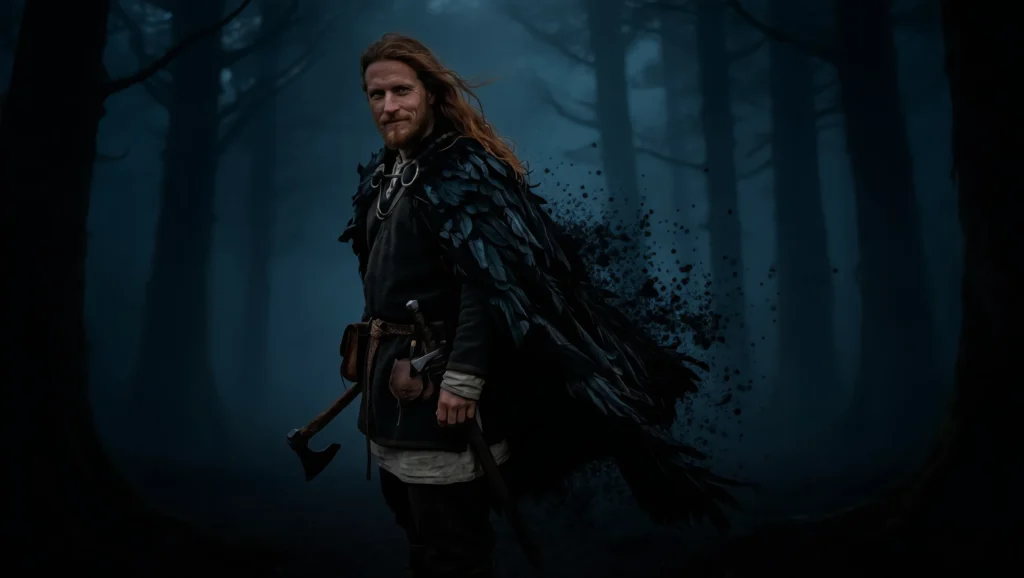
When Loki Helped the Gods
Loki is not consistently an enemy. Several myths depend on him restoring what his own action—or the gods’ bargain—has endangered.
Sif’s Hair and the Treasures of the Gods
In Skáldskaparmál, Loki cuts off Sif’s hair. Thor forces him to obtain a replacement from the dwarfs. The episode expands into a contest of craftsmanship that produces Sif’s golden hair, Odin’s spear Gungnir and ring Draupnir, Freyr’s ship Skíðblaðnir and boar Gullinbursti, and Thor’s hammer Mjölnir. Loki both causes the loss and sets the recovery in motion.
The short handle of Mjölnir is also tied to his interference. Disguised as a fly, Loki bites the smith working the bellows. The resulting flaw does not prevent the gods from judging the hammer the greatest defensive treasure. This is Snorri’s narrative; it should not be projected onto every archaeological hammer pendant.
The Builder and Svaðilfari
In Gylfaginning 42, a builder promises the gods a fortification and demands Freyja, the sun, and the moon as payment if he finishes on time. When his stallion makes success likely, the gods blame Loki for the bargain and demand a solution. Loki, as a mare, draws Svaðilfari away. The builder fails to complete the work within the agreed term; the text does not say that nothing useful had been built.
Iðunn and the Apples
Another Skáldskaparmál narrative has Loki compelled to lure Iðunn outside Asgard, allowing the jötunn Þjazi to seize her and the apples associated with the gods’ youth. When the gods begin to age, they force Loki to repair the damage. Borrowing Freyja’s falcon form, he retrieves Iðunn. Again, helper and offender are the same figure within the same story.
Did Loki Kill Baldr?
Snorri gives the most familiar version. In Gylfaginning 49, Frigg secures promises that things will not harm Baldr but overlooks mistletoe because it seems too young. Loki learns this, fashions a missile from mistletoe, and guides the blind Höðr’s throw. Baldr dies. When Hel later agrees to release him if all beings weep, a figure named Þökk refuses; Snorri says people suppose that Þökk was Loki.
Other sources are less uniform. Lokasenna has Loki claim responsibility for ensuring that Baldr will not return, while Völuspá connects Höðr, mistletoe, and Baldr’s fate without narrating Snorri’s complete plot. Saxo Grammaticus preserves a very different Latin account of Balderus and Høtherus. “Loki killed Baldr” is therefore accurate for Snorri’s influential synthesis, but the surviving tradition is not a single identical script.
This distinction strengthens rather than weakens the story. It shows how medieval authors preserved related material in different forms—and why an evidence-led article must name the source behind a familiar claim.
Loki’s Punishment and Sigyn’s Bowl
The prose ending of Lokasenna and Snorri’s Gylfaginning describe Loki’s capture and binding, but details vary. Snorri tells how Loki hides as a salmon, is caught, and is bound with the transformed entrails of his son. A serpent is placed above him. His wife Sigyn catches its venom in a bowl; when she turns away to empty it, drops strike Loki and his convulsions cause earthquakes.
Völuspá also presents Loki bound beneath a grove while Sigyn sits beside him. The image is ancient within the surviving poetic tradition, but the fullest narrative sequence comes through Snorri. Loki remains bound until the events of Ragnarök.

What Happens to Loki at Ragnarök?
Loki’s final role must be described source by source. In Snorri’s Gylfaginning 51, Loki becomes free and arrives with the people of Hel, while the jötunn Hrym steers Naglfar. Snorri then says Loki and Heimdall fight and kill one another.
Völuspá presents compressed and difficult ship imagery. Some translations and reconstructions associate Loki with steering a ship from the north, while Hrym comes from the east. The often-repeated statement that Loki “captains Naglfar” combines material that is not expressed identically in every witness or retelling. The secure common point is Loki’s release and alignment with the forces opposing the gods.
His children dominate the same catastrophe: Fenrir kills Odin, and Jörmungandr and Thor kill one another. Loki’s family therefore links several of Ragnarök’s central confrontations, but the poems do not reduce the end of the world to a private plan executed by Loki alone.
Loki’s Children and Partners
| Figure | Relationship | What the sources say |
|---|---|---|
| Angrboða | Partner in Snorri’s account | Mother of Fenrir, Jörmungandr, and Hel |
| Fenrir | Son | Wolf bound by the gods; kills Odin at Ragnarök |
| Jörmungandr | Son | World Serpent cast into the sea; kills and is killed by Thor |
| Hel | Daughter | Given authority over a realm of the dead in Snorri |
| Svaðilfari | Stallion in the builder story | Loki, as a mare, bears Sleipnir after drawing Svaðilfari away |
| Sleipnir | Child borne by Loki | Odin’s eight-legged horse |
| Sigyn | Wife | Stays beside bound Loki and catches the serpent’s venom |
| Narfi/Nari and Váli | Sons associated with Loki and Sigyn in Snorri | The naming and punishment details vary across texts and manuscripts |
For the connected myths and their source problems, see the dedicated guide to Loki’s children. These figures are not evidence of a fixed “family built to destroy the world”; they belong to narratives in which fear, attempted control, and foretold catastrophe reinforce one another.
What Does the Name Loki Mean?
The etymology of Loki remains disputed. Connections with words for loops, knots, or closures have been proposed. Older popular explanations sometimes identify Loki with fire by linking his name to Logi, but Gylfaginning itself distinguishes Loki from Logi: the two compete in Útgarða-Loki’s hall, where Logi is revealed as fire. “Fire god” is therefore not a secure translation of Loki’s name.
Loptr, another name used for him, has also attracted explanations connected with air, but a possible etymology does not establish a divine portfolio. The responsible conclusion is simple: no single translation of Loki’s name has scholarly consensus.
What Did Loki Look Like?
Contrary to a common claim, Snorri does provide a brief description. Gylfaginning 33 says Loki is pleasing or handsome in appearance but evil in character and very changeable in behaviour, with exceptional cunning. Translation choices differ, and the passage is a moral characterization rather than a detailed portrait: it gives no canonical hair colour, horned helmet, costume, or facial design.
Later artists often give Loki sharp features, green clothing, horns, scars, or sewn lips. The sewn-mouth motif responds to the Skáldskaparmál story in which Brokkr stitches Loki’s lips. The other familiar traits belong to later art and screen adaptations. A modern illustration should therefore be labelled as modern, not presented as Viking Age evidence.
Did Vikings Worship Loki?
No securely identified Viking Age temple, altar, votive deposit, or place-name demonstrates an organized cult of Loki. Researchers at the University of Copenhagen discuss proposed Scandinavian names connected with Loki, but the readings and derivations remain contested. The evidence is not equivalent to the abundant place-name and amulet record associated with gods such as Thor.
Absence of secure cult evidence is not proof that no Viking Age person ever addressed Loki. Archaeology rarely preserves private thought, and literary prominence is not a direct measurement of worship. The strongest conclusion is narrower: a historical cult of Loki has not been securely demonstrated.
Loki in Viking Age and Medieval Art
The Snaptun stone from Denmark, dated around the year 1000, shows a face with marked or sewn-looking lips on a hearth stone. It is widely proposed as Loki because Snorri tells how the dwarf Brokkr sewed Loki’s mouth. Moesgaard Museum identifies the image as Loki. Even here, the identification rests on comparison with a literary motif; no inscription names the face.
The Kirkby Stephen stone in Cumbria shows a bound, horned figure and is sometimes connected with Loki’s punishment. The Gosforth Cross has also been read through Norse mythic scenes. These interpretations are plausible but debated. They should not be converted into a fixed “Loki symbol,” and no historical Loki rune is known.
Loki, Gender, and Modern Interpretation
Loki repeatedly crosses gendered boundaries. He becomes a mare and gives birth to Sleipnir. Lokasenna accuses him of spending years beneath the earth as a woman, milking cows and bearing children; the insult relies on the gender norms of the poem’s society. These passages make Loki especially important in modern discussions of gender and transformation.
Calling Loki “gender-fluid” can be a meaningful modern reading, but it is not a label used by the medieval texts. The evidence supports repeated changes of sex, form, and social role. Whether those episodes map onto a modern identity is an interpretive question, and different readers will answer it differently.
The same boundary applies to Marvel. The screen character has made Loki globally recognizable, but Marvel’s adoption story, frost-giant identity, horned costume, romantic plots, and personal psychology belong to a modern fictional continuity. They can lead readers to the myths; they cannot serve as evidence for them.
What Loki Represents—Without Turning Interpretation into Fact
Scholars have proposed Loki as a trickster, culture hero, fire figure, bound monster, ritual outsider, and agent of cosmic dissolution. None of these theories explains every source. Rudolf Simek calls him one of the most complex figures in the Germanic pantheon, while earlier scholars repeatedly revised their own attempts to assign him a single origin or function.
A productive reading sees Loki as a stress test for social and cosmic boundaries: he exposes promises, weaknesses, and contradictions, sometimes restoring order and sometimes breaking it. That is an interpretation, not an attested Viking doctrine. The distinction follows the same evidence rule used throughout Mythic Harmonies: where the source stops, the article names the inference.
This is also why Loki belongs beside the wider guide to the Norse gods and goddesses, the study of wyrd and fate, and the account of the Norns. Loki cannot be understood as a free-floating mascot of chaos; his stories work inside a network of oaths, kinship, prophecy, retaliation, and failed attempts to control the future.
Frequently Asked Questions About Loki
Who is Loki in Norse mythology?
Loki is a shape-changing figure who lives among the Æsir although his father, Fárbauti, is a jötunn. Across the surviving sources he alternately helps and harms the gods, contributes to Baldr’s death in Snorri’s account, is bound, and opposes the gods at Ragnarök.
What is Loki the god of?
The medieval sources do not assign Loki a formal divine portfolio. “God of chaos,” “god of mischief,” and “trickster god” are modern descriptive labels based on his stories, not titles found in the Eddas.
What is Loki’s full name?
The sources give no modern-style full name. Snorri calls him Loki or Loptr, while Þrymskviða calls him Loki Laufeyjarson—Loki, son of Laufey. Laufeyjarson is a matronymic description, not a hereditary surname.
What other names does Loki have?
The best-attested alternatives are Loptr and Loki Laufeyjarson. Later lists contain many descriptive labels, but they should not all be treated as formal personal names or historically attested titles.
Was Loki a god or a giant?
Loki does not fit a strict modern either-or category. Gylfaginning names his father Fárbauti as a jötunn, yet Loki lives and acts among the Æsir. The sources preserve that mixed position instead of resolving it into a simple classification.
How is Loki related to Odin?
Lokasenna 9 has Loki remind Odin that they once mixed blood and that Odin promised not to drink unless Loki was served. This indicates an oath of fellowship; it does not make Loki Odin’s son.
Are Loki and Thor brothers?
No. Their adoptive-brother relationship is a Marvel invention. In Norse sources Loki sometimes travels with or assists Thor and sometimes antagonizes him, but they are not brothers.
Who are Loki’s children?
With Angrboða, Snorri names Fenrir, Jörmungandr, and Hel. Loki also bears Sleipnir after taking mare form. Snorri associates Narfi or Nari and Váli with Loki and Sigyn, although names and punishment details vary across texts.
Can Loki shapeshift?
Yes. The sources associate Loki with forms including a mare, salmon, fly, seal, and female disguises; some episodes also involve borrowed bird equipment. The texts do not organize these changes into one formal system of magic.
What did Loki look like?
Gylfaginning 33 describes Loki as pleasing or handsome in appearance but bad in character and highly changeable in behaviour. It gives no canonical hair colour, horned helmet, or detailed costume. Most familiar visual traits come from later art.
Did Vikings worship Loki?
No securely identified Viking Age temple, altar, votive deposit, or uncontested place-name proves an organized cult of Loki. That absence does not prove that no individual ever addressed him; it means a historical cult is not securely documented.
Is Loki a frost giant?
The Eddas do not call Loki a “frost giant.” Snorri says his father Fárbauti is a jötunn. Loki’s specific frost-giant identity belongs to Marvel’s adaptation.
Is Loki evil in Norse mythology?
The sources do not present a simple modern moral biography. Loki helps the gods in several myths and harms them in others. His role becomes decisively hostile in the Baldr and Ragnarök traditions, but “pure evil” erases the earlier material.
Was Loki gender-fluid?
Loki repeatedly crosses sex and gender boundaries, most famously becoming a mare and giving birth to Sleipnir. “Gender-fluid” is a meaningful modern interpretation, but it is not a category used by the medieval texts.
How does Loki die in Norse mythology?
In Snorri’s account of Ragnarök, Loki becomes free, fights Heimdall, and the two kill one another. The Poetic Edda gives a more compressed picture of Loki’s release and the approaching forces.
Conclusion: Loki Is More Complicated Than a God of Chaos
Loki is not Thor’s brother, not Odin’s adopted son, and not securely documented as the god of a single domain. He is Loki or Loptr, son of Fárbauti and Laufey, oath-linked to Odin, moving among the Æsir while repeatedly crossing the boundaries their world depends on. He retrieves treasures, causes losses, changes sex and species, contributes to Baldr’s death in Snorri’s account, is bound with Sigyn beside him, and returns among the gods’ enemies at Ragnarök.
The contradictions are not defects to be smoothed away. They are the reason Loki has resisted a final definition for centuries. The best guide is therefore not the one that gives him the neatest label, but the one that tells readers which source says what—and where certainty ends.
Primary Sources and Further Reading
- Snorri Sturluson, Edda: Prologue and Gylfaginning, ed. Anthony Faulkes, Viking Society for Northern Research.
- Snorri Sturluson, Skáldskaparmál, volume 1, ed. Anthony Faulkes, Viking Society for Northern Research.
- The Poetic Edda, trans. Carolyne Larrington, Oxford World’s Classics.
- Lokasenna, Old Norse text and translations collected by Heimskringla.no.
- Þrymskviða, Old Norse text and translations collected by Heimskringla.no.
- Rudolf Simek, Dictionary of Northern Mythology, D. S. Brewer.
- University of Copenhagen, “Loki and place-names”, discussion of disputed name evidence.
- Moesgaard Museum, institutional reference to the Snaptun Stone and its Loki interpretation.
Music to read by
Each article has a soundtrack. Listen to Mythic Harmonies while you read.
Explore the music