

Viking Hygiene: Why the Horn Comb Was More Valuable Than Gold
On this page 8 sections
When you picture a Viking warrior, what do you see? Likely a hulking figure covered in mud and blood, with matted hair and a wild beard, smelling of wet dog and smoke. This is the Hollywood image of the “filthy barbarian.”
But historically, this image is completely wrong.
In reality, the Norse people were arguably the cleanest and most well-groomed population in Medieval Europe. They bathed regularly, changed their clothes often, and took immense pride in their appearance.
And at the center of this daily ritual was a simple, yet vital tool: the horn comb.
Far from being a disposable accessory, the comb was a status symbol. Archeologists have found more combs in Viking graves than swords or axes. In this guide, we will explore the surprising truth about Viking hygiene and why a simple comb from horn was often treated with as much respect as a weapon of war.
The Myth of the Filthy Barbarian
To understand the value of the comb, we first need to look at how the Vikings’ neighbors viewed them.
In 1220, the English chronicler John of Wallingford complained about the Danes (Vikings) who had settled in England. But he didn’t complain that they were dirty. Quite the opposite—he complained that they were too clean.
He wrote that the Vikings caused trouble because they managed to seduce English noblewomen by:
“Combing their hair every day, bathing every Saturday, and changing their clothes frequently.”
To the Anglo-Saxons of the time, this level of hygiene was seen as excessive, almost vain. But for the Norse, Laugardagur (Saturday) literally meant “Washing Day” (a word that survives in Scandinavian languages today, like Lördag in Swedish).
The Evidence in the Grave
This obsession with grooming is proven by archeology. When excavating Viking burials—from the poorest farmers to the richest Jarls—one item appears more consistently than almost any other. It isn’t the sword. It isn’t the shield. It is the comb.
These were not cheap, mass-produced items. A horn comb was a masterpiece of craftsmanship, often kept in a protective leather case to ensure its teeth never broke.
Not Just Plastic: A Feat of Engineering
When you buy a plastic comb today, it is molded in seconds. A Viking horn comb took days of skilled labor to create.
Contrary to popular belief, most “horn” combs were actually made from Red Deer antler or Reindeer antler. Antler is tougher and more resilient than cow horn, making it the superior material for tools that need to last a lifetime.
The “Composite” Construction
The genius of the Viking comb lies in its assembly. They were not carved from a single flat piece of bone (which would snap easily if dropped). Instead, they used a composite construction method.
- Tooth Plates: The craftsman cut small, flat plates of antler.
- Connecting Plates: These tooth plates were sandwiched between two long, horizontal bars (the “handle” of the comb).
- Riveting: The entire assembly was fastened together with iron or bronze rivets.
- Cutting the Teeth: Only after the pieces were riveted together did the craftsman saw the teeth into the plates. This ensured perfectly even spacing.
Why does this matter? This composite design made the combs incredibly durable and flexible. If a tooth broke, you could technically un-rivet the comb and replace just that plate, rather than throwing the whole tool away. It was sustainable engineering.

More Than Just Hair: A Tool for Survival
Why put so much effort into a hair accessory? Because for a Viking, a comb was a health tool.
Living in longhouses with livestock and sleeping on furs meant that lice and fleas were a constant threat. A fine-toothed horn comb was the primary defense against parasites.
- De-lousing: The teeth were often cut very fine (finer than many modern combs) specifically to trap and remove head lice and nits.
- Beard Maintenance: A tangled beard is a hazard in battle (an enemy can grab it) and a trap for food and dirt. Combing the beard was a daily ritual for men to maintain dignity and hygiene.
In many sagas, a hero is described as being “unwashed and uncombed” only when they are in deep mourning or madness. To be combed was to be civilized.

Protecting the Asset: The Comb Case
Because a horn comb represented hours of skilled labor and was essential for health, you couldn’t just throw it loosely into a sea chest. It would break.
Most high-quality Viking combs came with a matching comb case.
- Design: These cases were made of the same material (antler or bone) and constructed using the same riveted composite method.
- Function: The case protected the delicate teeth from snapping during travel.
- Decoration: Often, the case was more decorated than the comb itself, featuring “Ring-and-Dot” motifs, geometric carvings, or even Runic inscriptions identifying the owner (e.g., “Thorfast made this good comb”).
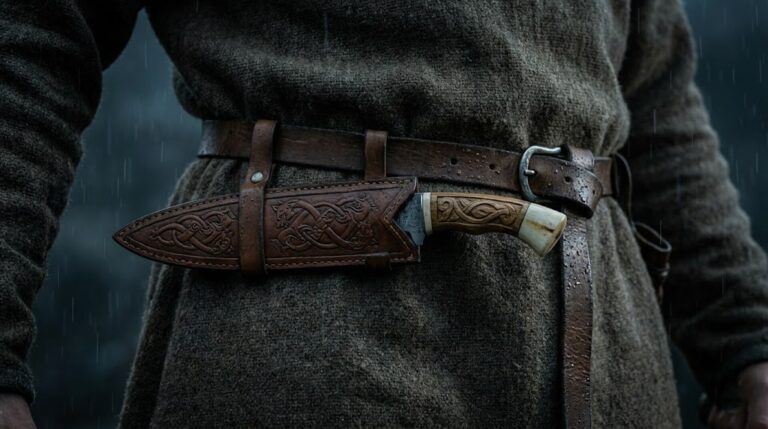
A Connection to Daily Carry: While the comb case protected the teeth, the comb itself had to be carried. Many cases had suspension loops, allowing them to be tied to the belt alongside the knife and pouch. (See our guide on What Kind of Bags Did Vikings Use? to understand how these items were integrated into their belt system).
A Gift for the Afterlife
Perhaps the strongest proof of the comb’s value is where we find them today: in graves.
In the Viking belief system, you were buried with the items you needed for the journey to the afterlife (whether to Valhalla, Folkvangr, or Hel). Warriors were buried with weapons; smiths with hammers. But almost everyone—men and women, rich and poor—was buried with a comb.
Why?
- Identity: A comb was a deeply personal item. Unlike a sword which could be passed down, a grooming tool was intimate. It was part of the person’s essence.
- Order vs. Chaos: In Norse mindset, unkempt hair represented the “wild” or “troll-like” nature. Combed hair represented “humanity” and social order. To enter the afterlife with a comb meant you entered as a civilized, proud soul, not a beast.
It was not uncommon for a Viking to treasure their comb more than their gold hacksilver. Gold could be spent; a comb kept you human.
Horn Combs Today: Why the Viking Design Still Wins
A thousand years later, the horn comb is quietly winning again. Modern grooming brands have rediscovered what the Norse knew, and the reasons are physical, not nostalgic. Horn is keratin, the same material as hair itself, so a horn comb generates none of the static electricity that makes plastic combs lift and frizz hair. Its polished teeth glide along the strand and distribute the scalp’s natural oils down the length, where a molded plastic comb, with its microscopic seam lines, snags and tears. And a well-made horn comb lasts decades, the same sustainable logic as the Viking composite design that could be repaired tooth by tooth.
One caveat the Vikings would appreciate, since honesty about craftsmanship was their standard: many cheap “horn combs” sold online are molded from horn slurry, which behaves like plastic. A genuine one is cut and sawn from a solid plate, shows slight natural variations in color, and has individually polished teeth. Check for those three signs before buying. The riveted antler construction of the Viking Age is no longer made, but its material logic survives in every real horn comb sold today.
Grooming was one half of the Norse appearance code. The other half, the clothes themselves, has its own complete guide: what Viking men and women really wore.
Conclusion: The Mark of a Civilized Warrior
So, why was the horn comb more valuable than gold?
Because gold sits in a chest, but a comb builds identity.
The next time you watch a Viking movie and see a warrior covered in mud, remember the truth. The real Vikings were fastidious groomers who carried their combs in decorated cases on their belts, right next to their knives.
For the Norse people, the act of combing was a daily ritual that separated order from chaos, friend from foe, and human from beast. The horn comb was a marvel of composite engineering, a tool of health, and a passport to a dignified afterlife.
It turns out the most dangerous warriors in history were also the best groomed.
Frequently Asked Questions
Did Vikings really bathe once a week?
Yes. Historical chronicles confirm that Vikings bathed every Saturday (Laugardagur). This was considered frequent compared to other European cultures of the time, who often bathed much less.
What were Viking combs made of?
Most were made from Red Deer antler or Reindeer antler, which is stronger and more flexible than cow horn. Bone was also used for cheaper versions.
Did Viking men have long hair?
Generally, yes. While styles varied, long hair and well-groomed beards were symbols of masculinity and freedom. Slaves (thralls) often had their hair cropped short, so long hair was a mark of status.
How did they make the combs so strong?
They used a “composite” method. Small plates of antler were riveted between two connecting bars, and the teeth were sawed after assembly. This made the comb flexible and durable.
Did Vikings use soap?
Yes, and theirs was unusually strong. Viking soap was made with a high concentration of lye, which cleaned aggressively and had a side effect the Norse embraced: it bleached hair blonde. Chroniclers note that even dark-haired Vikings lightened their hair and beards with it, making the look a deliberate fashion.
Why were Vikings buried with combs?
Because a comb was personal in a way a sword was not: swords were passed down, but a grooming tool carried its owner’s identity. In the Norse mindset, combed hair separated the civilized human from the wild beast, so entering the afterlife with a comb meant arriving as a dignified soul.
Why did Vikings carry combs?
Daily necessity and social signal combined. In communal longhouses shared with livestock, a fine-toothed comb was the primary defense against lice. A groomed beard and combed hair also marked a free, civilized person, which is why combs hung from belts beside the knife and appear in Viking graves more often than swords.
Are horn combs better for hair?
For most hair types, yes. Horn is keratin, the same substance as hair, so it creates no static, and its polished teeth distribute natural scalp oils along the strand instead of snagging. Molded plastic combs carry microscopic seam lines that tear hair. The catch: it must be genuine cut horn, not molded horn slurry.






All five albums and every single: 86 songs in WAV and MP3, yours to keep.