
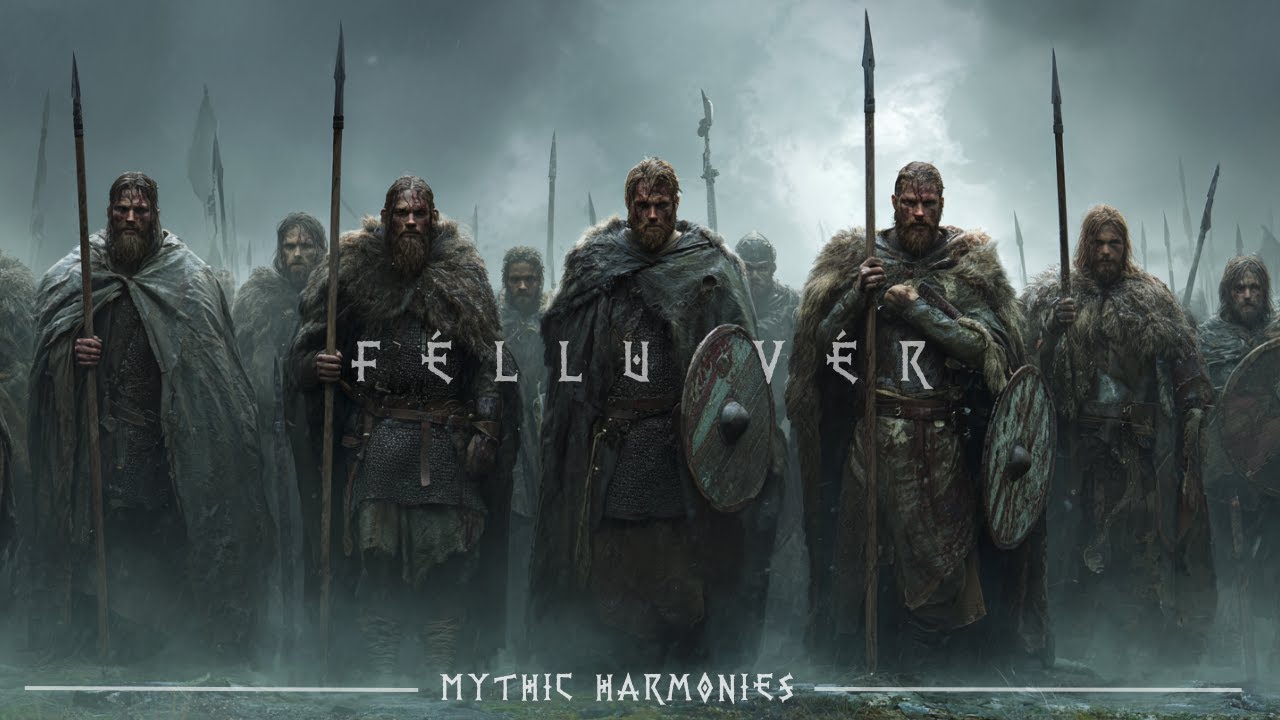
Fellu Vér (“We Fell, We Rise”) is a 3:02 Mythic Harmonies chant in stylized Old Norse. Its speakers are fallen warriors who answer death with a repeated reversal: they fell, they rise, they fight again, and war still waits.
This page preserves the complete Fellu Vér lyrics and English translation exactly as released. The daily combat of Odin’s einherjar has a medieval source basis. The fearless chorus, undying words and awaited judgment are the modern song’s interpretation, not a recovered Viking Age confession.
Fellu Vér at a Glance
- Site and video title: Fellu Vér
- Released subtitle: We Fell, We Rise / Rise of the Einherjar
- Streaming title: Féllu Vér
- Artist: Mythic Harmonies
- Language: stylized Old Norse with an artistic English translation
- Duration: 3:02 on YouTube, Spotify and Apple Music
- Mythic focus: the einherjar’s repeated fall, return and preparation
- Historical status: modern original composition
What Does Fellu Vér Mean?
The opening performed form Féllu vér means “we fell.” Rísum vér answers “we rise.” The site title drops the first acute accent, while Spotify and Apple use Féllu Vér. Both identify the same track; the discrepancy is documented rather than corrected silently in the released words.
“We Fell, We Rise” combines the first two statements and is therefore a subtitle or summary, not a translation of the two-word display title alone. That distinction also explains the song’s search intent: this is the fiche for the exact title, full bilingual text and daily-return refrain.
What Is the Song About?
The song begins after defeat. Blood is on the earth, a sword remains in hand, the eye closes and the heart continues to beat. Valhalla calls, but the text does not linger on a journey into the hall. It jumps quickly to collective presence: “We still stand.”
The refrain addresses the einherjar by name and gives four propositions: rise today, do not fall, words do not die, war awaits. A second verse supplies the repeated cycle—combat, wounds, laughter and renewed life—before the ending slows into fallen men, continued existence, judgment and one last “we rise.”
The Daily Combat of the Einherjar
Snorri’s Gylfaginning asks what entertainment the einherjar have when they are not drinking. The answer describes them arming, going into the enclosure, fighting, felling one another and then returning to Valhalla at mealtime to sit together. That cycle is the firmest source parallel for the song’s “each day we fight.”
The source does not describe an inspirational morning resurrection with the wording used here. Nor does it say that the dead simply refuse to stay down by willpower. The song converts a mythic routine into a modern defiant chorus. The source supplies the cycle; the track supplies the attitude.
Falling, Rising and Returning to the Hall
The repeated opposition works because the speakers are already dead. “We fell” can point backward to the deaths that brought them into Odin’s host and inward to the daily combats described by Snorri. “We rise” joins both moments into one identity: the group is defined by return.
That does not make Valhalla a general afterlife for every warrior or every Norse person. Grímnismál gives Freyja half of the slain and Odin the other half, while other sources preserve other destinations. The full evidence and its limits belong to the guide on Valhalla versus Fólkvangr.
“Words Do Not Die” Is the Song’s Claim
Deyr ei orð is translated “words do not die.” It connects speech to the same resistance given to bodies, but it is not an Eddic definition of the einherjar. Hávamál famously discusses the survival of reputation after cattle, kin and self die; that is a useful comparison, not proof that this exact phrase is ancient.
Inside the track, the line makes the refrain itself part of the return. The warriors fall, yet their word can be shouted again. The safest reading begins with that musical function instead of turning the couplet into a universal statement about Norse belief.
Laughter on the Warrior’s Path
The second verse places laughter beside wounds and blood. Snorri calls the daily fighting the einherjar’s sport and then has them return to drink together, so joy and violence do coexist in the literary picture. The song compresses that coexistence into one audible image.
It should not be generalized into a historical claim that Viking warriors laughed at injury or treated death casually. The speakers are mythic dead in a modern composition, not a sociological sample of Viking Age soldiers.
What War Awaits Them?
The refrain says only that war waits. The final lines add “awaiting judgment” but never name Ragnarök. The identification comes from the einherjar’s broader mythic role: in Gylfaginning, Odin’s host marches with the gods when Fenrir and the other enemies gather for the last battle.
The song therefore keeps the final war just outside the frame. Unlike a Ragnarök narrative, it focuses on preparation through repetition. For the actual sequence of opponents, deaths and the renewed world, read what happens at Ragnarök in the sources.
Language and Translation Notes
The released wording is stylized Old Norse, not a normalized medieval text. Féllu vér, rísum vér, blóð á jǫrð and dag hvern are clear in intention. Other forms are uneven: plural vér appears with singular stendr; rísum dag is compressed; föllum ei says “we do not fall” rather than an imperative; berjask does not agree transparently with the first-person subject; and anda lifr is uncertain.
The English block smooths these problems and expands the emotional logic. Fórum vér um dauðans land becomes “we walked through the land of death,” hlátur heyrisk “laughter echoes,” and sá er drapst, hann rísr síðr “he who died shall rise again.” The translation is coherent and performable, but not a critical edition.
Is Fellu Vér an Authentic Viking Age Chant?
No. Fellu Vér is a modern original Mythic Harmonies song. No Viking Age inscription or medieval manuscript preserves this lyric, English translation, melody or 3:02 arrangement. Its premise draws on the Eddic einherjar cycle, but the speakers and refrain are contemporary creations.
Keeping that boundary explicit is especially important here because the song closely echoes a real mythic routine. A source parallel is not the same thing as a recovered chant. The page lets readers see exactly where Snorri ends and the composition begins.
How the 3:02 Recording Uses Repetition
The arrangement of the text follows the cycle it describes. A two-part declaration opens the track, one verse crosses death, a short “we still stand” bridge sets the pulse, and the four-line einherjar refrain returns after the daily-combat verse.
The closing passage removes complete sentences until only identities and states remain: einherjar, fallen men, still alive, waiting, rising. That contraction prevents the repeated chorus from becoming static. The final word answers the first: falling was real, but it did not have the last position.
Related Einherjar Songs Without Cannibalization
This fiche owns the exact title Fellu Vér, the “we fell / we rise” hook, daily combat and return. Einherjar Kallar owns the host’s repeated call and Ragnarök muster; its focus is mobilization, not the fall-and-rise cycle.
Call of Valhalla owns an English first-person arrival. Voices of Valhalla owns the voices heard from the hall. Each page answers a different title and listening story instead of competing for one generic “Valhalla song” query.
Fellu Vér Lyrics (Old Norse and English)
The first block is the released performed text; the second is the official artistic English translation. Both are reproduced unchanged.
Old Norse:
Féllu vér. Rísum vér.
Blóð á jǫrð, sverð í hönd,
fórum vér um dauðans land.
Augat lokast, hjarta slær,
Valhǫll kallar, engi hræðr.Stendr vér enn. Stendr vér enn.
Einherjar! Rísum dag!
Einherjar! Föllum ei!
Einherjar! Deyr ei orð!
Einherjar! Bíðr oss stríð!Dag hvern berjask, sár ok blóð,
hlátur heyrisk í herjarslóð.
Féllu menn, en anda lifr,
sá er drapst, hann rísr síðr.Stendr vér enn. Stendr vér enn.
Einherjar! Rísum dag!
Einherjar! Föllum ei!
Einherjar! Deyr ei orð!
Einherjar! Bíðr oss stríð!Einherjar… fellnir menn… lifum enn… bíðum dóm…
Rísum…
English translation:
We fell. We rise.
Blood on the earth, sword in hand,
we walked through the land of death.
The eye closes, the heart still beats,
Valhalla calls, none are afraid.We still stand. We still stand.
Einherjar. We rise today.
Einherjar. We do not fall.
Einherjar. Words do not die.
Einherjar. War awaits us.Each day we fight, wounds and blood,
laughter echoes on the warrior’s path.
Men fell, but the spirit lives,
he who died shall rise again.We still stand. We still stand.
Einherjar. We rise today.
Einherjar. We do not fall.
Einherjar. Words do not die.
Einherjar. War awaits us.Einherjar… fallen men… we still live… awaiting judgment.
We rise.
Listen to Fellu Vér
Watch the official 3:02 YouTube video. The same Mythic Harmonies master is titled Féllu Vér on Spotify and Apple Music, also 3:02. The accent variant is disclosed and the title, artist and duration otherwise match exactly.
Sources and Further Reading
- Snorri Sturluson, Edda: Prologue and Gylfaginning, ed. Anthony Faulkes, Viking Society for Northern Research; especially the daily combat, feast and Ragnarök sections.
- Hávamál, ed. D. A. H. Evans, Viking Society for Northern Research, for the distinct source comparison about reputation surviving death.
- Michael Barnes, A New Introduction to Old Norse: Grammar, Viking Society for Northern Research.
- Dictionary of Old Norse Prose, University of Copenhagen.
Questions About Fellu Vér
What does Fellu Vér mean?
The performed and streaming form Féllu vér means “we fell.” The released subtitle “We Fell, We Rise” also incorporates the next line, Rísum vér, “we rise.”
Do the einherjar fight and rise every day?
Gylfaginning describes Odin’s einherjar fighting and felling one another each day, then returning to Valhalla to sit together at mealtime. The song turns that mythic cycle into a defiant modern refrain.
Did every brave Viking become an einherji in Valhalla?
No. Grímnismál gives Freyja half of the slain and Odin the other half, and other Norse death traditions preserve additional destinations. Valhalla is not a universal Viking heaven.
Is Fellu Vér an authentic Viking Age chant?
No. It is a modern Mythic Harmonies composition in stylized Old Norse. The daily combat of the einherjar is source-based, but this lyric, translation, melody and arrangement are not medieval.
Where can I listen to Fellu Vér?
The official YouTube video runs 3:02. Spotify and Apple Music carry the same 3:02 Mythic Harmonies master as Féllu Vér, with the first acute accent restored.
More from Funeral & Ritual
March with the War-Band
New Old Norse chants every month. Join the listeners who never miss a release.