
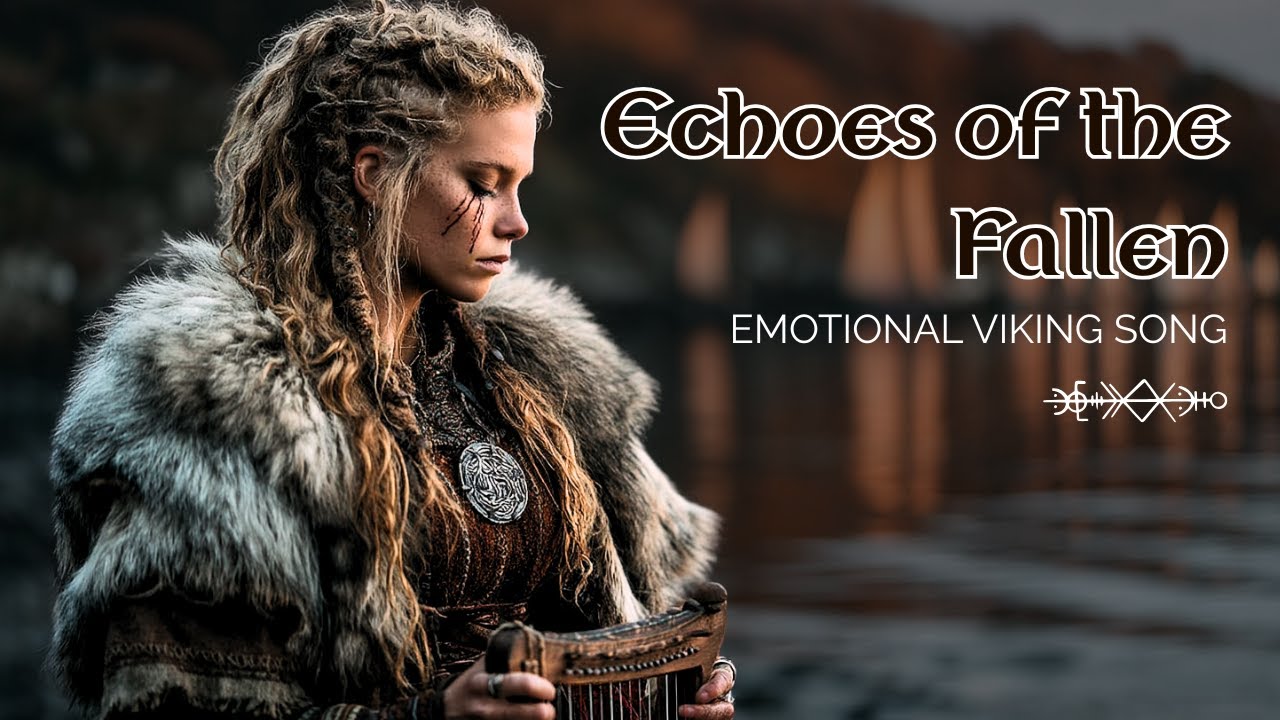
Echoes of the Fallen is a 4:05 English-language Mythic Harmonies lament about remembering absent warriors. Its narrator walks a silent shore after the fires fade, sees carved names and a broken shield, and imagines the dead continuing through whispers, song and the memory of their kin.
This page preserves the complete Echoes of the Fallen lyrics exactly as released. The song is a modern composition, not a recovered Viking funeral song. Its ravens, weeping sea and voices in the wind are poetic images; the evidence-led notes below identify where the text meets medieval ideas of reputation and real commemorative practice—and where it does not.
Echoes of the Fallen at a Glance
- Title: Echoes of the Fallen
- Artist: Mythic Harmonies
- Language: English
- Duration: 4 minutes 5 seconds
- Album: Oaths of the North
- Core theme: collective grief, remembrance and continuity through song
- Historical status: modern original song, not a medieval text or ritual reconstruction
What Is Echoes of the Fallen About?
The first stanza establishes distance rather than action. Whispers rise into a northern sky, shadows fall, ravens watch and memory itself seems to cry. The speaker then reaches a shore where ceremonial fires are dying. Names have been cut into a surface, yet the line “none remain” makes the monument feel insufficient beside the people it cannot restore.
The chorus answers that absence with sound. The fallen call through the night and their song refuses to die, even when bodies are taken by cold. A later verse narrows the loss to kin, stone, a broken shield and one isolated soul. The final chorus expands again: the remembered voices rise through the ages. The song does not describe a particular historical battle or named individual; it builds a collective memorial from invented images.
Is It an Authentic Viking Funeral Song?
No. Echoes of the Fallen is a modern English song by Mythic Harmonies. No medieval manuscript, runic inscription or archaeological object preserves these words or this melody. Calling it a Viking lament describes its creative setting and subject, not the date of composition.
Real Viking-Age treatment of the dead was not one uniform ceremony. Archaeology records cremations, inhumations, mounds, chamber graves and graves with very different assemblages. The National Museum of Denmark’s chamber-grave overview, for example, describes roughly sixty known examples from Denmark and the old Danish area and dates the Mammen chamber to 970–971. One grave type cannot stand for every region, century or social group.
Reputation After Death in Hávamál
The song’s closest literary parallel is the concern with what remains after a person dies. Stanzas 76 and 77 of Hávamál contrast the mortality of people and possessions with orðstírr, the favourable judgment or reputation earned by the dead. The point is more precise than a general doctrine of literal immortality: a person dies, while what others say about that person may endure.
The complete text and manuscript discussion are available in the Viking Society’s scholarly edition of Hávamál. Echoes of the Fallen turns that durable reputation into audible “echoes.” That is an interpretation of the modern lyric, not proof that the song reproduces an ancient memorial performance.
Carved Names and Viking-Age Memorial Stones
The shore verse says that names are carved. Viking-Age rune stones offer a real, though not identical, point of comparison. According to the National Museum of Denmark’s guide to rune stones, many were raised visibly in memory of named dead people and their deeds. They might stand near roads or bridges rather than at the grave itself.
The evidence also resists a heroic-only stereotype. Stones commemorated men and women, relatives, patrons and companions; some record sad fates or explicit grief. The lyric never says its carved names are runes, so this page does not convert its anonymous poetic stone into a specific runestone or claim that every bereaved family raised one.
What Do the Ravens Mean?
The opening ravens are silent witnesses. Ravens can evoke battlefields and Odin in Norse-themed art, but the song does not name Huginn, Muninn or Odin. Assigning the birds a divine message would add a claim that the lyric never makes.
For the named birds and the actual medieval passages, see the site’s source comparison on Huginn and Muninn. Here the safest reading is visual and emotional: dark birds watch a place where remembrance and loss meet.
Fire, Sea and the Broken Shield
“Where fires fade” places the speaker after an unnamed rite or gathering. It does not establish a burning ship. Viking-Age funerals varied, and the famous ship-on-fire image is not a universal archaeological pattern. The site’s evidence-led guide to Viking funeral rites separates cremation, ship burial, chamber burial and later literary scenes.
The sea that weeps, the stone that sheds tears and the strength living in wind are personifications. The broken shield signals the human cost of conflict, but it does not identify a shield-wall, weapon deposit or documented burial assemblage. These images work because they remain compressed and suggestive.
How the Recording Builds a Lament
The 4:05 recording moves through repeated refrains rather than a battle sequence. Each return gives the central promise—“their song will never die”—greater weight. The closing line reduces the arrangement to fading echoes, allowing the idea of remembrance to persist after the narrative has ended.
The published outro direction names harp and wind, but the public release pages do not provide full performer or instrument credits. This fiche therefore avoids presenting a detailed “Nordic harp,” tagelharpa, female-mourner and male-ancestor arrangement as verified production fact. It also makes no medical promise: listeners may choose the track for reflection or fictional storytelling, but it is not a treatment for grief, anxiety or sleep problems.
Related Songs Without Search Overlap
Echoes of the Fallen owns the English collective-lament intent, the silent shore, carved names and the refrain about the fallen. Tár Hrafn owns intimate grief through the image of a raven’s tear. Dagr ok Nótt owns a love vow and farewell at dawn.
Cry of the North is a first-person song about carrying an ancient voice forward, while Call of Valhalla specifically imagines a call toward Odin’s hall. Those distinctions keep each fiche aligned with a separate title, narrative and search intent.
Echoes of the Fallen Lyrics
The complete released English text appears below without silent rewriting.
Whispers rise through northern skies, Shadows fall where honor lies. Ravens watch with solemn eyes, Echoes sing where memory cries.
I walked the shore where fires fade, Names are carved, but none remain. The sea it weeps, the hills are still, Yet I can hear their voices still.
Echoes of the fallen, calling through the night, Guiding us with whispers, fading into light. Though the cold may take them, their song will never die, Echoes of the fallen, beneath the northern sky.
The blood of kin, the tears of stone, A broken shield, a soul alone. Yet in the wind, their strength abides, Their song of fire forever guides.
Echoes of the fallen, calling through the night, Guiding us with whispers, fading into light. Though the cold may take them, their song will never die, Echoes of the fallen, beneath the northern sky.
Echoes of the fallen, rising ever high, Singing through the ages, blazing in the sky. Though the world may change, their voices still remain, Echoes of the fallen, eternal is their flame.
Outro – fading whispers, harp and wind Echoes… echoes… forever…
Listen to Echoes of the Fallen
Watch the official 4:05 Echoes of the Fallen video. The same 4:05 Mythic Harmonies master appears on Spotify and Apple Music as track 7 of Oaths of the North.
Sources and Further Reading
- Viking Society for Northern Research: Hávamál, complete edition, especially stanzas 76–77 on death and enduring reputation.
- National Museum of Denmark: Rune stones, for visible memorials, named dead and commemorative inscriptions.
- National Museum of Denmark: The chamber-graves of the Viking Age, for one documented burial form and the Mammen date.
- Mythic Harmonies: Viking Funeral Rites, for a broader source-led comparison of cremation, inhumation, ship graves and later accounts.
Questions About Echoes of the Fallen
What is Echoes of the Fallen about?
It is an English-language lament about collective remembrance. A narrator walks a silent shore and imagines absent warriors surviving through names, stories, voices and the memory of their kin.
Is Echoes of the Fallen an authentic Viking funeral song?
No. It is a modern original Mythic Harmonies song. Its imagery draws on Norse-themed remembrance, but no medieval manuscript or inscription preserves these words or this melody.
What does Hávamál say about remembering the dead?
Stanzas 76 and 77 contrast mortal people and possessions with orðstírr, the favourable judgment or reputation left by the dead. The song turns that literary idea into modern poetic echoes rather than reproducing an ancient rite.
Are the ravens in Echoes of the Fallen Huginn and Muninn?
The song does not name Odin or his two ravens. The birds can evoke Norse imagery, but identifying them specifically as Huginn and Muninn would add information not present in the lyric.
Where can I listen to Echoes of the Fallen?
The official video and the matching Spotify and Apple Music recording all run 4:05. The streaming track appears on the Mythic Harmonies album Oaths of the North.
More from Funeral & Ritual
March with the War-Band
New Old Norse chants every month. Join the listeners who never miss a release.