
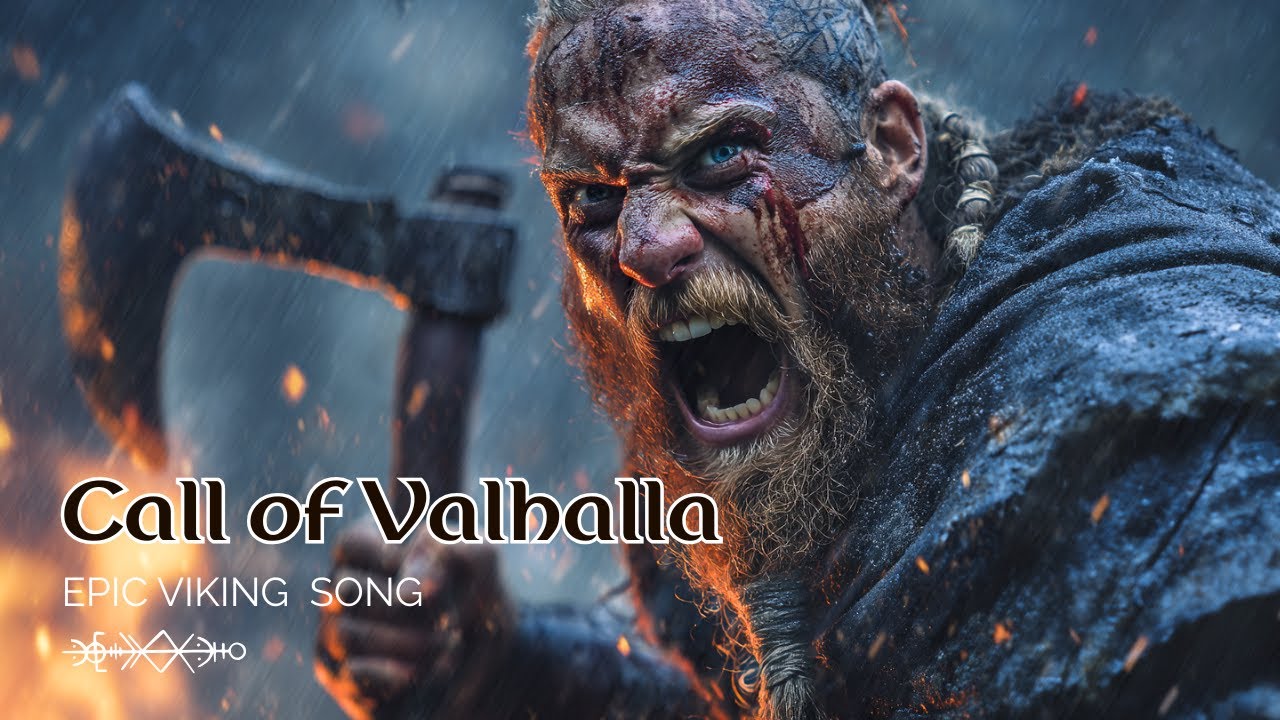
Call of Valhalla is a 4:19 original Mythic Harmonies funeral song in English. A fallen narrator hears Valhalla, imagines ancestors guiding him through a storm and turns a broken shield, a distant horn and a shining mead hall into a modern heroic farewell.
This page preserves the complete Call of Valhalla lyrics exactly as released. It also distinguishes the song’s first-person journey from the more complicated medieval evidence: Valhalla was not the destination of every Norse person or even every battle-dead warrior, and the sources do not describe one universal Viking funeral route.
Call of Valhalla at a Glance
- Title: Call of Valhalla
- Artist: Mythic Harmonies
- Language: English
- Duration: 4 minutes 19 seconds
- Core theme: a modern fallen-warrior monologue that transforms death into remembered honour
- Historical status: original song, not a surviving Viking Age funeral hymn
What Is Call of Valhalla About?
The narrator’s breath ends after battle, but the song refuses silence. Ravens cry, the sky changes colour and a call turns the unknown after death into “Odin’s land.” The repeated chorus gives ancestors the role of guides, although no Valkyrie is named in the released words.
Later verses widen the vision: the shield and sword stop, a mead hall shines, the fallen rise, a horn sounds and doors open. The final “wings of flame” and drink with gods complete a contemporary heroic ascent. They should be interpreted as this narrator’s imagined passage rather than a recovered Norse liturgy.
Valhalla in the Medieval Sources
Valhǫll means “hall of the slain.” Grímnismál describes a hall associated with Óðinn, roofed with shields and equipped with spears. Its famous 540 doors are connected to the host that will go out to face the wolf at Ragnarök; the poem does not present Valhalla as a generic peaceful heaven.
Snorri’s Gylfaginning expands this picture with the einherjar’s daily combat and evening feast. These are medieval textual portrayals, written or preserved in Christian Iceland. They are essential evidence, but they do not allow every modern detail in Call of Valhalla to be labelled a Viking belief. The site’s complete Valhalla guide owns the encyclopedic search intent; this fiche stays with the song.
Who Reaches Valhalla—and Who Does Not?
Grímnismál says Freyja chooses half of the slain and Óðinn receives the other half. That single statement already disproves the claim that Valhalla was the “ultimate goal of every Norse warrior.” Norse afterlife traditions are plural, unevenly preserved and not reducible to one destination.
The song selects an Óðinn-centred heroic voice because that makes a clear narrative. It does not establish how a historical individual understood death, and “my day is won” cannot prove that dying in battle was universally considered the highest spiritual achievement. The familiar claim that all death in bed was shameful is also too broad.
Ancestors, Valkyries and the Unnamed Guides
The chorus explicitly names “voices of ancestors.” It never calls them Valkyries. Elsewhere, Old Norse poetry does connect Valkyries with choosing the slain, but replacing the song’s ancestors with warrior-maidens would rewrite the lyric and imply a journey it does not describe.
Likewise, “the gods shall guide me” leaves the divine agents plural and unnamed. The page therefore resists assigning a fixed escort, welcome ceremony or theology to imagery that the composer deliberately keeps open.
Shield, Horn, Fire and Mead
The broken shield and still sword establish death through objects, but they do not document the manner of death or prove that the warrior fought “to the very end.” The horn can signal arrival, battle or ceremony; no line identifies it as Heimdallr’s Gjallarhorn. “Wings of flame” is modern transformation imagery, not evidence for cremation carrying a soul to Valhalla.
Gylfaginning does describe mead flowing from the goat Heiðrún for the einherjar. It does not describe the specific arrival scene previously claimed on this page, in which a new warrior is handed a welcoming horn and assigned a seat. The song’s shining hall and eternal drink remain a poetic compression of several motifs.
A Transparent Note on Wyrd and Fate
The English word wyrd does not appear in the song, and it is Old English rather than the standard Old Norse term. Explaining “my day is won” through one universal Viking doctrine of Wyrd would import a different linguistic tradition and overstate the evidence.
The line can be read directly as the narrator’s refusal to call his death a defeat. Readers interested in the real history of the term can use the source-led guide to wyrd and its relationship to Old English fate.
How the Song Builds Its Farewell
The track moves from the last breath to a recurring four-line call, then through objects of battle, an opening hall and a final toast. The chorus returns after the hall appears, so the imagined ancestors remain the emotional bridge between battlefield and afterlife.
Repetition, rising vocal layers and broad percussion convert grief into affirmation. That sound can support reflection or fictional farewell scenes, but it is a modern arrangement rather than a reconstruction of a funeral performance.
Call of Valhalla and Related Songs
Call of Valhalla owns the English title, first-person ascent and exact lyrics. Valhǫll Kallar owns the stylized Old Norse “Valhalla calls” intent, while Viking Funeral at Sea owns the farewell viewed from ship, shore and survivors.
Fellu Vér centres fallen warriors who speak collectively, not one narrator entering a hall. These boundaries let closely related songs support each other without competing for one generic Valhalla page.
Call of Valhalla Lyrics
The complete released English lyric appears below without silent correction or an invented Old Norse version.
The fire fades, my breath is gone, Yet in the wind, my soul moves on. The ravens cry, the sky turns gold, Valhalla calls, the brave, the bold.
Blood on steel, the battle done, The night has come, my day is won. No more fear, no mortal pain, The gods shall guide me home again.
Call of Valhalla, I hear it near, Voices of ancestors, strong and clear. Through the storm, through death’s cold hand, They lead me home to Odin’s land.
The shield lies broken, the sword is still, Yet in my heart, I feel their will. The mead hall shines, the doors are wide, For those who fought, for those who died.
One by one, the fallen rise, Carried by fire to northern skies. The horn resounds, the gates unfold, Where tales are sung, and hearts are bold.
Call of Valhalla, I hear it near, Voices of ancestors, strong and clear. Through the storm, through death’s cold hand, They lead me home to Odin’s land.
Lift me high on wings of flame, Sing my honor, speak my name. For in the hall where heroes rest, I drink with gods, forever blessed.
Valhalla… calls… Valhalla… calls…
Listen to Call of Valhalla
Watch the official 4:19 Call of Valhalla video, or hear the matching Mythic Harmonies track on Spotify and Apple Music.
Sources and Further Reading
- Snorri Sturluson, Edda: Prologue and Gylfaginning, especially the sections on Valhalla, the einherjar, Sæhrímnir and Heiðrún.
- Valhalla: What It Actually Means in Norse Mythology, Mythic Harmonies’ source-led encyclopedic guide.
- Dictionary of Old Norse Prose, University of Copenhagen, for Valhǫll and related forms.
- Wyrd Meaning, for the Old English history of the term excluded from the song’s Norse claims.
What is Call of Valhalla about?
The song follows a fallen narrator who hears ancestors, imagines Valhalla opening and turns death in battle into a modern heroic farewell. It is storytelling, not a recovered funeral account.
Is Call of Valhalla an authentic Viking funeral song?
No. It is an original modern Mythic Harmonies song in English. No Viking Age source preserves its lyrics, melody or complete journey from battlefield to hall.
Did every Viking warrior go to Valhalla?
No. Grímnismál says Freyja chooses half of the slain and Odin receives the other half. Norse afterlife traditions are more varied than the popular idea that every warrior automatically entered Valhalla.
Do Valkyries guide the singer in Call of Valhalla?
The lyric names voices of ancestors and says that gods guide the narrator, but it never names Valkyries. Identifying the guides as Valkyries would add a detail that the released words leave open.
Where can I listen to Call of Valhalla?
The official 4:19 video is on YouTube. The matching Mythic Harmonies track is also available under the same title on Spotify and Apple Music.
More from Funeral & Ritual
March with the War-Band
New Old Norse chants every month. Join the listeners who never miss a release.