
What Is Rǫddir Norðrs?
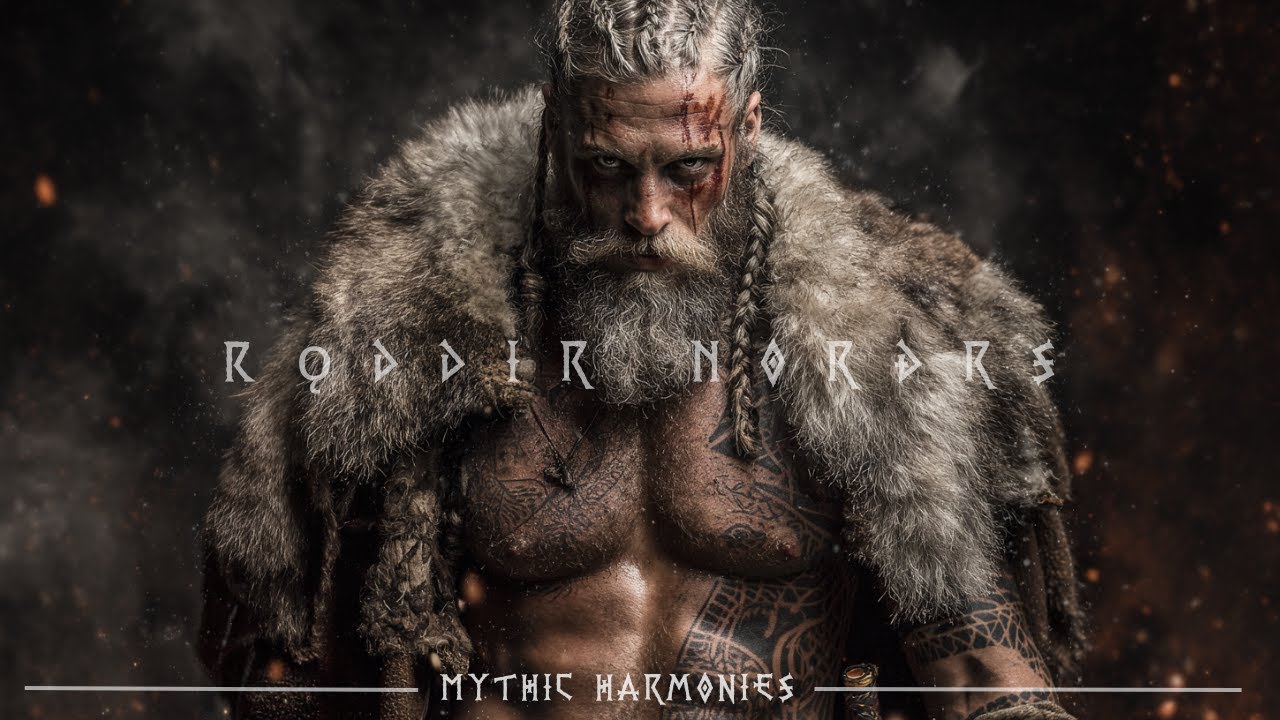
Rǫddir Norðrs (“Voices of the North”) is a 2:40 Mythic Harmonies Viking battle chant built around a repeated summons: horns sound, the ground shakes, warriors close ranks and the chorus answers, “Syng, syng, rǫddir Norðrs!” The official video above is the master for this fiche.
- Artist: Mythic Harmonies
- Recording: official 2:40 YouTube version
- Language: stylized Old Norse-inspired lyrics with an English rendering
- Song identity: collective war chant; horns, shields, wolves, bears, ravens and a recurring northern chorus
- Historical status: a modern composition, not a surviving Viking Age song
This fiche belongs to the song itself. It explains the title, follows the scene created by the verses and separates the modern lyric world from what medieval sources actually say.
What Does Rǫddir Norðrs Mean?
The intended title meaning is “Voices of the North.” Rǫddir is the plural of rǫdd, “voice,” while Norðrs presents “the North” in a possessive construction. The chorus turns that phrase into the song’s central image: many individual voices becoming one answer.
That title is also the cleanest way to distinguish this recording from two related but separate Mythic Harmonies songs. Raddir Forna belongs to the “Voices of the Ancients” theme, while Rǫddir Stríðs owns the “Voices of War” title. This page is specifically about the 2:40 Voices of the North recording.
The Song’s Story: From Horn Call to Final Chorus
The opening verse begins in motion. Horns thunder and the earth shakes before any individual hero is named. Men answer the noise, blood appears on shields and fire appears in hearts. The line “Æsir kalla” places the imagined march beneath the call of the gods, but the song never pauses to narrate a specific myth or historical battle.
The chorus is the structural centre. Its repeated command to sing makes voice itself the weapon of cohesion: the group rises together, returns together and promises to endure together. The second verse widens the soundscape through wolves and bears, then brings it back to human formation with brothers in ranks, sword in hand and a breaking shield.
In the final verse, darkness, a resounding horn, Odin’s gaze and flying ravens move the song from physical combat toward memory and fate. The closing line, “Rǫddir Norðrs… Ævinliga syngjum,” resolves the scene through collective song rather than through the biography of one warrior. This is why the track reads as an anthem: its protagonist is the chorus.
Horns, Animal Warriors and Ravens in Context
The lyric’s horn is best read first as part of its rallying soundscape. Medieval Norse literature also gives the horn a famous mythic association: in Snorri Sturluson’s Gylfaginning, Heimdall keeps Gjallarhorn, whose blast can be heard through all worlds, and sounds it when the powers assemble at Ragnarök. The song echoes that vocabulary of warning and gathering; it does not retell the episode or identify its unnamed horn as Gjallarhorn.
Wolves and bears likewise intensify the verse before swords and shields return it to the human war band. Early skaldic material associates úlfheðnar with wolf-skins and berserkir with animal imagery, while Snorri’s later prose gives a dramatic account of Odin’s furious warriors. Neither source supports reducing them to tidy “speed” and “power” classes or confidently labelling them elite shamanic castes. For the evidence in detail, use our dedicated Úlfheðnar song fiche.
The ravens in the last verse work differently: they accompany Odin’s gaze and the possibility of death. That association is at home in Norse poetic and prose traditions, but here it remains modern songwriting imagery. The fiche therefore explains the reference without presenting the lyrics as a recovered ritual text.
Language Note: A Modern Old Norse-Inspired Text
The left-hand text below is preserved exactly as performed and published. It uses recognizable Old Norse vocabulary and letters, but it is a modern, stylized composition, not an edited medieval stanza. Several forms and agreements are non-normalized—for example blóðr, vér rís and Óðinn lít—so the English block should be read as the song’s intended rendering rather than as a line-by-line scholarly translation.
This distinction matters: the music can draw honestly on Norse language and imagery without claiming that the wording, melody or performance practice survives from the Viking Age.
Rǫddir Norðrs Lyrics and English Translation
Old Norse-inspired text:
Horn dynja, jǫrðr skelfr,
Raddir manna, stríðit helfr.
Blóðr á skjǫld, eldr í hjarta,
Æsir kalla, vér förum bratta.Syng, syng, rǫddir Norðrs!
Þrumr dynja, vér rís í stríð.
Syng, syng, rǫddir Norðrs!
Eld ok blóðr, vér lifum tíð.Úlfar gaula, bjarnar gnýr,
Brœðr í liði, engi flýr.
Sverðr í hönd, skjǫldrinn brestr,
Sigurr kallar, dauðinn frest.Syng, syng, rǫddir Norðrs!
Þrumr dynja, vér rís í stríð.
Syng, syng, rǫddir Norðrs!
Eld ok blóðr, vér lifum tíð.Í myrkri loga, hornit kveðr,
Óðinn lít, vér deyjum meðr.
Hrafnar fljúga, hjarta brennr,
Ævinliga, vér sigru menn.Syng, syng, rǫddir Norðrs!
Þrumr dynja, vér rís í stríð.
Syng, syng, rǫddir Norðrs!
Eld ok blóðr, vér lifum tíð.Rǫddir Norðrs… Ævinliga syngjum.
Published English rendering:
Horns thunder, the earth quakes,
Voices of men, the battle breaks.
Blood on shields, fire in hearts,
The Æsir call, we march to parts.Sing, sing, voices of the North!
Thunder roars, we rise in war.
Sing, sing, voices of the North!
Fire and blood, we live evermore.Wolves are howling, bears roar,
Brothers in ranks, none shall ignore.
Sword in hand, shield that cracks,
Victory calls, death holds back.Sing, sing, voices of the North!
Thunder roars, we rise in war.
Sing, sing, voices of the North!
Fire and blood, we live evermore.In darkness blazing, the horn resounds,
Odin watches, we fall unbound.
Ravens fly, the heart still burns,
Forever we triumph, fate returns.Sing, sing, voices of the North!
Thunder roars, we rise in war.
Sing, sing, voices of the North!
Fire and blood, we live evermore.Voices of the North… Forever we sing.
Listen to the Exact Recording
Watch the exact 2:40 Rǫddir Norðrs video on YouTube. Authenticated catalogue searches found no Mythic Harmonies release matching both this title and duration on Spotify or Apple Music, so this fiche keeps the official Spotify artist page and Apple Music artist page rather than assigning another “Voices” recording.
Sources and Further Reading
- Anthony Faulkes (ed.), Snorri Sturluson: Edda. Prologue and Gylfaginning, especially the passages on Heimdall, Gjallarhorn and Ragnarök.
- Skaldic Poetry of the Scandinavian Middle Ages, edition context for Haraldskvæði/Hrafnsmál and the animal-warrior vocabulary.
- Alison Finlay and Anthony Faulkes (trans.), Heimskringla I, Ynglinga saga chapter 6, for Snorri’s later prose description of berserkir.
What does Rǫddir Norðrs mean?
The intended title meaning is “Voices of the North.” The repeated phrase names the collective chorus at the centre of the song.
Is Rǫddir Norðrs an authentic Viking Age song?
No. It is a modern Mythic Harmonies composition inspired by Norse vocabulary and imagery. Neither its lyrics nor its melody is presented as a surviving Viking Age work.
Are the Rǫddir Norðrs lyrics normalized Old Norse?
No. The published text uses recognizable Old Norse-inspired vocabulary and characters, but several forms and agreements are stylized or non-normalized. The English version gives the intended song meaning rather than a scholarly critical translation.
Is this exact recording on Spotify or Apple Music?
No exact Mythic Harmonies title-and-duration match was verified. The official 2:40 master is the YouTube video on this fiche; the Spotify and Apple Music links therefore lead to the artist pages.
More from Epic War Battle
March with the War-Band
New Old Norse chants every month. Join the listeners who never miss a release.